Introduction
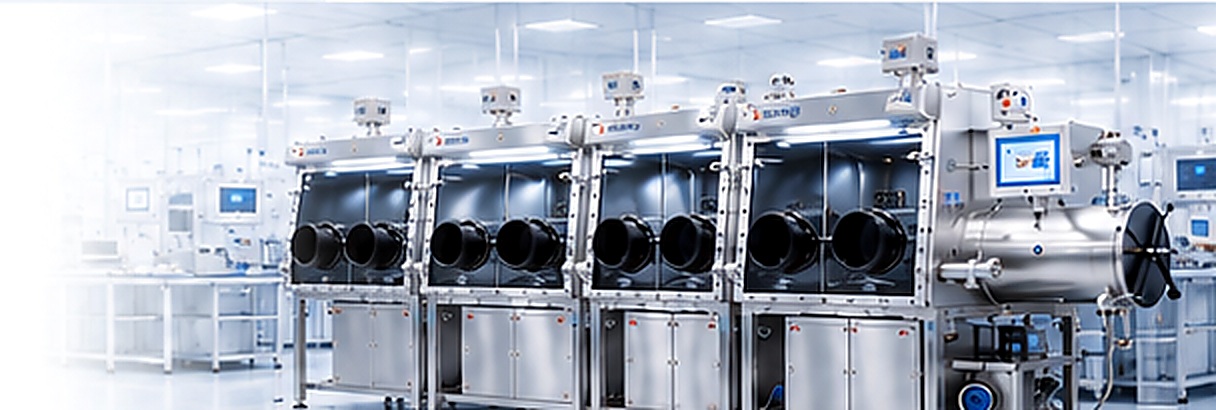
At its core, a pneumatic vacuum baffle valve is a specialized vacuum shut‑off valve designed for automated gas flow control in inert glove box systems. Laboratories and production facilities working with air‑sensitive materials—such as lithium‑ion battery electrolytes, perovskite solar cells, or OLED compounds—use this valve to isolate sections of the gas circulation loop, enable vacuum evacuation of chambers, and maintain the ultra‑low moisture and oxygen environment essential for their processes.
Core Function and Working Principle
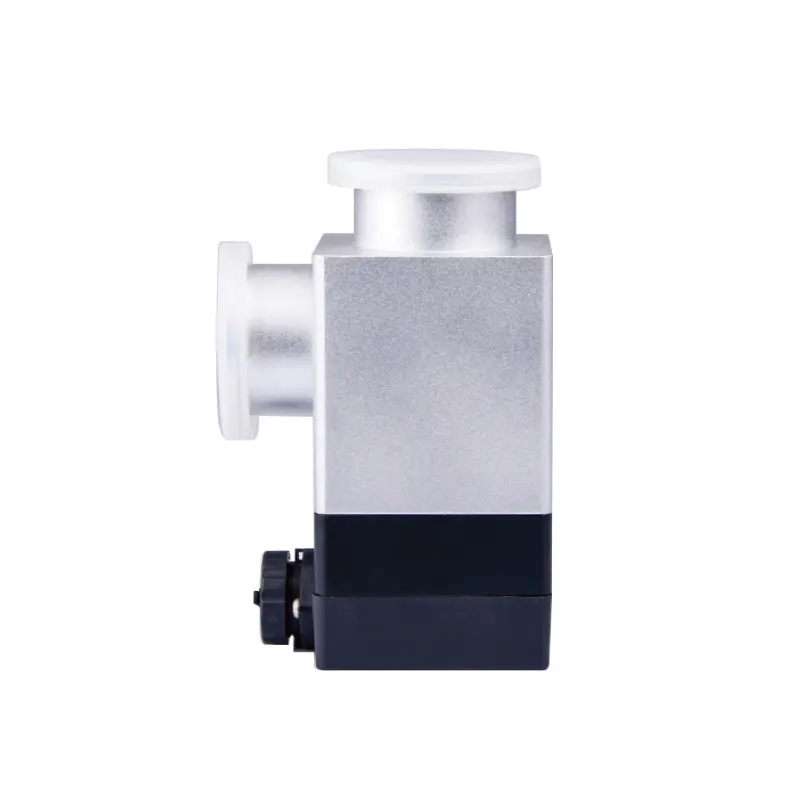
The pneumatic vacuum baffle valve transforms an ordinary gas line into a remotely controllable, leak‑tight isolation point. It is typically installed between a glove box main chamber and its antechamber or between the recirculation loop and the vacuum pump. The valve uses compressed air to move a stainless steel bellows‑sealed stem that lifts or lowers a poppet or disc, either opening or closing the flow path.
When actuated by a solenoid valve, the pneumatic cylinder receives pressurized air (typically 0.4–0.8 MPa) and drives the stem upward to open the valve. In the event of power loss or air supply failure, a spring force automatically returns the valve to its closed (fail‑safe) position, protecting the glove box atmosphere from accidental contamination. The bellows seal eliminates shaft leakage, achieving a helium leak rate as low as 1.3 × 10⁻⁶ Pa·L/s, which is critical for maintaining water and oxygen levels below 1 ppm.
Key operational parameters include the actuator pressure, response time (typically <1 s), and the number of cycles before seal maintenance. The valve operates in a pressure range from atmosphere (10⁵ Pa) down to ultra‑high vacuum (10⁻⁵ Pa), making it suitable for both purging cycles and continuous gas circulation.
Core Components and Key Technologies
Although the pneumatic vacuum baffle valve is a single product type, its performance depends on several sub‑components:
Bellows Seal
Instead of a dynamic O‑ring shaft seal, the valve employs a welded metal bellows that hermetically isolates the stem from the atmosphere. This eliminates wear‑related leakage and allows the valve to withstand bake‑out temperatures up to 150 °C.
Pneumatic Actuator
A double‑acting or spring‑return cylinder provides the driving force. The actuator is typically made of anodized aluminum or stainless steel, with NAMUR mounting for direct attachment of solenoid valves. Optional magnetic switches provide position feedback to the glove box PLC controller.
Valve Body and Seat
The body is machined from 316L stainless steel to resist corrosion and outgassing. The sealing element is usually a Viton® O‑ring or a perfluoroelastomer (FFKM) for high‑temperature or aggressive chemical environments.
Other accessories such as KF vacuum butterfly valves, port covers, and sealing rings complement the baffle valve to form a complete vacuum plumbing system.
Key Performance Indicators and Selection Criteria
When selecting a pneumatic vacuum baffle valve for a glove box application, researchers should evaluate the following metrics:
- Leak Rate: The ultimate helium leak rate (e.g., <1.3 × 10⁻⁶ Pa·L/s) determines how well the valve preserves the glove box inert atmosphere.
- Operating Pressure Range: Must cover the full range from atmospheric to high vacuum (10⁵ Pa to 10⁻⁵ Pa).
- Seal Material: Viton® is standard for most glove box gases (N₂, Ar); FFKM is recommended when aggressive solvents or high temperatures are present.
- Actuator Type: Spring‑return (fail‑safe closed) is preferred for glove box safety. Double‑acting versions allow faster cycling but require constant air supply.
- Mounting Configuration: KF (Quick‑Flange) or ISO‑KF sizes (KF16, KF25, KF40) must match the existing vacuum line dimensions. The valve also often includes a KF vacuum clamp for easy installation.
- Bake‑out Capability: If the glove box system requires thermal regeneration of moisture analyzers or filters, the valve must tolerate temperatures up to 150 °C.
- Control Interface: Compatibility with 24 VDC solenoids and position feedback (magnetic or proximity sensors) for integration into the glove box PLC system.
Applications and Selection Advice
The pneumatic vacuum baffle valve is widely used in:
- Lithium‑ion battery research: To isolate the antechamber during electrolyte filling and electrode handling.
- Perovskite solar cell fabrication: To maintain an inert environment during spin‑coating of moisture‑sensitive precursors.
- OLED material testing: To prevent oxygen and moisture from degrading organic emitters.
- Semiconductor packaging: For vacuum baking and hermetic sealing of devices.
For most glove box users, a standard Viton‑sealed valve with spring‑return actuator is sufficient. If your process involves organic solvent vapors or high‑temperature bake‑out cycles, choose an FFKM‑sealed version with metal bellows. Always verify the valve’s cycle life rating (typically >100,000 cycles) and ensure the actuator matches the available compressed air supply (0.4–0.8 MPa).
References
Pneumatic Vacuum Baffle Valve – TENCAN Glove Box
KF Vacuum Butterfly Valve – TENCAN Glove Box
Glove Box Port Cover – TENCAN Glove Box