What is a Precision Recirculating Water Chiller?
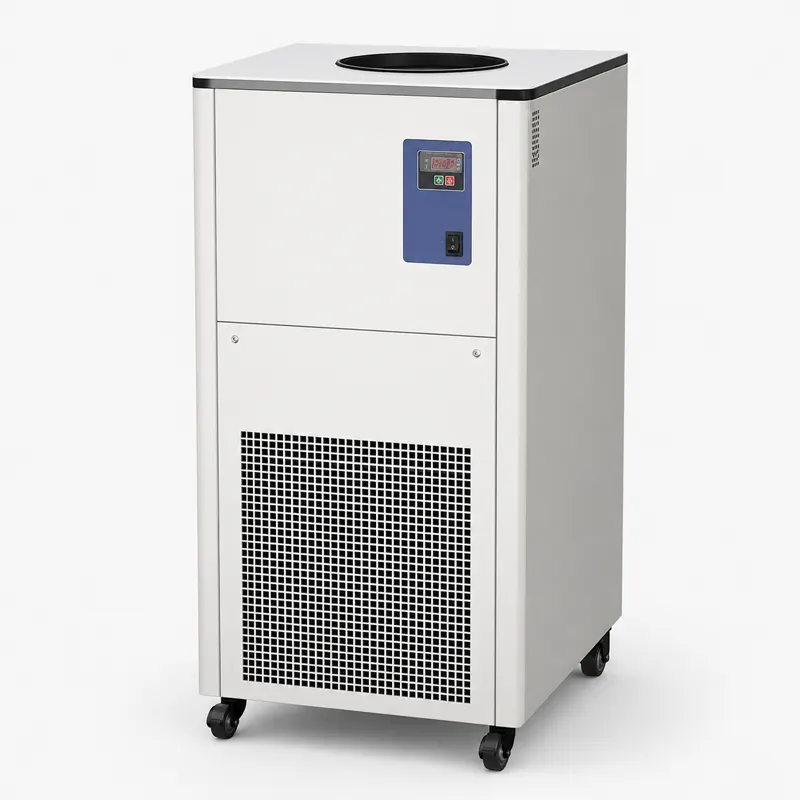
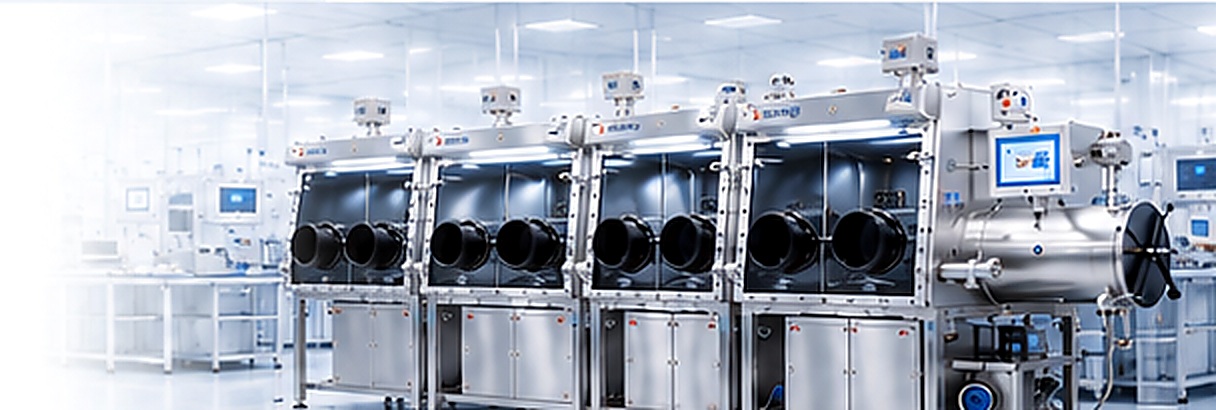
At its core, a Precision Recirculating Water Chiller is a dedicated cooling system that removes heat from laboratory and industrial equipment by continuously circulating a coolant (typically water or a water-glycol mixture) through a closed loop. It is used to maintain precise process temperatures—often within ±0.1°C or better—ensuring stable operation for heat-sensitive devices such as glove boxes, analytical instruments, lasers, and semiconductor fabrication tools. Unlike standard tap-water cooling, this chiller provides a consistent, controllable thermal environment regardless of fluctuations in the building’s water supply.
Core Function and Working Principle
The fundamental task of a precision recirculating chiller is to convert waste heat from the target equipment into a controlled cooling load. It does this through a vapor-compression refrigeration cycle: A compressor raises the pressure and temperature of a refrigerant, which then passes through a condenser where heat is released to the ambient air or a secondary coolant. The high-pressure liquid refrigerant passes through an expansion valve, causing a sudden pressure drop that cools it significantly. This cold refrigerant then flows through an evaporator (heat exchanger) that absorbs heat from the circulating fluid (e.g., water). The cooled fluid is pumped back to the user’s equipment, while the refrigerant returns to the compressor to repeat the cycle.
Critical to its performance is the control system. A microprocessor-based controller monitors the fluid temperature via sensors and modulates the compressor and/or heating elements to maintain the setpoint. Many models feature PID (Proportional‑Integral‑Derivative) algorithms that minimize temperature overshoot and oscillation. The chiller also includes a reservoir tank, a pump with adjustable flow rate, and often a filter to remove particles. For glove box applications, a Precision Recirculating Water Chiller is commonly used to cool the solvent purification columns, vacuum pumps, or reaction vessels inside the inert atmosphere.
Key Components and Technologies
Modern precision recirculating chillers share several core components:
Compressor
Most units use a scroll or reciprocating compressor. Scroll compressors are quieter and more efficient, making them preferable for lab environments. The cooling capacity (measured in watts or BTU/h) determines how much heat the chiller can remove per unit time.
Condenser and Fan
Air‑cooled condensers are common for ease of installation. Some systems use water‑cooled condensers for higher efficiency, but they require a separate cooling water loop.
Pump and Reservoir
A high‑quality magnetically‑driven or centrifugal pump provides stable flow and pressure. The reservoir volume (e.g., 5 L, 10 L) affects thermal inertia and how quickly the system can recover from heat loads.
Controller and Display
Touchscreen models allow users to set temperature, flow, and alarms. Data logging and remote communication (RS‑232, Ethernet) are common for integration with glove box trace moisture analyzers or external monitoring systems.
Key Performance Indicators and Selection Criteria
When choosing a precision recirculating water chiller, consider the following specifications:
- Temperature Stability: Look for ±0.1°C or better. Some advanced units achieve ±0.05°C at the point of use.
- Cooling Capacity: Match the chiller’s wattage to the total heat load of your equipment. Oversizing can cause short cycling; undersizing leads to inadequate cooling.
- Temperature Range: Typical chillers operate from 5°C to 35°C. If you need to heat the fluid (for applications that require warming), choose a model with an integrated heater.
- Flow Rate and Pressure: Ensure the pump can deliver the required liters per minute (L/min) at the pressure needed for your process.
- Reservoir Volume: A larger reservoir helps buffer temperature swings but increases footprint.
- Leakage and Reliability: For glove box integration, the chiller must have zero or minimal leakage of coolant to avoid contaminating the inert atmosphere. All connections should use proper seals.
- Maintenance: Check for easy‑to‑clean condensers, replaceable filters, and accessible drain ports.
In a glove box dry scroll vacuum pump setup, for example, the chiller must maintain the pump at its optimal operating temperature without causing condensation on the pump body.
Applications and Selection Suggestions
Precision recirculating water chillers are widely used in:
- Lithium‑ion battery research: Cooling high‑energy battery cyclers and calorimeters.
- Semiconductor processing: Thermal management of plasma etchers, CVD reactors, and lithography tools.
- Laser systems: Maintaining stable diode temperatures for consistent output power.
- Analytical instruments: NMR, ICP‑MS, X‑ray diffraction, and electron microscopes require precise temperature control for accurate results.
- Glove boxes: The Precision Recirculating Water Chiller is often paired with solvent purification systems and vacuum pumps to prevent overheating and preserve the inert environment.
For users who need a compact solution with minimal noise, choose an air‑cooled scroll‑compressor unit with a digital display and RS‑485 communication. If the equipment is located in a cleanroom, opt for a model with HEPA‑rated intake filtration. Always check the ambient temperature range; some chillers may de‑rate at high ambient temperatures.
References