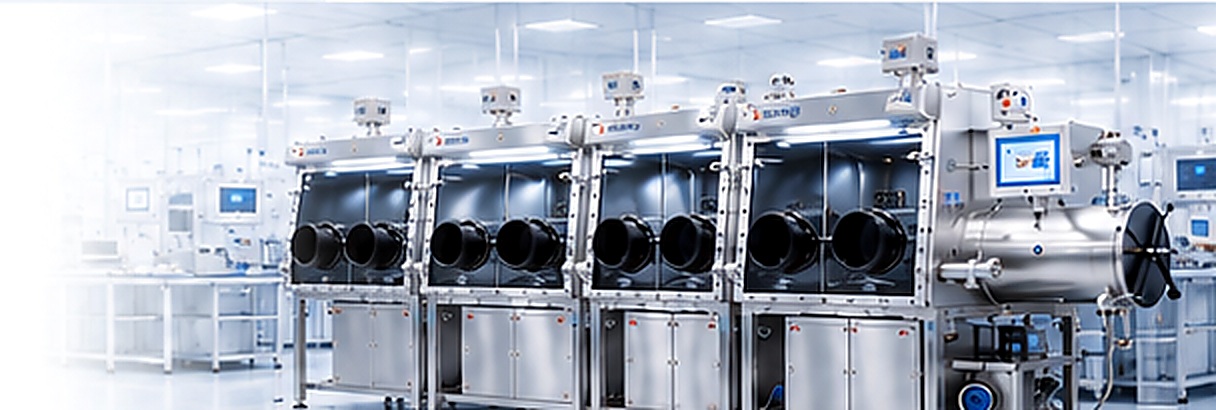
What is a Precision Recirculating Water Chiller? A precision temperature control system for glove box and laboratory thermal management
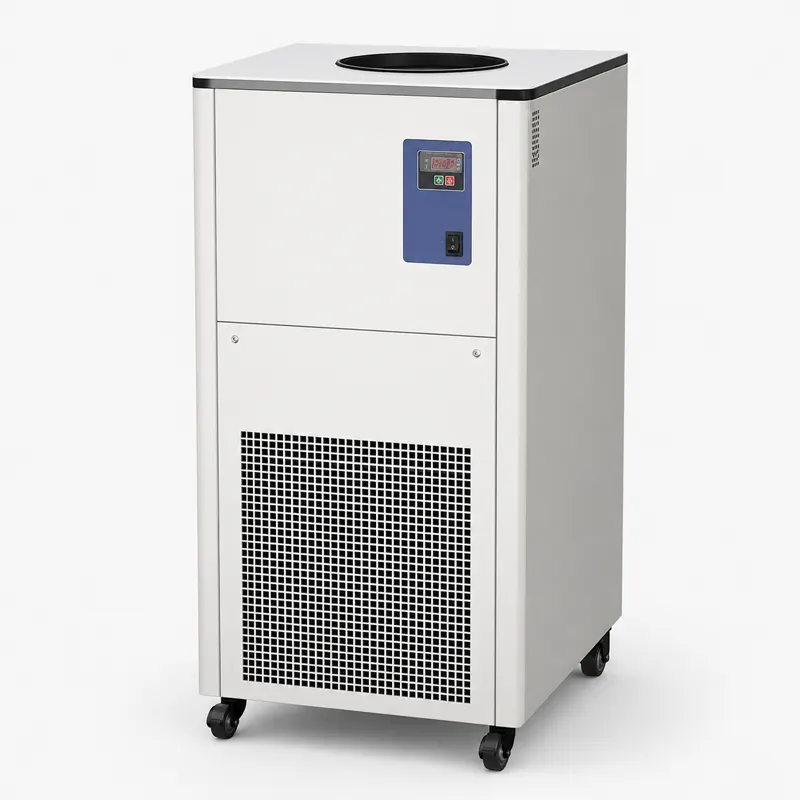
At its core, a Precision Recirculating Water Chiller is a specialized temperature control device that laboratories, semiconductor fab lines, and industrial processes use to maintain a stable, precisely controlled temperature for heat-generating equipment or sensitive reactions. By continuously circulating a coolant — typically deionized water, a water-glycol mixture, or a fluorinated fluid — through a closed loop, the chiller removes excess heat from the source and returns it at a constant setpoint, eliminating thermal drift and ensuring process reproducibility.
Core Function and Working Principle
The fundamental task of a Precision Recirculating Water Chiller is to transform the ambient environment into a controlled thermal environment. The system consists of a sealed refrigeration circuit, a circulating pump, a reservoir tank, and a digital controller. The coolant is drawn from the reservoir, pumped through the external load (e.g., a glove box reactor, laser optics, or a semiconductor process chamber), and then returned to the chiller where the refrigeration cycle extracts the heat. The temperature is monitored by a high-precision sensor and adjusted via a PID algorithm, allowing the chiller to maintain stability of ±0.05°C or better under no-load conditions.
Key parameters influencing performance include cooling capacity (measured in watts or BTU/hr), flow rate, temperature range, and ambient temperature tolerance. For demanding applications such as vacuum pump cooling or moisture analyzer thermal management, the chiller must be able to reject heat even when the ambient room temperature rises above 30°C.
Core Components and Key Technologies
While the Precision Recirculating Water Chiller is a single product category, it comprises several critical subsystems that determine its performance:
Refrigeration System: Most precision chillers use a vapor-compression cycle (compressor, condenser, expansion valve, evaporator) to achieve sub-ambient cooling. Some variants employ thermoelectric (Peltier) modules for oil-free, vibration-free operation in sensitive analytical environments.
Pump and Hydraulics: A centrifugal or magnetic-drive pump circulates the coolant. Features like a front-fill reservoir, low-level alarms, and a full-flow filter protect the pump and the external load from debris.
Control and Interface: Modern units use a large touchscreen display with real-time feedback, programmable temperature and pressure alarms, and USB connectivity for data logging. Integration with instruments (e.g., ICP-OES) via the chiller's ICP Expert software allows seamless control from the host instrument.
Key Performance Indicators and Selection Criteria
When selecting a Precision Recirculating Water Chiller for glove box or laboratory use, users should evaluate the following metrics:
Temperature Stability: Look for a unit that can maintain ±0.05°C or better (no-load). This is critical for processes like semiconductor wafer temperature control or laser diode cooling.
Cooling Capacity: Choose a chiller whose rated capacity (in watts) exceeds the peak heat load of the equipment being cooled, with a safety margin of 20–30%.
Coolant Compatibility: Ensure the wetted materials (stainless steel, PTFE, etc.) are compatible with your chosen coolant — deionized water, ethylene glycol, or fluorinated fluids.
Leakage and Sealing: For glove box integration, the chiller must have a low leak rate and robust sealing to prevent contamination of the inert atmosphere.
Maintenance: Easy access to the reservoir, filter, and condenser for cleaning, as well as a long compressor life, reduce downtime.
Application Areas and Selection Recommendations
Precision Recirculating Water Chillers are indispensable in glove box workstations for handling temperature-sensitive materials, such as lithium battery electrolytes and OLED precursors. They are also widely used in semiconductor etching/CMP tools, high-power lasers, analytical instruments (ICP-MS, NMR), and medical devices. For researchers working with glove box systems, a compact, low-noise chiller with remote monitoring capability is ideal. For industrial production, a higher-capacity unit with redundant pumps and alarms is recommended.