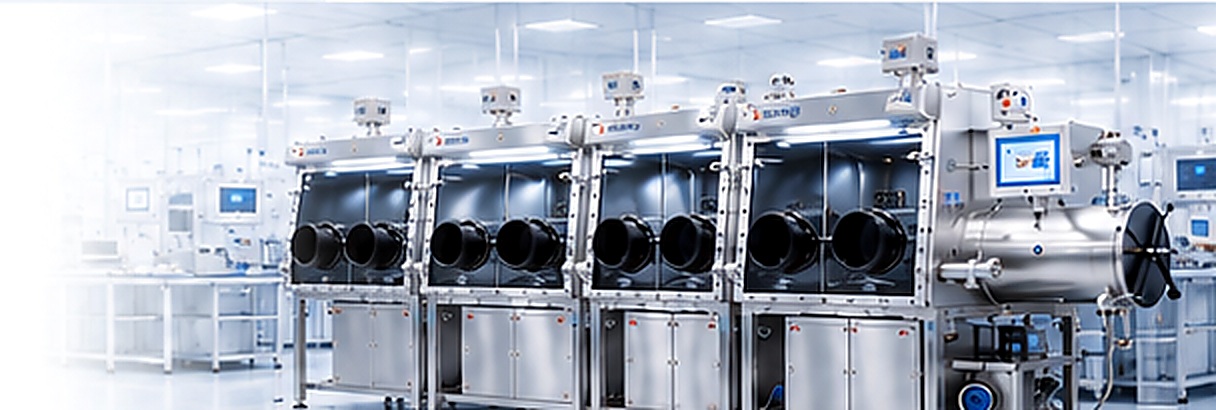
What is an Organic Solvent Vapor Adsorption System? A purification system for removing organic solvent vapors inside a glove box
At its core, an Organic Solvent Vapor Adsorption System is a specialized purification accessory for inert atmosphere glove boxes. Researchers in lithium battery development, OLED material synthesis, and pharmaceutical chemistry use it to continuously remove volatile organic compound (VOC) vapors that escape from opened solvent bottles, reaction vessels, or sample preparation steps. This system prevents solvent vapors from contaminating the glove box’s inert gas environment, protecting both the materials being processed and the sensitive purification components of the glove box itself.
Core Function and Working Principle
The primary function of an Organic Solvent Vapor Adsorption System is to transform the glove box’s internal atmosphere from a state contaminated with organic solvent vapors back to a high-purity inert gas environment. The system works by circulating the glove box gas through a dedicated adsorption column filled with high-surface-area activated carbon or specialized polymeric adsorbents. These adsorbents physically trap organic molecules (e.g., toluene, acetone, THF, dichloromethane) while allowing inert gases like nitrogen or argon to pass through.
Typical operation involves a small circulation pump that draws gas from the glove box, passes it through the adsorption cartridge, and returns the purified gas. The system is often integrated with the glove box’s main gas purification loop or can operate as a standalone recirculation unit. Key parameters include the adsorption capacity (measured in grams of solvent per cartridge), the gas flow rate (typically 10–50 L/min), and the breakthrough point (when the cartridge becomes saturated and needs replacement). The effectiveness of solvent removal directly impacts the glove box’s water and oxygen levels, as solvent vapors can poison the molecular sieves and copper catalysts used in the main purifier.
Core Components and Key Technologies
Since the Organic Solvent Vapor Adsorption System is a dedicated accessory, it is not typically categorized into multiple types. Instead, its design revolves around a few critical components:
Adsorption Cartridge
The heart of the system is the replaceable cartridge filled with activated carbon or advanced polymer sorbents. The choice of sorbent depends on the solvent types used: broad-spectrum activated carbon works for most common solvents, while specialty resins may be needed for aggressive or low-boiling-point chemicals. The cartridge is usually housed in a stainless steel or chemical-resistant polymer shell with quick-connect fittings for easy replacement.
Circulation Module
A small, chemically resistant diaphragm pump or fan circulates glove box gas through the cartridge. The pump must be sealed to prevent solvent vapor leakage and typically operates at a low noise level to avoid disturbing sensitive experiments. Some systems offer variable speed control to adjust the purification rate.
Monitoring and Control
Advanced systems include a pressure sensor to detect clogging, a timer to track cartridge usage, and optional analog output to integrate with the glove box’s PLC. The control interface may be a simple on/off switch or a digital display showing remaining cartridge life. The glove box moisture analyzer and trace oxygen analyzer are often used in conjunction to ensure that solvent removal does not affect the primary atmosphere control.
Key Performance Indicators and Selection Criteria
When selecting an Organic Solvent Vapor Adsorption System for your glove box, consider the following critical parameters:
- Adsorption capacity: Measured in grams of solvent per cartridge. Higher capacity means longer intervals between cartridge changes. For labs using large volumes of solvents, a larger cartridge or dual-cartridge system is recommended.
- Solvent compatibility: Ensure the adsorbent and housing materials are resistant to the specific solvents you use (e.g., ketones, chlorinated solvents, ethers). Always check chemical compatibility data.
- Flow rate: A higher flow rate provides faster purification but may cause turbulence inside the glove box. Typical flow rates range from 10 to 50 L/min, matching the glove box’s volume.
- Leak tightness: The system must have a low leak rate (e.g., <0.001 vol%/h) to prevent outside air ingress. The glove box port cover and glove port sealing ring are examples of components that maintain overall box integrity.
- Regeneration capability: Some systems allow in-situ regeneration of the cartridge by heating and purging with inert gas, reducing operating costs. Check if the cartridge is disposable or regenerable.
- Integration with existing systems: The adsorption system should be compatible with your glove box’s control system. Look for units that offer analog or digital communication for remote monitoring and alarm functions.
Application Fields and Selection Suggestions
Organic Solvent Vapor Adsorption Systems are essential in any glove box where organic solvents are used. Common applications include:
- Lithium battery research: Electrolyte preparation and cell assembly often involve volatile solvents like dimethyl carbonate (DMC) or ethyl methyl carbonate (EMC). Vapors can interfere with the lithium metal surface and degrade the inert atmosphere.
- OLED and display materials: Solvent-based processing of organic semiconductors requires a solvent-free environment to prevent film contamination.
- Catalysis and organic synthesis: Handling air-sensitive catalysts and reagents in solvents like THF or toluene can generate vapors that poison the glove box’s purification system.
- Pharmaceutical and chemical R&D: When working with potent or volatile compounds, the adsorption system ensures operator safety and maintains a clean environment.
For selection, start by evaluating the solvent types and volumes you use daily. If you primarily work with low-boiling solvents (e.g., dichloromethane), a high-capacity cartridge with strong affinity for halogenated compounds is needed. For high-throughput labs, consider a dual-cartridge system that allows continuous operation while one cartridge is being regenerated. Always consult the Organic Solvent Vapor Adsorption System product page for detailed specifications and compatibility with your glove box model.
References
- Organic Solvent Vapor Adsorption System - https://www.gloveboxs.com/products/glove-box-accessories/organic-solvent-vapor-adsorption-system.html
- Glove Box Port Cover - https://www.gloveboxs.com/products/glove-box-accessories/glove-box-port-cover.html
- Glove Box Moisture Analyzer - https://www.gloveboxs.com/products/glove-box-accessories/glove-box-moisture-analyzer.html