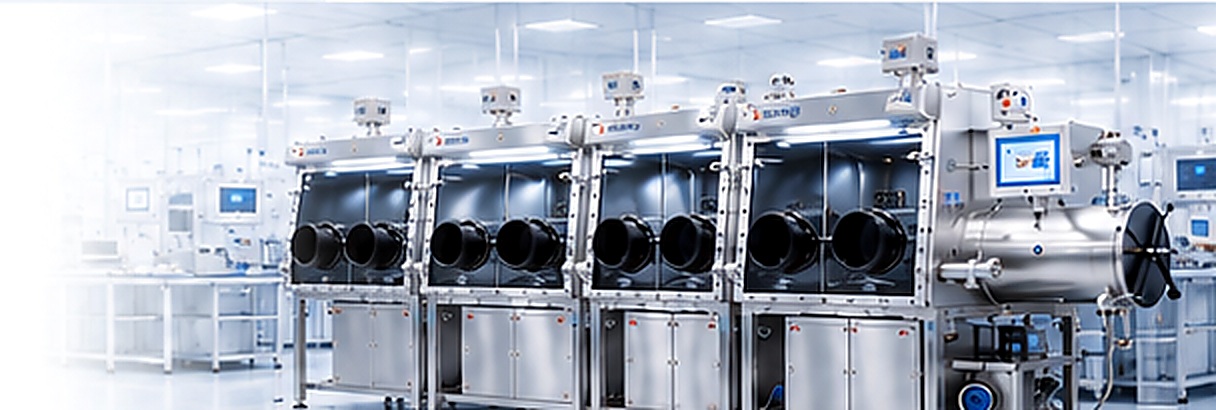
What is a Gas and Liquid Feedthrough?
At its core, a gas and liquid feedthrough is a specialized sealing device designed to safely introduce gases or liquids into a glove box while preserving the internal inert atmosphere. Researchers and engineers in fields such as lithium battery research, OLED fabrication, and chemical synthesis use it to connect external gas lines, coolant hoses, or reagent feeds to equipment inside the glove box without compromising the ultra-low oxygen and moisture environment.
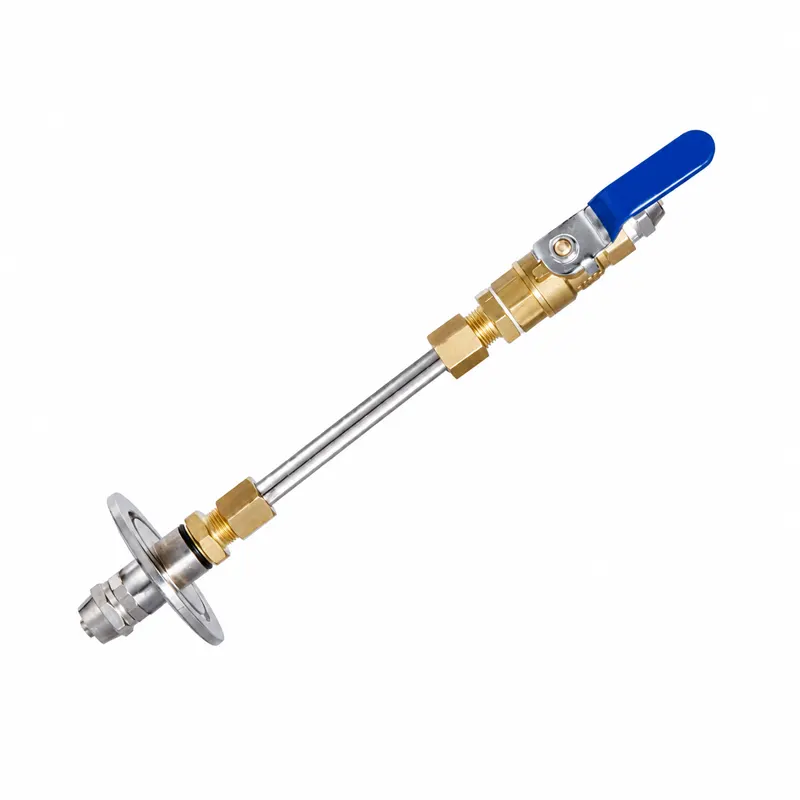
How Does a Gas and Liquid Feedthrough Work?
The feedthrough creates a hermetic barrier between the outside atmosphere and the glove box interior. It typically consists of a metal or polymer body with one or more through-holes, each sealed with a compression fitting, O-ring, or welded joint. When installed on a glove box port, such as the glove port, the feedthrough prevents any leakage of oxygen, moisture, or contaminants while allowing the passage of a tube or pipe. The sealing mechanism is critical: even a minor leak can raise the water and oxygen levels inside the glove box, ruining sensitive experiments.
Most feedthroughs are designed to work with standard vacuum components, such as KF (Klein Flange) fittings. For example, a KF vacuum clamp and a stainless steel bellows can be used to connect the feedthrough to the glove box wall. The internal passage may be a smooth bore for gas or a smaller diameter tube for liquid, and the material of construction (e.g., 304 stainless steel, brass, or PTFE) is chosen based on the chemical compatibility and temperature requirements of the application.
Types and Configurations
Gas and liquid feedthroughs are available in several configurations to suit different needs:
- Single-Port Feedthroughs: Designed for a single tube or line, ideal for simple gas supply or occasional liquid addition.
- Multi-Port Feedthroughs: Allow multiple lines to pass through a single port, saving space and reducing the number of penetrations into the glove box.
- KF Flange Feedthroughs: Use standard KF flanges (e.g., KF16, KF25, KF40) for quick mounting and disconnection. These are common in vacuum systems and glove boxes.
- Electrical Feedthroughs: While not for gas/liquid, similar designs exist for electrical signals, such as BNC feedthroughs or Ethernet feedthroughs.
For applications requiring high purity, the feedthrough may be made of electropolished stainless steel with all-metal seals. For corrosive fluids, PTFE or PVDF versions are available.
Key Selection Criteria
When choosing a gas and liquid feedthrough for your glove box, consider the following factors:
- Leak Rate: The most important parameter. A high-quality feedthrough should have a leak rate below 1×10⁻⁹ mbar·L/s to protect the glove box atmosphere.
- Material Compatibility: Ensure the wetted materials (body, seals, tubes) are compatible with the gas or liquid being used. For corrosive chemicals, PTFE or Hastelloy may be required.
- Pressure and Temperature Range: The feedthrough must withstand the operating pressure (typically ±1 bar relative to atmosphere) and any temperature extremes from process fluids or nearby heaters.
- Port Size and Connection Type: Match the feedthrough to the glove box port diameter. Common port sizes are 360 mm and 150 mm, and the feedthrough may use a port cover adapter.
- Number of Passages: Determine how many separate lines you need. Multi-port feedthroughs can reduce the number of penetrations, simplifying sealing and maintenance.
Applications in Glove Box Systems
Gas and liquid feedthroughs are used in virtually any glove box application that requires external utilities. Common examples include:
- Inert Gas Supply: Introducing argon or nitrogen to maintain the glove box atmosphere.
- Coolant Circulation: Connecting a recirculating chiller to cool internal equipment like a precision water chiller.
- Reagent Addition: Adding liquid reactants or solvents to a reaction vessel inside the glove box without breaking the seal.
- Vacuum Lines: Connecting a vacuum pump for drying or degassing processes.
- Analytical Instruments: Feeding gas to a moisture analyzer or oxygen analyzer for continuous monitoring.
In research labs, feedthroughs are essential for enabling complex experiments while preserving the low-oxygen, low-moisture conditions required for sensitive materials like lithium metal, perovskites, and organic semiconductors.