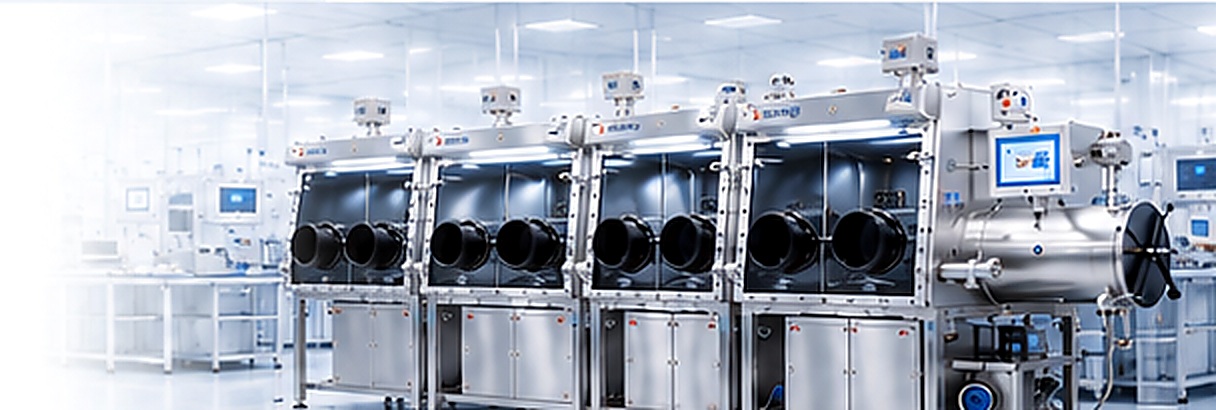
What is a KF Vacuum Clamp? An Essential Tool for Glove Box Vacuum Connections
From the core, a KF vacuum clamp is a professional quick-connect sealing component that glove box operators and vacuum system engineers use to securely join KF (Klein Flansch) flanges, creating leak-tight connections for gas lines, vacuum pumps, and accessories. This simple yet robust device allows for rapid assembly and disassembly without tools, making it indispensable for maintaining the integrity of inert atmosphere environments in glove boxes.
Core Function and Working Principle
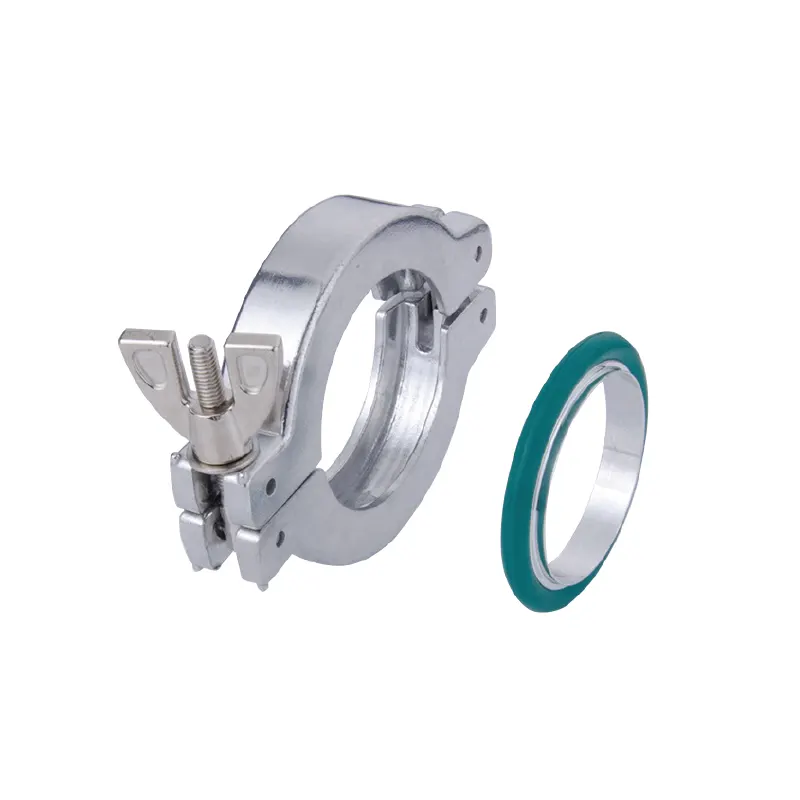
The KF vacuum clamp's primary function is to convert a loose flange-to-flange interface into a vacuum-tight seal. The clamp consists of a wing nut, a threaded bolt, and a hinged or split-body design that encircles the two mating KF flanges. When the wing nut is tightened, the clamp compresses an elastomeric O-ring (typically made of Viton or Buna-N) between the flanges, creating a positive seal that can withstand vacuum down to 10⁻⁷ mbar and positive pressure up to 1 bar.
In a typical glove box setup, the clamp is used to attach a vacuum pump to the glove box port, or to connect a port cover when not in use. The clamp's design allows for quick manual operation: simply place the clamp over the flanges, align the components, and tighten the wing nut. The entire process takes seconds, eliminating the need for wrenches or complicated assembly. The clamp's self-centering feature ensures even pressure distribution, reducing the risk of O-ring pinching or misalignment.
Core Components and Key Technology
Wing Nut and Bolt Assembly
The wing nut provides the mechanical advantage needed to compress the O-ring. It is typically made of stainless steel or zinc-plated steel for corrosion resistance. The bolt threads into a fixed nut on the opposite side of the clamp, allowing for precise tension adjustment.
Hinged or Split-Body Design
Most KF clamps feature a hinged body that opens like a clamshell, allowing it to be placed around the flanges without disconnecting the lines. Some designs use a split-body with a separate locking pin, offering similar functionality. The hinge is often made of stainless steel to withstand repeated use.
O-Ring and Centering Ring
While the clamp itself does not include the O-ring, it works in conjunction with a centering ring that holds the O-ring in place. The clamp's internal profile is designed to press the centering ring evenly against the flange faces, ensuring a consistent seal. The glove port sealing ring is a similar concept applied to glove ports.
Key Performance Indicators and Selection Criteria
When selecting a KF vacuum clamp for glove box applications, consider the following parameters:
- Size compatibility: KF clamps are available in standard sizes (KF16, KF25, KF40, KF50, etc.). Ensure the clamp matches the flange outer diameter. For example, the KF40 Ethernet feedthrough requires a KF40 clamp.
- Material: Stainless steel (304/316) offers excellent corrosion resistance and durability. Aluminum clamps are lighter but less robust. For glove box environments with solvent exposure, stainless steel is preferred.
- Vacuum and pressure rating: Most standard KF clamps are rated for vacuum down to 10⁻⁷ mbar and backfill pressure up to 1.5 bar. High-performance versions can handle higher pressures.
- Temperature range: The clamp itself can withstand temperatures up to 200°C, but the O-ring material limits the operating temperature. Viton O-rings handle up to 200°C, while Buna-N is limited to 100°C.
- Leak rate: A properly assembled KF connection with a new O-ring can achieve a helium leak rate of less than 10⁻⁹ mbar·L/s, ensuring minimal contamination of the glove box atmosphere.
- Ease of use: Look for clamps with ergonomic wing nuts that provide good grip, and a hinge that opens fully for easy alignment.
Application Areas and Selection Advice
KF vacuum clamps are used in almost every glove box system that requires vacuum connections. Common applications include:
- Connecting vacuum pumps: Attach dry scroll vacuum pumps or turbomolecular pumps to the glove box for evacuation or backfill operations.
- Feedthroughs: Secure gas and liquid feedthroughs, BNC feedthrough connectors, or electrical test lead feedthroughs to the glove box wall.
- Antechamber connections: Attach small antechambers or large antechambers to the main box.
- Piping and flexible lines: Use with KF stainless steel flexible bellows to accommodate misalignment and vibration.
For most glove box users, a standard stainless steel KF clamp with a wing nut is sufficient. If you need to frequently disconnect and reconnect the same port, consider a clamp with a quick-release lever instead of a wing nut. Always ensure the clamp and O-ring are compatible with the chemicals used in the glove box (e.g., Viton for organic solvents, EPDM for ketones).