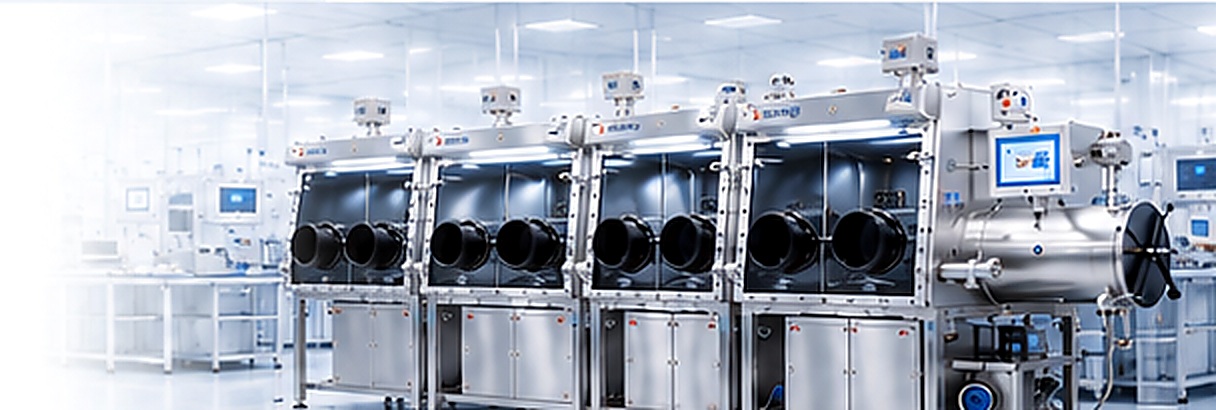
In the controlled environment of a glove box, maintaining an inert atmosphere with H₂O and O₂ levels below 1 ppm requires meticulous attention to every component. Among these, the gloves themselves represent a primary entry point for contaminants. Glove box butyl rubber gloves are specialized accessories designed to provide an exceptional barrier against moisture and oxygen, allowing researchers to perform sensitive manipulations while preserving the purity of the inert gas environment.
Core Function and Working Principle
The fundamental role of butyl rubber gloves in a glove box is to serve as a flexible, low-permeability interface between the operator's hands and the inert atmosphere. Unlike standard laboratory gloves, these gloves are engineered to minimize the ingress of water vapor and oxygen through the glove material itself. Because the operator's hands are enclosed within the glove box, any permeability in the glove material can introduce contaminants that degrade the ultra-pure environment.
Low Permeability to Gases and Moisture
Butyl rubber (isobutylene-isoprene rubber, IIR) is renowned for its extremely low gas and vapor transmission rates. It offers one of the lowest permeability coefficients for oxygen and water vapor among elastomeric materials. This characteristic directly counters the primary source of H₂O and O₂ infiltration in a glove box—leakage through the gloves. By employing butyl rubber gloves, operators can significantly reduce the regeneration frequency of the purification system, lowering maintenance costs and extending system life.
Mechanical Integrity and User Safety
Beyond permeability, these gloves also provide high tensile strength and tear resistance, ensuring safe operation during handling of heavy objects or sharp instruments. The thickness (typically 0.4 to 0.8 mm) balances flexibility for manual dexterity with robust barrier performance. They are generally resistant to degradation by common organic solvents, oils, and greases used in glove box applications, maintaining their properties over extended service life.
Key Performance Indicators and Selection Criteria
When selecting butyl rubber gloves for a glove box, consider the following parameters:
Water Vapor Transmission Rate (WVTR) and Oxygen Permeability
Industry-standard butyl rubber gloves typically exhibit oxygen permeability less than 0.01 cm³·mm/(m²·24h·atm) and water vapor transmission rates below 0.1 g/(m²·24h) at 40°C and 90% RH. These ultra-low values ensure that the gloves contribute minimally to the overall leak rate of the glove box system. For comparison, neoprene or latex gloves can have permeability values 10 to 50 times higher, which often makes them unsuitable for high-purity glove box applications.
Thickness and Durability
Common thicknesses range from 0.35 mm to 0.8 mm. Thicker gloves offer improved barrier performance and abrasion resistance but reduce tactical sensitivity. The choice depends on the nature of the work: delicate sample handling (lighter gloves) vs. heavier laboratory tasks (thicker gloves).
Chemical Resistance and Static Dissipation
If the glove box work involves aggressive solvents (ketones, chlorinated hydrocarbons), verify the glove's resistance data. Some butyl rubber grades dissolve or swell in certain organic solvents. In static-sensitive environments (e.g., handling semiconductor wafers, OLED materials), conductive or anti-static versions may be required.
Size and Fit
Standard glove ports accommodate sizes from 6 (small) to 10 (large). Proper fit is essential to prevent excessive stretching that can increase permeability and reduce comfort. Disposable inner liners (e.g., cotton or nylon) can improve dexterity and moisture absorption inside the glove.
Core Components and Packaging
A complete glove box glove set usually includes:
- Butyl rubber glove body: main barrier component, seamless or with molded cuff.
- O-ring or sealing ring: ensures gas-tight connection between glove and glove port (glove port sealing ring).
- Glove port cover: protective cover when gloves are not in use (port cover).
- Anti-roll cuff: prevents the glove from rolling inside the box during installation.
Comparison with Other Glove Materials
| Material | O₂ Permeability (relative) | H₂O Vapor Permeability | Chemical Resistance | Typical Use |
|---|---|---|---|---|
| Butyl rubber | Very low (best) | Very low | Good (hydrocarbons, alcohols) | High-purity glove boxes (H₂O/O₂ <0.1 ppm) |
| Neoprene | Moderate | Moderate | Good (oils, solvents) | Organic chemistry, O₃ environment |
| Latex/natural rubber | High | High | Poor (solvents) | Low-budget, general-purpose boxes |
| Hypalon® (CSM) | Low | Low | Excellent (acids, ozone) | Chemical processing, solar cell work |
Application Scenarios and Selection Advice
Butyl rubber gloves are indispensable in applications requiring the highest level of inert atmosphere integrity, such as:
- Lithium-ion battery research – handling lithium metal, electrolytes, and cathode materials.
- Perovskite solar cell fabrication – spin-coating and annealing under ultra-dry conditions.
- OLED and organic electronics – deposition and encapsulation.
- Semiconductor materials processing – dry-box handling of air-sensitive precursors.
- Metal-organic frameworks (MOFs) and catalysts – synthesis and activation.
For labs with moderate purity requirements (e.g., H₂O/O₂ <50 ppm), neoprene or latex gloves may be more economical. However, if you operate a gas purification system capable of <1 ppm, investing in high-quality butyl rubber gloves is essential to avoid frequent regenerations. Always verify compatibility with your specific glove port design (see glove box glove port details).
References
Product page: Glove Box Butyl Rubber Gloves