
What a glove box moisture analyzer is and where it fits in the system
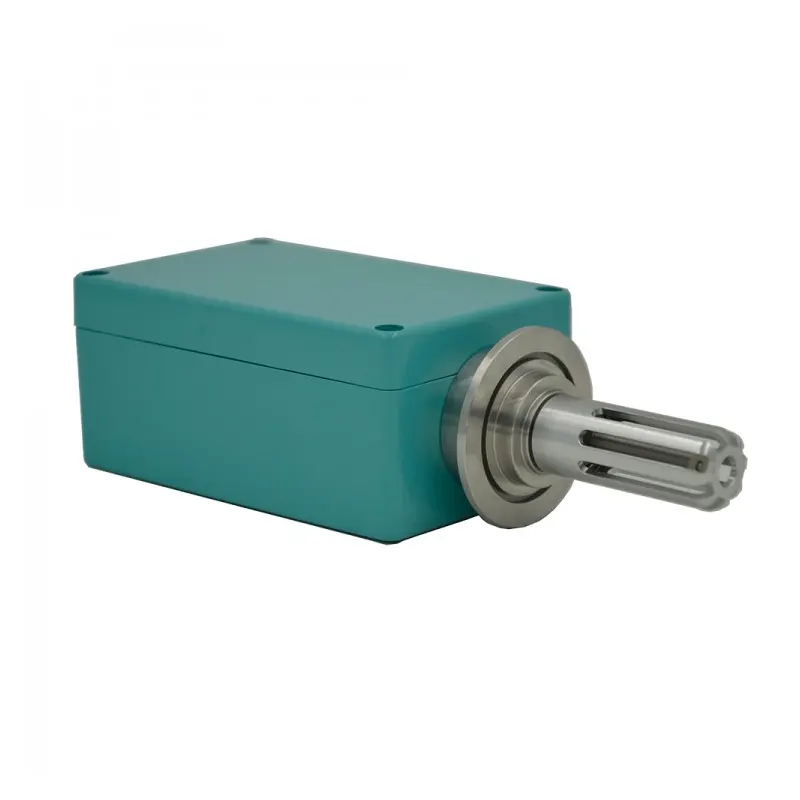
A glove box moisture analyzer is an instrument that measures the concentration of water vapor in the atmosphere inside an enclosed inert-atmosphere workspace. It does not purify the atmosphere and it does not create a dry environment on its own. Its job is to answer a specific operational question: how much moisture is present at a chosen point in the box, and is that level stable, rising, or falling? In practice, the analyzer belongs to the monitoring and control layer of a glove box system, alongside oxygen measurement, pressure control, alarms, and the gas purification loop.
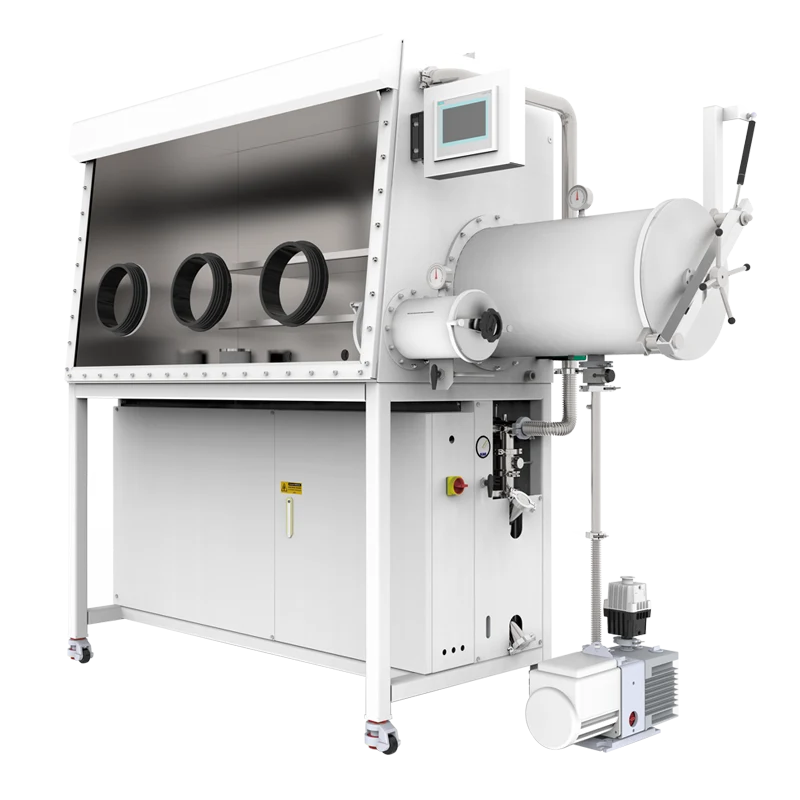
In a purification glove box, the main atmosphere-control work is done by the purification subsystem. That subsystem circulates the working gas through columns or media that remove water and oxygen, and it manages regeneration when the media becomes loaded. The moisture analyzer does not perform that work. It provides the measurement that tells the operator or controller what the purification system is achieving, whether a leak or process release is affecting the atmosphere, and whether a change in the reading deserves investigation. This division of roles is important: a moisture analyzer supports atmosphere control, but it is not a substitute for it.
The physical location of the analyzer also matters. It may be mounted directly on the enclosure, connected through a feedthrough, or installed on a bypass or return line. Each arrangement gives a slightly different view of the atmosphere. A probe placed in the main working volume may respond quickly to a glove leak or an open transfer chamber, while a sample point downstream of the purification loop may reflect the condition of the circulated gas. The correct choice depends on what the user needs to know and how quickly they need to know it.
How it works: measurement principle, sampling, and signal path
Moisture analyzers for glove boxes can use different measurement principles. Some designs rely on capacitive polymer sensors, some use electrolytic cells, some measure dew point, and others use optical or spectroscopic methods. Each approach has trade-offs in range, response time, resistance to contamination, and maintenance. Because a product listing may not document every internal detail, the safe approach is to treat the measurement principle as a selection question. What matters is whether the sensor is compatible with the actual atmosphere in the box, including residual solvent vapors, acidic species, oxygen, and process by-products.
Sampling method
There are two broad sampling approaches. An in-situ probe is placed directly in the atmosphere, which reduces transport delay but requires the sensor and its materials to withstand the box pressure and chemistry. An extracted sample uses tubing and sometimes a pump to bring gas to the analyzer. This can simplify sensor replacement, but it adds transport lag, creates potential leak paths, and can produce a misleading reading if the tubing adsorbs or releases moisture. When comparing analyzers, the sampling method should be matched to the required response speed and to the layout of the glove box.
From sensor to signal
The analyzer converts the sensor response into a reading, often with a local display and one or more outputs. These outputs may include alarm contacts, analog signals, or digital communication to a data logger or control system. In a purification glove box, the reading can help the controller decide when regeneration is needed or help the operator confirm that the atmosphere is ready for a sensitive process. Even so, measurement and purification remain separate functions. Gas replacement, vacuum cycling, circulation purification, and purification media regeneration are different operations. A moisture analyzer measures the result; it does not perform any of those steps.
Why moisture monitoring matters in inert-atmosphere work
Water vapor is one of the most common hidden variables in a glove box. Many materials used in research and production are sensitive to moisture: lithium metal and battery components, solid-state electrolyte precursors, perovskites, OLED materials, semiconductor interfaces, air-sensitive organometallic compounds, and some additive manufacturing powders. A low oxygen reading does not guarantee a low moisture reading, because oxygen and water are separate contaminants with different sources and different effects. A moisture analyzer gives a direct indication of water vapor, which can influence hydrolysis, corrosion, film quality, powder flow, and the reproducibility of an experiment or process.
Monitoring also helps reveal changes that are not visible. A small glove leak, a transfer chamber that was not fully purged, a purification column that is approaching exhaustion, or a process that releases moisture can all appear as a trend in the moisture reading. Trends can be as valuable as absolute values, especially when the user is trying to establish a baseline or compare one day with another. However, a single analyzer reading cannot prove that every point in a large glove box is at the same moisture level, and it cannot prove the absence of moisture. Placement, sample flow, and representativeness are part of the measurement.
Which specifications should you check before buying a moisture analyzer?
Glove box moisture analyzers are not interchangeable, and the right specification depends on the host enclosure and the process. The following points are useful to compare, but the actual values must come from current product documentation or from the supplier.
- Measurement range and units. Moisture may be expressed in parts per million, dew point, or another unit. Confirm that the range covers the levels you need to observe, and do not assume that a wide range implies reliable measurement at the low end.
- Resolution, accuracy, and drift. Resolution is the smallest change the instrument can display; accuracy is how close the reading is to the true value. A high-resolution display can still be inaccurate if the sensor is not calibrated or is affected by drift.
- Response time and recovery. A fast response helps detect leaks or verify a purge cycle, while a slow sensor may smooth over short events. Recovery after exposure to high moisture is also important.
- Sensor compatibility. Solvent vapors, acids, corrosive gases, oxygen, and process by-products can affect different sensor types in different ways. The analyzer must be rated for the actual atmosphere, not just for clean nitrogen or argon.
- Operating pressure and temperature. The box working pressure, sample pressure, and ambient temperature all influence the measurement. These are separate from the analyzer's own limits and must be checked together.
- Sampling interface and materials. The connection type, tubing material, and internal wetted parts should be compatible with the glove box atmosphere. Interface details should not be inferred from a photograph alone.
- Calibration and service. Ask how the analyzer is calibrated, what reference gas or method is used, and what service or replacement parts are required. Calibration frequency should follow the manufacturer's instructions and the criticality of the process.
- Outputs and integration. Alarm contacts, analog outputs, and digital communication determine whether the analyzer can feed a control system, data logger, or remote display.
- Mechanical integration. Mounting, feedthrough, cable routing, and available space inside or outside the box affect installation. A compact analyzer may still require a specific port or bracket.
When a data point is missing, it is better to leave it out or mark it for confirmation than to assume a value. A confident-looking number without conditions can lead to a mismatch between the analyzer and the glove box.
Where it is suitable, and what it cannot do
A moisture analyzer is suitable when the user needs to monitor water vapor in a controlled atmosphere. Typical uses include verifying the atmosphere before handling sensitive materials, documenting process conditions, checking a purification loop after maintenance, and investigating a suspected leak or contamination event. It is especially relevant in laboratories and pilot lines where the moisture level is a process variable rather than a fixed assumption.
Its limits are just as important. A moisture analyzer does not remove moisture, so it cannot replace a purification system, vacuum cycling, or gas replacement. It does not establish sterility, cleanroom class, or biological safety, and it should not be described as doing so. It may not tolerate solvent-laden or corrosive atmospheres unless the sensor is specifically rated for them. It cannot guarantee that the entire glove box volume is at the measured level, and it does not make a non-purified acrylic isolator into a continuously purified system. Compatibility with a particular enclosure must be verified rather than assumed. The fact that a moisture analyzer and a glove box are both offered by the same supplier does not automatically mean that every analyzer can be installed on every box.
How to select and integrate a moisture analyzer with a glove box
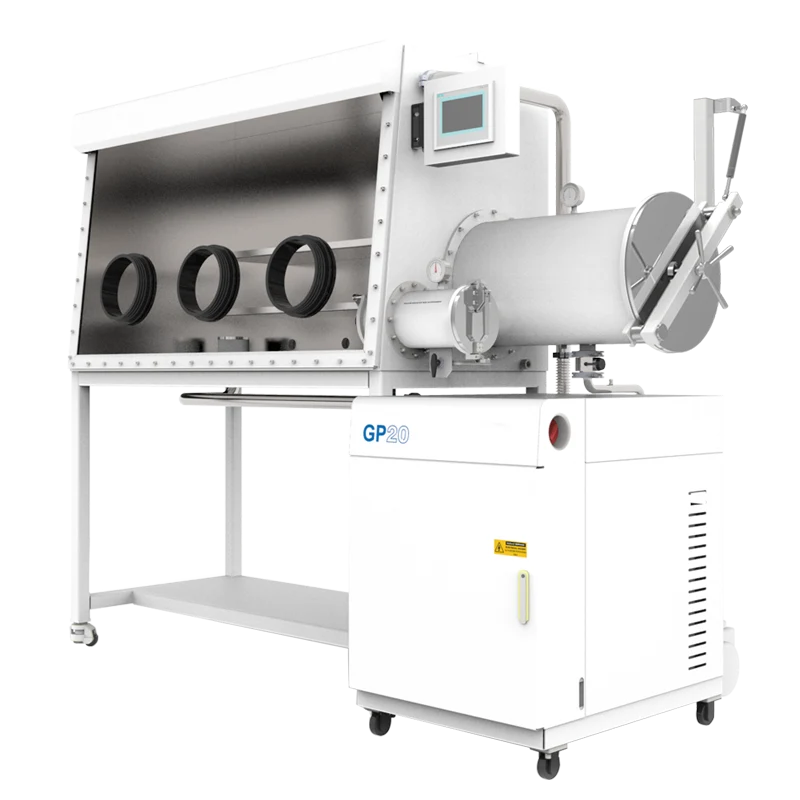
Selection begins with the host system. Identify whether the enclosure is a continuously purified glove box, a vacuum and inert-gas replacement box, or an acrylic isolator with limited atmosphere control. The monitoring strategy differs in each case. A purification glove box, such as the Three-Glove Single-Sided Glove Box with Gas Purification System, uses a closed loop to manage moisture and oxygen. A moisture analyzer can serve as a feedback and verification device in that kind of system if the sensor, interface, and pressure conditions are compatible. In a simpler vacuum box, moisture monitoring may still be useful, but it does not imply continuous purification.
Next, define the measurement point. Decide whether the reading should represent the working volume, the return gas, or a specific process zone. Then confirm the analyzer's wetted materials and sensor against the actual atmosphere. If the process uses solvents, acids, or other reactive species, verify that the sensor is suitable. Check the pressure and temperature at the sample point, and confirm that the analyzer's range and accuracy are appropriate for the levels that matter. Finally, plan the integration: how the signal will be displayed, recorded, or used for alarms, and how calibration and service will be performed without compromising the glove box atmosphere.
It is also wise to document the installation. Record the sample point, the calibration date, the expected range, and the conditions under which the reading is valid. This makes the data more useful and helps the next operator understand what the analyzer is actually measuring.
FAQ: quick answers about glove box moisture analyzers
Does a moisture analyzer dry the glove box?
No. It measures water vapor. Drying is performed by the purification system, vacuum cycling, or gas replacement, depending on the design of the glove box.
Can I add any moisture analyzer to any glove box?
Not necessarily. Compatibility depends on sensor chemistry, sampling interface, pressure, materials, and control integration. Verify the details with the supplier and the glove box manufacturer.
Is a moisture analyzer the same as an oxygen analyzer?
No. They measure different variables. A glove box can have a low oxygen reading and a higher moisture reading, or the reverse, because the sources and removal mechanisms are different.
What is the difference between resolution and accuracy?
Resolution is the smallest displayed change, while accuracy is how close the reading is to the true value. A high-resolution instrument can still be inaccurate if it is not calibrated or if the sensor is affected by drift or interference.
Do I need a moisture analyzer if I already have a purification system?
It is not always mandatory, but it helps verify performance, detect leaks, and document atmosphere quality. The purification system removes moisture; the analyzer tells you what remains.
Selection checklist
- Host system type and whether continuous purification is present
- Measured variable: water vapor, not oxygen or total pressure
- Required range, accuracy, response, and calibration approach
- Sensor compatibility with solvents, acids, oxygen, and process by-products
- Sampling method and representativeness of the measurement point
- Pressure, temperature, and material compatibility at the interface
- Alarm, data output, and integration with purifier or monitoring system
- Service, calibration, and spare parts availability
- Verification that the accessory and the enclosure are actually compatible
Matching a moisture analyzer to a glove box is an engineering decision, not a catalog match. The accessory provides the water-vapor measurement; the host system provides the controlled atmosphere. When those two roles are kept clear, selection becomes a matter of range, compatibility, and integration rather than assumption.
