Introduction
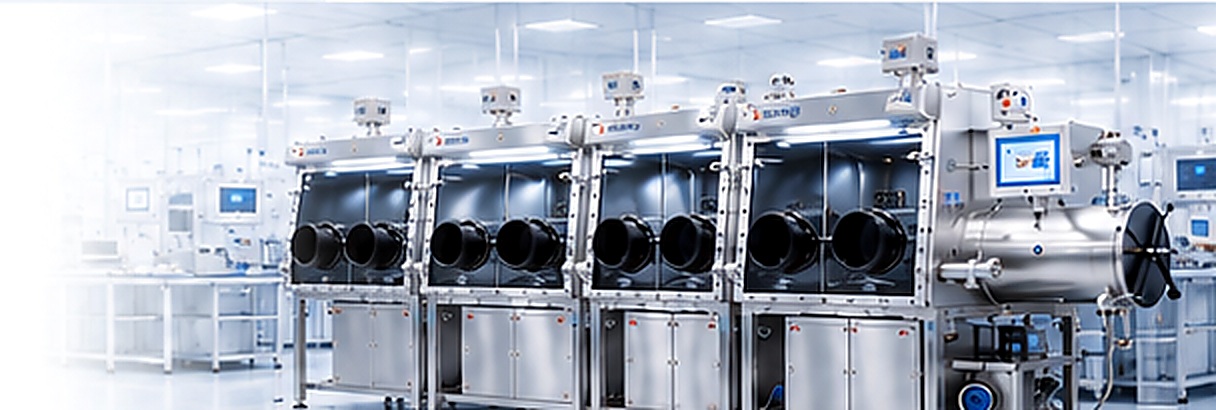
At its core, a Two-Station Single-Sided Glove Box with Gas Purification System is a specialized, sealed workstation designed to create and maintain an ultra-low moisture and oxygen environment. Researchers in lithium-ion battery development, perovskite solar cell fabrication, OLED material synthesis, and other cutting-edge fields use it to handle air-sensitive substances without contamination. The integrated gas purification system continuously circulates the internal atmosphere through catalytic columns, removing water (H₂O) and oxygen (O₂) to levels below 1 ppm, ensuring stable and repeatable experimental conditions.
Core Function and Working Principle
The primary function of this glove box is to transform the ambient air environment into a high-purity inert atmosphere, typically using argon or nitrogen. The process begins by purging the sealed chamber with inert gas, then the circulation system draws the internal gas through a purification column. Inside the column, a copper catalyst reacts with oxygen to form copper oxide, while molecular sieves physically adsorb water vapor. The purified gas is then returned to the chamber, continuously reducing the H₂O/O₂ levels until the target setpoint is reached.
The system's heart is the gas purification unit. It consists of a high-efficiency blower, a dual-column (one working, one regenerating) design, and precision sensors. The blower circulates gas at a typical flow rate of 60–100 m³/h, ensuring uniform atmosphere distribution. The regeneration cycle, triggered when the column is saturated, heats the column to 150–300°C while purging with a gas mixture to restore the catalyst and molecular sieve activity. A critical parameter is the leak rate of the box, usually specified as ≤0.05 vol%/h, which directly impacts the ability to maintain low H₂O/O₂ levels. The transition chamber (antechamber) allows sample introduction without breaking the main atmosphere, with a vacuum-purge cycle that typically takes 5–10 minutes.
Product Types and Configurations
While the Two-Station Single-Sided model is a popular choice, gas purification glove boxes come in various configurations to suit different workflow needs. The main dimensions of variation include:
By Number of Stations
Single-station units (e.g., Single-Station Single-Sided Glove Box) are compact and ideal for individual researchers. Two-station models (like the one featured here) allow two operators to work side by side, increasing throughput. Multi-station units, such as Four-Station Double-Sided or Six-Station Double-Sided Split-Type, are designed for larger teams or production-scale operations.
By Operation Side
Single-sided glove boxes have all glove ports on one face, suitable for lab benches. Double-sided models (e.g., Two-Station Double-Sided) allow operators to work from both sides, maximizing space utilization in larger facilities.
By Configuration
Standard integrated models combine the box and purification unit in one frame. Split-type designs (e.g., Two-Station Single-Sided Split-Type) separate the purification system from the box, offering flexibility for placement in tight spaces or when the purification unit needs to be shared among multiple boxes.
Key Performance Indicators and Selection Criteria
When choosing a two-station single-sided glove box, several critical parameters should be evaluated:
- H₂O/O₂ Control: Look for systems capable of maintaining <1 ppm for both water and oxygen. The best systems can achieve <0.1 ppm after stabilization.
- Box Dimensions and Usable Space: The standard box size for a two-station unit is typically around 1200 mm (W) × 750 mm (D) × 900 mm (H). Ensure the internal volume accommodates your equipment and samples.
- Glove Ports and Material: Two stations usually mean two glove ports (or three, depending on model). Hypalon or butyl rubber gloves offer excellent chemical resistance and low permeability.
- Purification System Efficiency: Check the blower flow rate (e.g., 60-100 m³/h) and the regeneration cycle time. Some systems offer automatic regeneration without interrupting operation.
- Leak Rate: A low leak rate (≤0.05 vol%/h) is essential for long-term stability. High-quality stainless steel welding and robust sealing gaskets contribute to this.
- Control System: Modern units feature a PLC with a touchscreen interface, real-time H₂O/O₂ display, pressure control, and data logging. Alarm functions for low gas pressure or high impurities are vital.
- Maintenance: Consider the ease of replacing the purification column (typically every 2-5 years depending on usage) and the cost of replacement gloves. Automatic regeneration minimizes downtime.
Applications and Selection Guidance
Two-station single-sided glove boxes are widely used in:
- Lithium-ion battery R&D: Handling lithium metal, solid electrolytes, and electrode materials that react violently with moisture.
- Perovskite solar cells: Fabricating devices under inert conditions to prevent degradation.
- OLED and display materials: Synthesizing and encapsulating light-emitting compounds.
- Metal-organic frameworks (MOFs): Air-sensitive synthesis and sample preparation.
- Semiconductor processing: Wafer handling and bonding in oxygen-free environments.
For a single researcher or a small team working on a limited number of projects, a single-station model may be sufficient. If two researchers need to work simultaneously or if the workflow involves larger equipment, a two-station unit is ideal. For larger production or multi-user labs, consider double-sided or multi-station configurations. Always verify the compatibility of the glove box with your specific inert gas (argon is typically preferred for reactive metals).
References
- Two-Station Single-Sided Glove Box with Gas Purification System: https://www.gloveboxs.com/products/gas-purification-glove-box/two-station-single-sided-purification-glove-box.html