
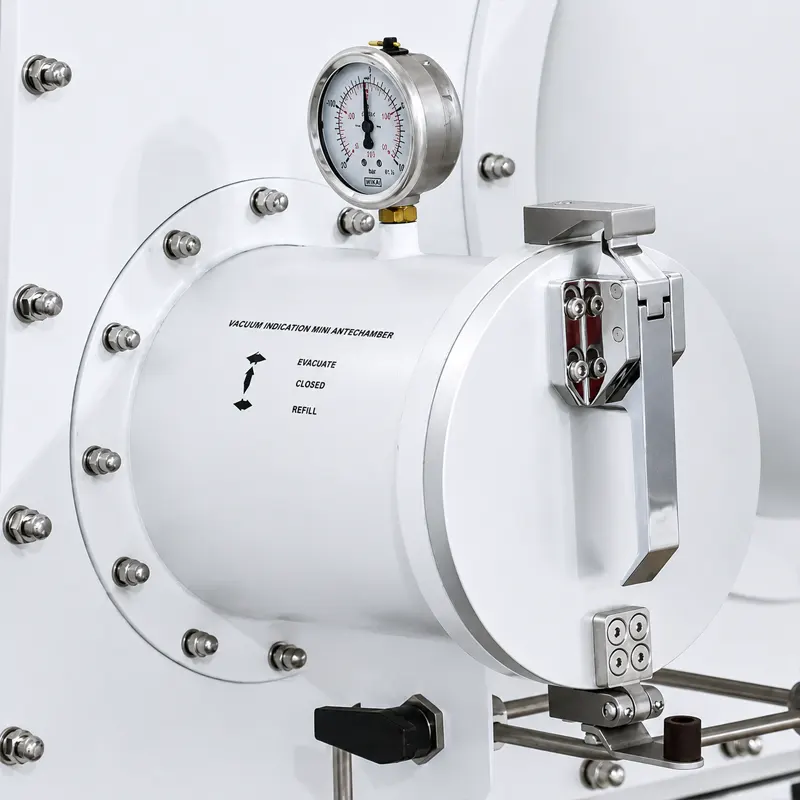
A small glove box antechamber is the transfer lock that lets samples, tools and small parts move between the laboratory and the working atmosphere of a sealed enclosure without opening the main chamber to room air. It sits between two environments: the outer door faces the lab, the inner door faces the controlled atmosphere, and between them lies a small chamber with a vacuum connection and a gas connection. Its purpose is not to purify anything. Its purpose is to make sure every transfer costs the box as little atmosphere quality as possible.
That distinction matters more than it first appears. In a glove box with a gas purification system, water and oxygen are removed by circulating the atmosphere through purifier columns, and the capacity of that purification loop is finite. Every door opened to ambient air loads the system with moisture and oxygen and dilutes the working gas. A small antechamber is the simplest way to keep that load small, and it is often the accessory that decides how quickly work can actually move in and out of the box. TENCAN Glove Box Systems offers the Small Glove Box Antechamber as one option in this category, and the questions raised below apply to any chamber of this general type.
What Does a Small Antechamber Do in a Glove Box System?
An antechamber performs three separate jobs, and confusing them is the source of most misunderstandings about what this accessory can and cannot deliver.
The first job is physical transfer. The chamber provides a defined space where an object can be placed, secured and moved from the outside to the inside. The outer door is closed and latched; the chamber becomes an isolated volume; the inner door is then opened from inside the box and the object is taken out. Because the main chamber never opens to the room, the box atmosphere is disturbed only by whatever the small chamber itself admits.
The second job is atmosphere protection. During a transfer, the chamber can be evacuated and refilled with the working gas. Instead of admitting a full volume of room air, the box receives only the diluted residual left after those cycles. This is the whole economic argument for an antechamber: it trades a small amount of working gas, pump time and operator attention for a much smaller contamination load on the purification system.
The third job is workflow discipline. Because the chamber has a limited size, it forces a routine in which consumables, tools and samples are prepared outside and passed in batches. That routine reduces the number of door movements, keeps gloves and sleeves away from the room atmosphere, and makes the transfer step repeatable enough to be written into a procedure.
What the antechamber does not do is equally clear. It does not remove water or oxygen — that is the function of the purification system with its columns, circulation loop and monitoring. It does not filter particles; a HEPA filter is a separate component with a separate function. It does not create a sterile, cleanroom-grade or biologically contained environment, and an inert atmosphere should never be described as if it were a certification of any of those things. It is a lock, a buffer and a staging volume, nothing more.
How a Small Antechamber Works: Evacuation, Refill and Repeat
Most small chambers follow the same basic sequence, although the hardware used to execute it varies considerably between models and suppliers.
The basic cycle
An object is placed in the chamber and the outer door is closed. A valve connects the chamber to a vacuum source and the pressure inside falls. The valve is then closed, and working gas — typically nitrogen or argon — is admitted through a separate gas inlet until the chamber returns to approximately the pressure of the enclosure. That is one cycle. The cycle is then repeated, usually two or three times in routine operation and more when the load is demanding. Only after the final refill is the inner door opened.
Each cycle dilutes what remains of the original air. The dilution is geometric rather than absolute: each repetition cuts the residual fraction, but the process never reaches a true zero, because gas clings to surfaces, sits in crevices, and hides inside the object itself. That is why the number of cycles, not the depth of a single pump-down, is usually the more useful variable to control.
Why repeated cycles beat one long pump-down
A long evacuation pulls air out of the open volume quickly but does comparatively little about air adsorbed on walls, trapped in packaging, or held inside porous materials. In practice, several short cycles of evacuation and refill remove more entrained air than one extended pump-down, because each refill carries the released contamination out with it. Items with large internal volume, fibrous or porous structure, or a loose paper label will always behave worse than a dense metal part of the same external size, and the operator should expect to add cycles for them.
Valves, seals and the vacuum source
A chamber of this kind needs at least a vacuum port and a gas inlet; many designs add a separate purge or vent line and a pressure gauge. Ports are commonly fitted with KF flanges so that standard fittings, hoses and valves can be used, but the exact configuration is a specification to be confirmed rather than assumed. Door sealing is normally achieved with a gasket or O-ring compressed by a clamp, hinge or screw mechanism, and the sealing surface, gasket material and clamping force together determine how well the chamber holds vacuum and how much effort a gloved operator needs to close it reliably.
The vacuum source deserves attention. Oil-sealed rotary vane pumps are common in laboratories, but an oil-lubricated pump connected to a chamber that communicates with a sensitive atmosphere carries a risk of oil vapour backstreaming into the chamber volume. Dry pumps avoid that particular risk and are often preferred where the atmosphere matters. The pump must also be matched to the gas being handled and to the vapours released by the samples: solvent vapours that reach a lubricated pump can degrade its oil and shorten service intervals, and in such cases a trap or an adsorption stage may be needed. This accessory is not a solvent removal device.
One unit confusion is worth stating plainly: the pressure achieved inside the antechamber, the working pressure maintained inside the glove box, and the ultimate pressure of the pump are three different numbers measured at three different points. A gauge fitted to the antechamber reads the antechamber only. It says nothing about the water and oxygen content of the box atmosphere.
Which Specifications Should You Check Before Ordering?
Because a transfer lock is an interface, its specifications become limits on the workflow. The list below follows the order in which those limits usually become visible.
Chamber volume and usable internal dimensions
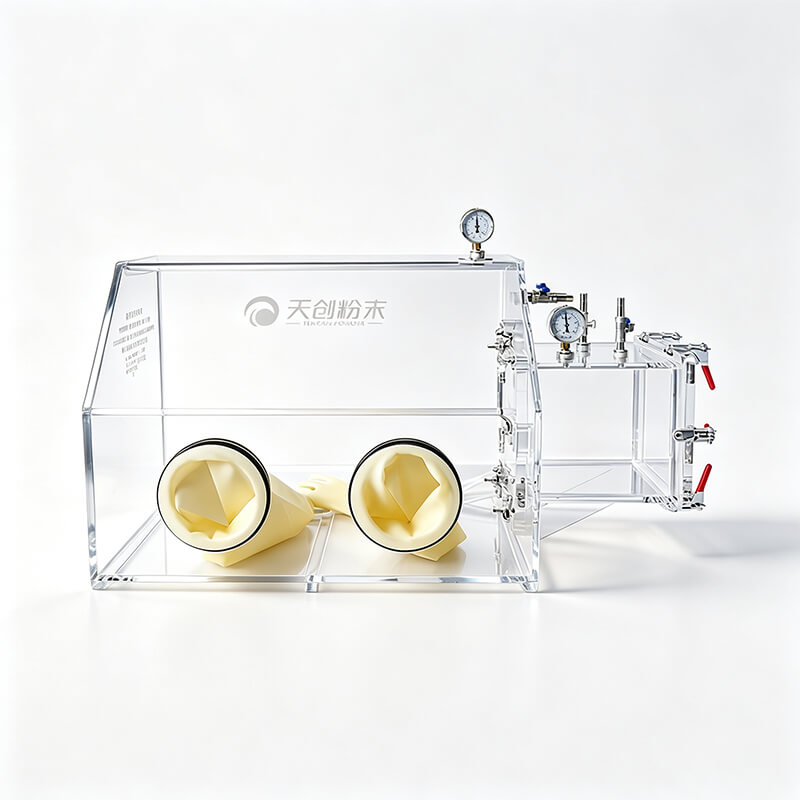
Nominal volume tells you less than the usable opening. Check the clear internal height and depth, the shape of the door aperture, whether an internal tray or shelf can be fitted, and how far the door projects when open. A chamber that looks large enough on a data sheet may still refuse a wafer carrier, a sealed transport box or a sample holder. Remember the trade-off as well: a larger chamber accepts more, but every cycle consumes more working gas and more time, so the smallest chamber that comfortably fits your routine transfers is usually the better choice.
Vacuum rating, sealing and door design
The chamber's pressure rating applies to the chamber, not to the enclosure it is attached to. Confirm the gasket material and its compatibility with the solvents or reagents you handle, the finish of the sealing surface, and how the door is clamped. A door that requires unusual force or two hands to close will be operated inconsistently, and inconsistent closure is the most common practical reason a transfer lock underperforms.
Ports, valves and instrumentation
Ask for the number and type of ports, the flange standard, whether gas inlet and vacuum lines are separate, whether valves are manual or automated, and what the gauge actually measures, in what range and in what units. A gauge with fine resolution is not automatically an accurate instrument; resolution and accuracy are different properties, and for routine transfer work a simple, readable indication of chamber pressure is often sufficient.
Material, surface finish and chemical compatibility
Stainless steel construction is typical where vacuum and solvent exposure are expected, and welded, smooth internal surfaces are easier to clean and release less adsorbed gas. Where an enclosure uses transparent acrylic walls, the wall material, wall thickness and intended duty all affect whether a transfer chamber can be mounted to it and under what conditions. Solvents deserve separate thought: an antechamber moves solvent vapour, it does not capture it, and solvent adsorption is a different accessory with a different purpose.
Mounting interface and fit to the enclosure
This is where random combinations fail. The chamber must match the wall material and thickness of the box, the cut-out and bolt pattern or flange, the gasket between chamber and wall, the position of glove ports, and the swing of both doors. A chamber designed for a stainless steel wall does not automatically suit an acrylic enclosure, and the reverse is equally true. The correct approach is to confirm fit at drawing level with the supplier of the enclosure, using the exact model and configuration.
Operating conditions and documentation
Finally, request the conditions under which any stated figure applies, the required supply pressures, the recommended leak-check method, and the spare parts that are likely to wear — gaskets and seals above all. If a figure in a catalogue or drawing is ambiguous or appears to use inconsistent units, treat it as unconfirmed until the supplier clarifies the conditions.
Where a Small Antechamber Fits, and Where It Does Not
Applications that suit a small transfer lock
- Air-sensitive chemical samples in sealed vials or small containers
- Battery and solid-state battery research items such as coin cells and small cell components
- Substrates for perovskite, OLED and semiconductor work, provided they fit the aperture
- Small tools, crucibles, tweezers, spare gloves and consumables passed in batches
- Small parts entering or leaving an inert-atmosphere step in additive manufacturing post-processing
- Optical and electronic components that tolerate the evacuation step
Practical limits and unsuitable cases
The most obvious limit is size: anything larger than the usable aperture simply cannot be transferred this way, and a small chamber is by definition not the right answer for bulky equipment. A second limit is outgassing. Porous powders, textiles, cardboard, paper labels, damp samples and any object with trapped internal volume hold air and moisture that no number of quick cycles will remove completely; such items need extended cycling, and some should not be passed through at all. Loose powders are a further concern, because transfer can spread dust inside the chamber and into the box, and the antechamber itself does nothing to contain it.
There is also a throughput limit. Each transfer costs pump time, gas and operator attention, so a laboratory that moves many small items per day may need a larger lock, an automated cycling routine, or both. Finally, keep the accessory in its proper place in the system: the water and oxygen level ultimately reached inside a glove box depends on the enclosure, its sealing, the circulation and purification system, and the materials stored inside. No antechamber, however well specified, replaces a purification system, and none should be presented as if it could hold an atmosphere on its own.
How to Select and Integrate a Small Antechamber
Selection becomes straightforward once the workflow is described honestly. Work through the following points before requesting a quotation.
- Describe the largest and the most frequent item that must pass, including packaging.
- State the atmosphere quality the enclosure must maintain, and how quickly it must recover after a transfer.
- Choose a chamber size with a modest margin over the largest item, accepting the gas and time cost of extra volume.
- Match the vacuum and sealing design to the pump you intend to use, and confirm that the pump is suitable for the gas and any sample vapours.
- Confirm the mounting interface against the exact enclosure model, using drawings rather than assumptions.
- Verify the gas supply: which working gas is used, how it is regulated, and whether a separate purge line is available.
- Write the operating procedure, including a cycle count for normal items and a longer count for outgassing loads, and train operators to follow it.
- Ask the supplier which figures are guaranteed, under what conditions, and which parts are consumables.
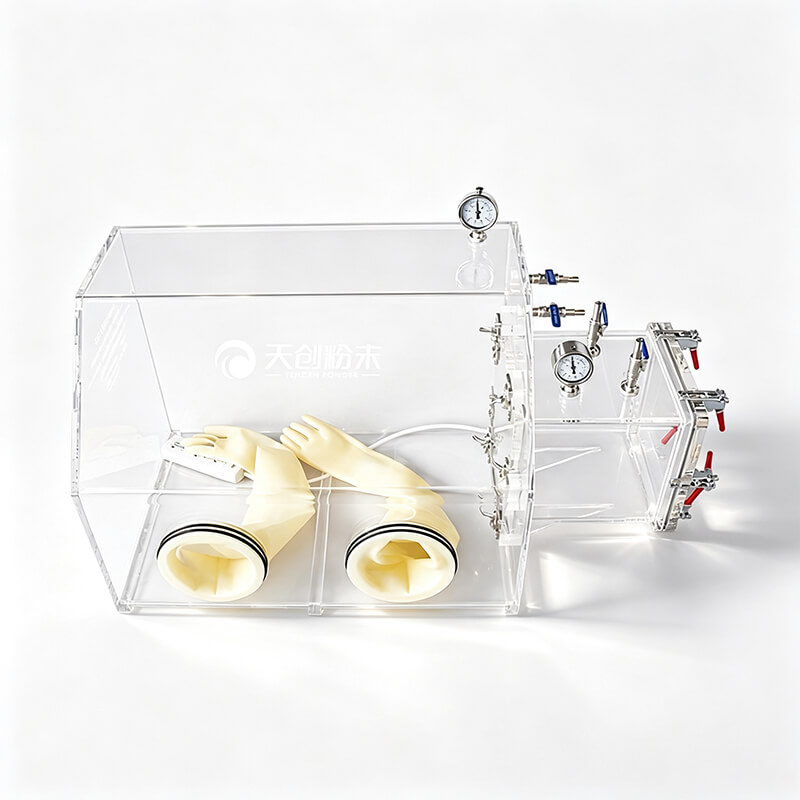
Enclosure families vary in exactly the ways that matter here. The GBT Series Acrylic Glove Box, for example, is offered in isolation, micro-vacuum and vacuum configurations that differ by model and wall thickness. Whether a given transfer chamber can be fitted, and under what conditions, therefore has to be confirmed against the specific configuration rather than inferred from the series name. The same rule applies to any accessory: a transfer lock and an enclosure are two products with two sets of limits, and compatibility is a verified property, not a default.
Quick Answers to Common Questions
Does a small antechamber purify the glove box atmosphere?
No. It reduces the amount of air admitted during a transfer. Water and oxygen are removed by the purification system through its columns and circulation loop.
Can it lower water and oxygen to low ppm levels by itself?
No. The chamber limits contamination entering during transfer, but the atmosphere actually achieved depends on the enclosure, the purification system, the leak rate and the materials kept inside.
How do I know whether a chamber fits my glove box?
Compare wall material and thickness, cut-out dimensions, bolt pattern or flange, gasket, glove port positions and door swing, then confirm at drawing level with the enclosure supplier. Do not assume that a chamber and a box from different sources will mate.
Why does a simple transfer take so long?
Chamber volume, the number of cycles, and how much air the item itself holds. A dense metal part cycles quickly; a porous or fibrous item, or one with trapped internal volume, needs more repetitions and more patience.
Do I need an additional pump or analyser?
Only if the existing vacuum supply is unsuitable — wrong gas compatibility, insufficient duty cycle, or an oil backstreaming concern — or if you want to record chamber pressure. An oxygen or moisture analyser measures the box atmosphere; it does not make the antechamber capable of cleaning that atmosphere.
Treat the transfer lock as part of the atmosphere system rather than as a piece of laboratory furniture. When its interior dimensions, sealing, ports and mounting match the work being done, it protects the atmosphere, the sample and the daily rhythm of the laboratory. When it does not, the purification system simply absorbs the difference, cycle after cycle.
