
What a glove box trace oxygen analyzer does
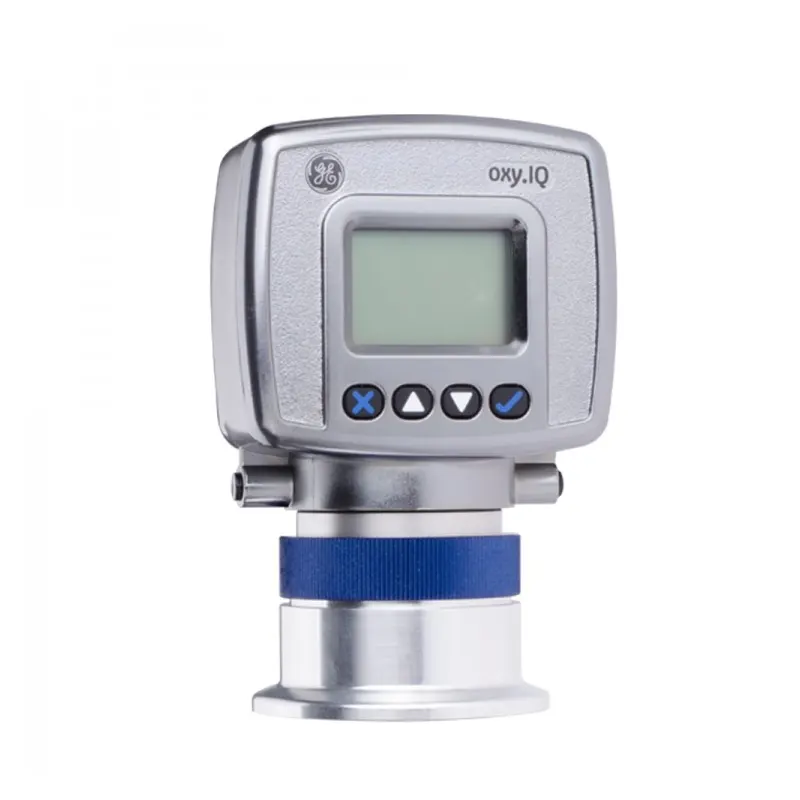
A glove box trace oxygen analyzer is an accessory that measures the oxygen concentration in the atmosphere of an inert-gas glove box. It does not create the inert atmosphere, and it does not remove oxygen. Instead, it provides the measurement that tells operators and control systems whether the atmosphere is staying within the intended operating window. In a typical installation, the analyzer samples gas from the box or from the purification loop, senses the oxygen level, and displays or transmits a signal. That signal can be used for manual checks, alarms, data logging, or automatic control of the gas purification system.
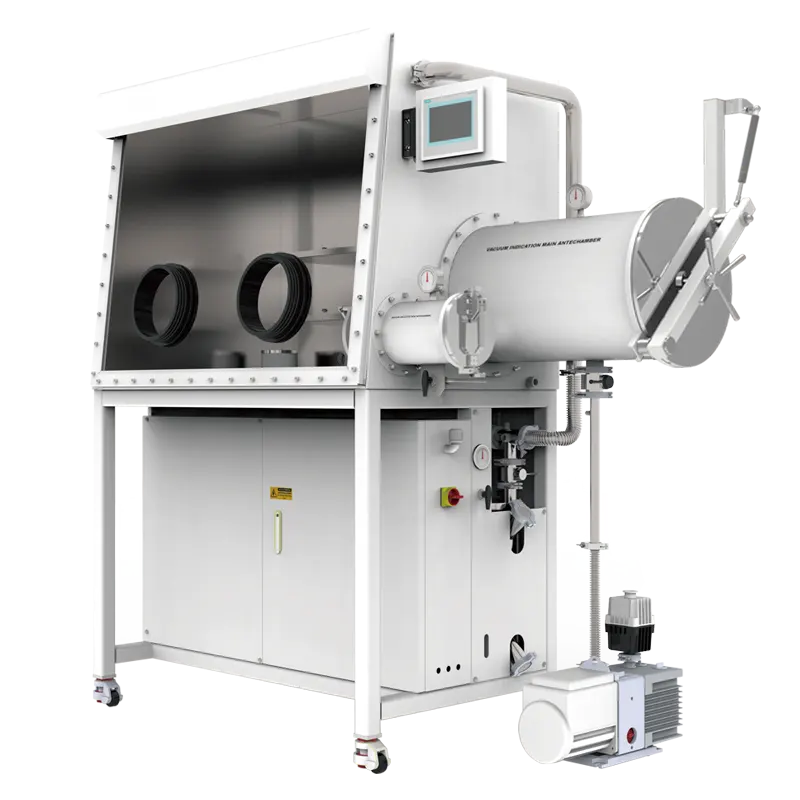
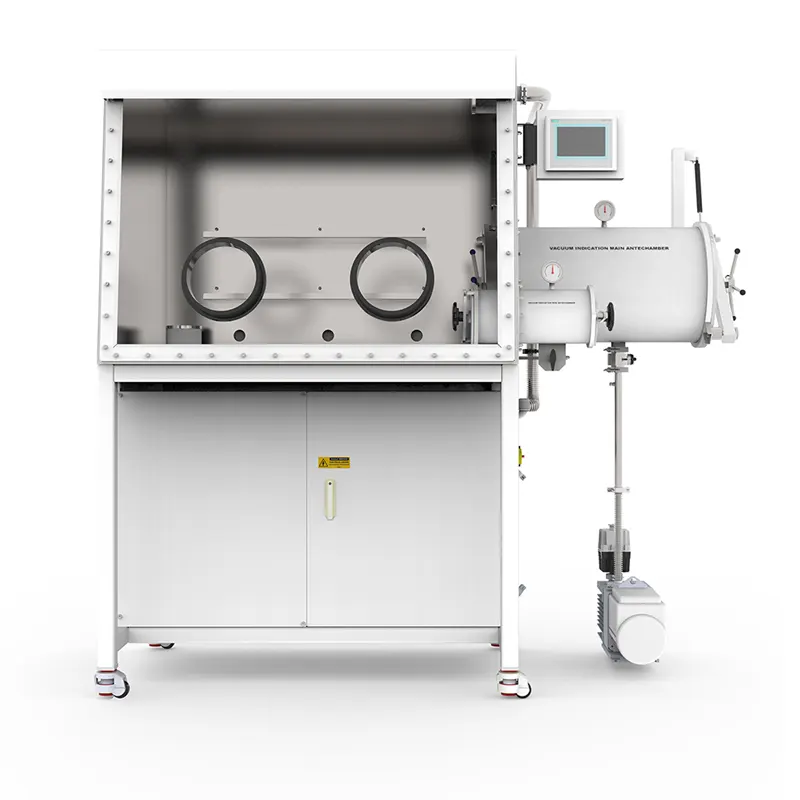
The distinction between measurement and purification is important. A glove box with a gas purification system uses purification columns, circulation, and monitoring to keep oxygen and moisture low. The analyzer is one part of that monitoring function. For example, the Single-Station Single-Sided Glove Box with Gas Purification System is described as a purification glove box, not as an oxygen analyzer. The analyzer is a separate accessory that helps verify how the system is performing. It should not be described as if it were the purification column, the circulation blower, or the regeneration system.
Because the accessory page provides the product name and image but not detailed performance specifications in the supplied material, the safest approach is to treat the Glove Box Trace Oxygen Analyzer as a measurement device whose exact sensor, range, accuracy, and interface must be confirmed from its product documentation. The general principles below explain what such an analyzer does, what to check, and where its limits lie.
How does it work?
A trace oxygen analyzer works by bringing a representative gas sample into contact with an oxygen-sensitive sensor. The sensor produces a signal proportional to the oxygen partial pressure or concentration in the sample. The analyzer then converts that signal into a reading, usually shown on a local display and often available as an electrical output. In a glove box, the sample may be drawn from the working chamber, from the return line of the purification loop, or from a dedicated sampling port. After measurement, the sample may be returned to the box or directed to an exhaust, depending on the system design.
Sampling path
The sampling path is a critical part of the measurement. If ambient air leaks into the sample line, the reading will be falsely high. If the sample flow is too low, the response may be slow. If the sample is taken from a dead zone rather than from a well-mixed part of the loop, the reading may not represent the atmosphere that the operator actually cares about. For these reasons, the analyzer should be integrated with attention to tubing material, connection type, leak tightness, flow rate, and pressure. A trace oxygen measurement is only as good as the sample reaching the sensor.
Sensor principles and calibration
Trace oxygen analyzers can use different sensing principles, such as electrochemical cells, zirconia-based sensors, or optical methods. Each principle has its own trade-offs in range, response, cross-sensitivity, and maintenance. The supplied product material does not specify which principle this model uses, so that detail should be confirmed before purchase. Calibration is equally important: most trace oxygen analyzers require a zero or span check using a known reference gas or an internal calibration method. The calibration procedure, frequency, and required gases should come from the manufacturer's instructions, not from a generic assumption. A reading is meaningful only when the analyzer is calibrated for the gas composition, pressure, and temperature conditions in which it is used.
Which types or configurations matter?
Because this article focuses on one accessory rather than a catalogue of many models, the useful comparison is not "model A versus model B." It is the configuration choices that determine whether a trace oxygen analyzer can be integrated into a glove box system. The main choices are sampling method, sensor technology, measurement range, mounting location, and signal interface.
In-line versus extracted-sample configuration
An in-line analyzer is placed directly in the gas circulation path, so it continuously sees the gas stream. An extracted-sample analyzer pulls gas from the box or loop through a sample line. In-line installation can reduce sample lag and avoid extra tubing, but it requires the analyzer to be compatible with the loop pressure, flow, and materials. Extracted-sample installation can be more flexible for mounting and service, but it introduces additional connections that must be leak-tight. For glove box work, the key question is whether the analyzer can be connected without creating a leak path or disturbing the box pressure. That question should be answered with the analyzer supplier and the glove box supplier.
Sensor technology and range
The sensor technology affects what the analyzer can measure and what it can tolerate. Some sensors are designed for very low oxygen levels but may be sensitive to solvents, acid vapors, or moisture. Others are more robust but may have different resolution or response characteristics. The measurement range should match the process: an analyzer intended for trace-level monitoring may not be appropriate for a process that regularly sees percent-level oxygen, and an analyzer with a wide range may not provide the resolution needed for low-level verification. The supplied accessory page does not list a specific range, so the range, resolution, accuracy, and response time must be checked on the current datasheet.
Mounting and signal interface
A trace oxygen analyzer may be panel-mounted, mounted on the glove box frame, or placed in a separate cabinet. It may provide a local display only, or it may offer analog outputs, digital communication, alarm relays, or data logging. In a research laboratory, the choice often depends on whether the reading will be recorded for experiments, used for operator alarms, or connected to the purification system's controller. The electrical connection and signal feedthrough must be compatible with the glove box. If the analyzer is outside the box, the sample line and return line pass through the box wall or a feedthrough; if it is inside, the analyzer's materials and electronics must be suitable for the atmosphere. Neither option should be assumed without confirming the available ports, feedthroughs, and sealing method.
Which specifications should you check?
When evaluating a glove box trace oxygen analyzer, the most useful specifications are the ones that connect directly to the measurement task. Start with the measurement range and the lowest oxygen level that the process needs to distinguish. Do not confuse resolution with accuracy: a display may show a fine increment while the actual measurement uncertainty is larger. Ask for the accuracy statement, the response time, the calibration method, and the conditions under which those figures apply.
Next, check the sample interface. What connection type is required? What sample flow and pressure does the analyzer expect? What are the wetted materials? Are they compatible with the glove box atmosphere and any solvent vapors that may be present? A trace oxygen analyzer that works well in a clean nitrogen atmosphere may not be suitable for a box that handles corrosive or condensable vapors. The analyzer's inlet filter, if any, should be selected for the application; a particle filter protects the sensor but does not remove oxygen or moisture.
Then check the electrical and control interface. What power supply is required? What output signals are available? Are alarm contacts included? Can the reading be logged? If the analyzer is to be connected to a purification system, the signal type and control logic must be compatible. Finally, check service requirements. Sensors may need replacement or recalibration, and the analyzer may need access for maintenance. The installation should allow that access without breaking the glove box atmosphere unnecessarily.
Where is it suitable, and what are its limits?
A trace oxygen analyzer is suitable wherever operators need to verify that oxygen remains within a controlled range. In materials research, this includes lithium battery and solid-state battery material handling, perovskite and OLED device work, semiconductor processing, air-sensitive chemistry, advanced materials synthesis, and additive manufacturing workflows that require a protected atmosphere. It is also useful for leak checking, for confirming that a purification system is recovering after a glove box entry, and for documenting atmosphere conditions during an experiment. In these settings, the analyzer supports decisions about when it is safe to introduce a sample or when the atmosphere needs attention.
The limits are just as important. A trace oxygen analyzer measures oxygen; it does not remove oxygen. It does not measure moisture unless it is combined with a separate moisture analyzer. It does not remove solvent vapors, and it does not replace a solvent adsorber. A HEPA filter removes particles, not oxygen or water. A purification column removes oxygen and moisture through chemical and physical processes, and the analyzer only monitors the result. If an application requires low moisture as well as low oxygen, both parameters need their own measurement and control strategy. If an application requires sterile conditions, cleanroom classification, biosafety containment, or hazardous-material enclosure, those are different requirements; an inert atmosphere and an oxygen analyzer do not by themselves provide those certifications.
The analyzer also has operating limits. Exposure to high oxygen concentrations, incompatible vapors, excessive pressure, or condensation can affect the sensor or the sample path. Some sensors are cross-sensitive to other gases. Some analyzers require a minimum sample flow or a specific sample pressure. The user should confirm the manufacturer's limits for temperature, humidity, pressure, and gas composition. The analyzer should not be used as a substitute for the glove box's pressure control, leak testing, or purification system maintenance. It is a monitoring tool, and its value depends on proper installation, calibration, and interpretation.
How should you select or integrate it?
Selection starts with the measurement requirement. Define the oxygen range that matters, the level at which an alarm should sound, and whether the reading must be recorded. Then define the installation: will the analyzer be inside the glove box, on the frame, or in a separate cabinet? Will it sample from the working chamber or from the purification loop? What connection, flow, and pressure are available? These answers determine the required sensor type, sample system, and interface.
Compatibility should be verified rather than assumed. A trace oxygen analyzer and a glove box with a gas purification system are not automatically compatible simply because both are used in inert-atmosphere work. The analyzer's sample port, return path, materials, pressure rating, and electrical connections must match the glove box. If the analyzer is connected to the purification loop, the connection must not bypass the purification columns or create a path for ambient air to enter. If the analyzer is used only for spot checks, a portable or temporarily connected unit may be sufficient, but it still needs a suitable sampling interface and calibration plan.
For the Glove Box Trace Oxygen Analyzer, the product page should be treated as the starting point for the current configuration and specifications. For the background system, the Single-Station Single-Sided Glove Box with Gas Purification System illustrates a purification glove box in which atmosphere monitoring is relevant. The two products should be evaluated together only after confirming that their interfaces and operating conditions are compatible. Do not assume that an accessory listed on the same website is a drop-in fit for every glove box model.
Frequently asked questions
Does a trace oxygen analyzer purify the glove box atmosphere?
No. It measures oxygen concentration. Purification is performed by the purification system, which typically includes purification columns, circulation, and regeneration functions. The analyzer provides information that helps the operator or controller decide whether purification is working as intended.
Can it directly lower oxygen or moisture levels?
No. It has no capacity to remove oxygen or water. If the oxygen level rises, the response is to check for leaks, review the purification system status, and follow the manufacturer's procedures. The analyzer itself cannot correct the atmosphere.
How do I judge whether it fits my glove box?
Check the sample connection, required flow and pressure, wetted materials, measurement range, calibration method, electrical interface, and physical mounting. Confirm that the analyzer can be connected without compromising the glove box seal or pressure control. The safest path is to verify these points with the glove box and analyzer suppliers before installation.
When is a trace oxygen analyzer needed?
It is useful when the process requires verification of low oxygen, when operators need an alarm or record of atmosphere quality, when leaks or purification performance must be checked, or when experimental documentation includes oxygen levels. It is not required for every glove box, especially when the process does not depend on tightly controlled oxygen.
Does a HEPA filter or solvent adsorber replace the analyzer?
No. A HEPA filter targets particles. A solvent adsorber targets solvent vapors. Neither measures oxygen or removes it from the atmosphere. An oxygen analyzer addresses a different measurement task.
Practical selection checklist
- Define the oxygen range and alarm level required by the process.
- Confirm whether the analyzer will be in-line, extracted-sample, portable, or fixed.
- Check the sample connection, flow, pressure, and return path.
- Verify wetted materials and compatibility with the glove box atmosphere and solvents.
- Review measurement range, resolution, accuracy, response time, and calibration requirements.
- Confirm the electrical supply, signal outputs, alarms, and data logging options.
- Plan for sensor service, calibration gases, and access for maintenance.
- Do not assume compatibility with a specific glove box model without confirming the interface.
In short, a glove box trace oxygen analyzer is a monitoring accessory, not a purification device. Its value comes from accurate measurement, proper integration, and correct interpretation. When it is selected to match the glove box atmosphere and the process requirements, it helps researchers and laboratory managers protect sensitive materials and maintain a controlled working environment.
