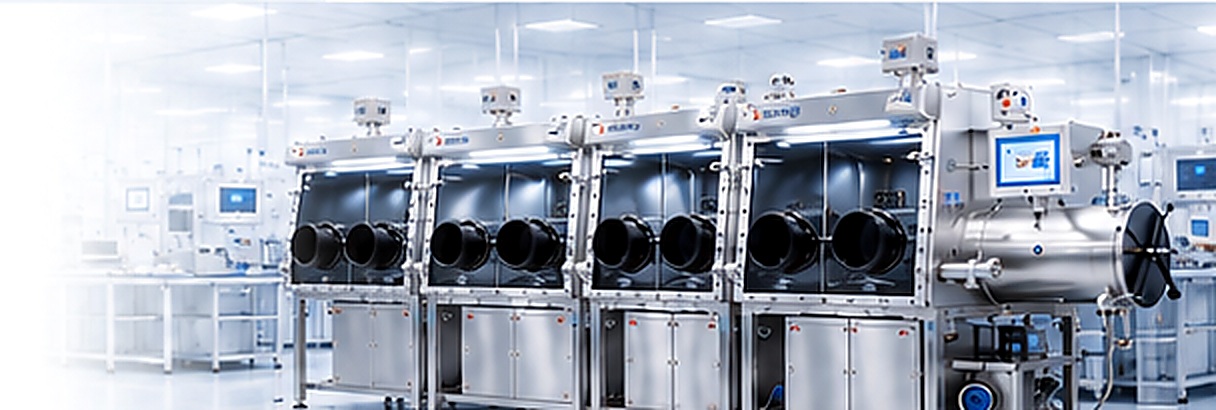
A six-glove double-sided glove box with gas purification is a sealed work enclosure that provides six glove ports and access from both sides, while a purification system recirculates the internal atmosphere to control oxygen and moisture. It sits between the operator and an air-sensitive process: the enclosure defines the controlled volume, the transfer hardware limits air ingress, and the purification loop removes contaminants that enter or outgas inside. This arrangement supports work that cannot be performed reliably on an open bench; it is not a substitute for process-specific risk assessment or material compatibility testing.
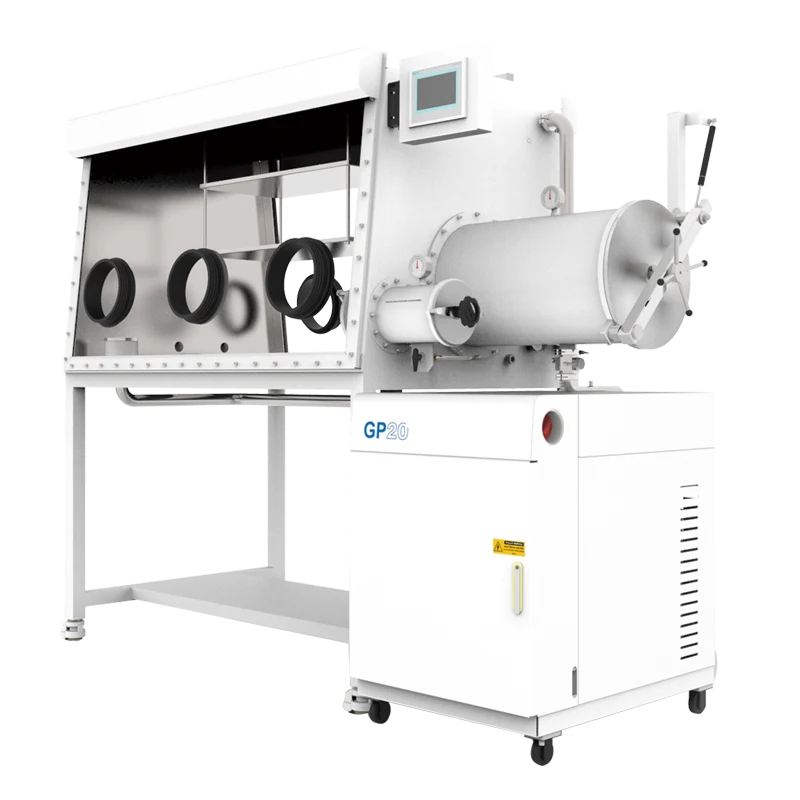
What does it do and where does it sit in the system?
The TENCAN six-glove double-sided glove box with gas purification system is an enclosure-based workstation, not a bench-top cabinet with a filter. Its primary function is to keep a working volume under an inert atmosphere while giving operators enough glove access to manipulate samples, tools, and small equipment. The double-sided layout means the same controlled volume can be reached from both faces of the box. The six-glove configuration increases the number of accessible hand positions, which can support several operators or a process that needs hands in different locations.
Where is it in the system? The enclosure is the central pressure boundary. Around it are transfer interfaces, such as an antechamber where fitted, glove ports and gloves, feedthroughs for power or signals, and connections to the purification loop. The purifier, circulation blower, sensors, and controls may be mounted on or near the enclosure, but they are not part of the usable workspace. This distinction matters during layout and procurement: the box, the gas-purification unit, and the vacuum hardware have separate requirements and should be specified as one integrated system.
The box also has to manage ordinary operations: loading samples, changing gloves, cleaning, moving tools, and connecting analytical instruments. A gas-purified box is therefore a system of seals, transfer steps, and atmosphere management, not simply a chamber with a gas inlet. The product name identifies the six-glove, double-sided, gas-purified configuration. Details such as working dimensions, port distribution, construction materials, window type, and electrical fittings must come from the current specification, because they are not established by the name alone.
How does the purification loop work?
Gas purification is a closed-loop process. Internal gas is drawn from the working volume, passed through purification media, and returned. Water and oxygen are removed by media selected for those duties; the exact media, capacity, and changeover procedure belong to the specific system. Particle filtration is a different function: a HEPA filter can capture particles, but it does not replace water and oxygen removal. Likewise, a solvent trap addresses organic vapor, not oxygen or moisture.
Circulation, monitoring, and control
The blower or circulator maintains flow through the purifier and the enclosure. Flow path, flow rate, and pressure drop affect how quickly a disturbance is mixed and treated, but they are not the same as the achievable oxygen or moisture level. Sensors monitor the atmosphere, and the control system uses those readings to manage the loop and indicate when purification or regeneration is needed. An analyzer measures the atmosphere; it does not purify it. Its range, resolution, accuracy, calibration, and sample location all matter. A fine display resolution does not by itself prove measurement accuracy.
Regeneration is not the same as purging
When purification media approaches saturation, the system needs regeneration or replacement according to its design. Regeneration is a separate operating mode from normal circulation; it may use heat, vacuum, or a regeneration gas, and it must follow the manufacturer's procedure. It should not be confused with initial inert-gas purging, which reduces the air burden after loading, or with vacuum cycles in an antechamber. The working gas, any control or actuation gas, and regeneration gas are distinct streams; confirm which supply each function requires.
Leak integrity and glove condition set the real workload on the purifier. Oxygen and moisture enter through seals, glove pinholes, poorly purged transfers, and outgassing samples and materials. A purifier can remove a certain contaminant load, but it cannot compensate indefinitely for a persistent leak or a heavily outgassing process. This is why leak testing, careful transfer, and selection of low-outgassing consumables belong in the operating routine, not only in commissioning.
Initial purging and routine circulation answer different questions. Purging replaces air with inert gas; purification removes contaminants that remain or enter later. A box that has been purged may show a low reading for a period while surfaces and samples continue to release moisture. Stable performance depends on the combined behavior of the enclosure, transfer practice, purification capacity, and monitoring.
What do six gloves and double-sided access change?
Six glove ports increase the possible number of simultaneous hand positions. That can be useful when two operators work together, when one person needs to hold a sample while manipulating a tool, or when a process is arranged across a wide workspace. The benefit is not automatic. Every additional port is another seal and glove to inspect, and poor ergonomics can make a large box slower to use than a compact one.
Double-sided access allows work from both faces of the same enclosure. It can support collaborative tasks, training, or a layout where equipment is approached from the rear without moving the entire box. It does not create two independent atmospheres: both sides share the same gas volume and the same contamination sources. The layout also affects footprint, sightlines, service access, and the route for transferring samples. A double-sided box should be chosen because the work pattern needs it, not simply because a larger enclosure appears more capable.
The combination of six gloves and two-sided access is especially relevant to a shared laboratory where several projects use one controlled atmosphere. It can reduce the need to move samples between separate enclosures, but it also means that one poorly prepared load can affect everyone using the box. House rules for purging, tool storage, solvent use, and glove inspection become part of the system's practical performance.
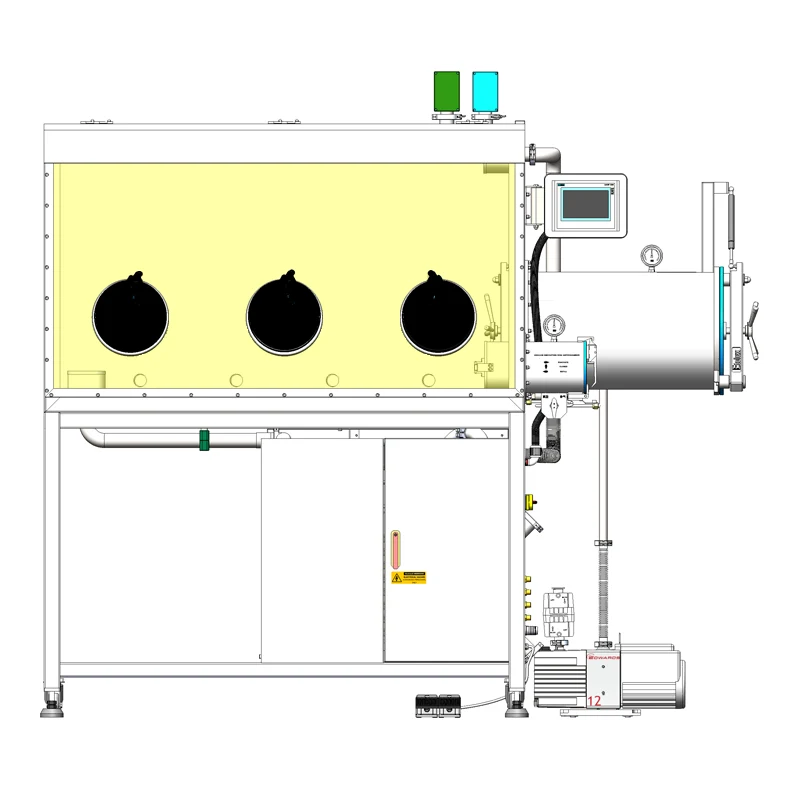
Which components and accessories matter?
Selection should follow the function of each item. The purification columns remove water and oxygen; the circulator moves gas; the analyzers report the atmosphere; the antechamber controls transfer; the gloves are the operator interface; and feedthroughs carry power, signals, or services without breaking the boundary. A HEPA filter, solvent trap, or cooling device, if fitted, addresses a separate requirement and should not be treated as an atmosphere purifier.
Vacuum-side hardware deserves separate attention. If the box or its transfer manifold uses KF connections, a KF vacuum butterfly valve can be used to isolate or control flow in that vacuum line. It is a valve, not a purification device, and it does not directly lower oxygen or moisture in the glove box. Compatibility depends on the flange size, seal material, intended vacuum duty, and actuator arrangement. The valve listing identifies the component; request the confirmed flange size, body and seal materials, pressure or vacuum rating, and actuation details before integrating it.
| Item | Role in the system | What to verify |
|---|---|---|
| Purification unit | Removes water and oxygen from circulating gas | Media, capacity, regeneration method, qualified atmosphere range |
| Circulator and controls | Moves gas and manages operating modes | Flow path, control logic, alarms, service access |
| Analyzers | Measure oxygen or moisture | Range, accuracy, calibration, sample point |
| Antechamber, if fitted | Limits air ingress during transfer | Volume, door seals, vacuum rating, purge method |
| Gloves and ports | Operator interface and seal | Size, material compatibility, leak inspection, replacement |
| KF vacuum valve | Isolates or regulates a compatible vacuum line | Flange, seal, vacuum rating, actuator |
Which specifications should you check?
Start with the workspace and access geometry: internal dimensions, usable height, port positions, side layout, window visibility, and clearance for tools or small equipment. For a double-sided six-glove box, confirm how the ports are distributed, whether all six are needed at once, and how an operator reaches the far side of the work area. Dimensional drawings are more useful than a single volume figure.
Atmosphere specifications need careful reading. Ask for the qualified oxygen and moisture range, the conditions under which it is achieved, the stabilization time after a defined challenge, and the accuracy of the monitoring method. Keep units and measurement object attached to every number. A purge level, a sensor detection limit, an achievable atmosphere value, and a guaranteed continuous performance are not interchangeable. The same rule applies to pressure: enclosure working pressure, antechamber vacuum, pump ultimate vacuum, and leak rate are separate parameters.
Confirm leak-test method and acceptance criteria, glove material and thickness, seal materials, and the compatibility of the intended process with those materials. Check the purification media, regeneration requirements, and expected replacement interval under your load. Ask about utility requirements, heat rejection, noise, and the space needed for service. If solvents, particles, or corrosive species will be present, state them early: they may require a solvent trap, compatible seals, or a different transfer strategy, and they can change purification duty.
Also verify the control and documentation package: sensor calibration, alarm behavior, operating logs, spare-parts list, and the instructions for safe regeneration and glove changes. These items are part of the system, not optional extras.
Where is it suitable, and what are its limits?
A gas-purified double-sided box is relevant to lithium metal and solid-state battery preparation, perovskite and OLED device work, air-sensitive synthesis, semiconductor and electronic materials handling, advanced materials research, and some additive-manufacturing post-processing. In these settings, the value is controlled atmosphere plus enough glove access for careful manual work. The box can support weighing, assembly, sample transfer, and small-scale processing when the materials and tools are compatible with the enclosure.
Its limits are equally important. It is not automatically sterile, cleanroom-rated, or suitable for biological or hazardous materials; those are separate containment requirements. It does not make every gas inert for every sample, and it does not remove the need for a fume hood or local exhaust when a process generates harmful vapors. Solvent adsorption, HEPA filtration, and water/oxygen purification solve different problems. A purification system also has finite capacity and requires regeneration or media service.
The six-glove, double-sided format can be too large for occasional single-operator use. More ports and more accessible surface area mean more gloves, seals, and cleaning to manage. The right choice depends on how often the box is used, how many people work at once, and whether the process needs the extra access.
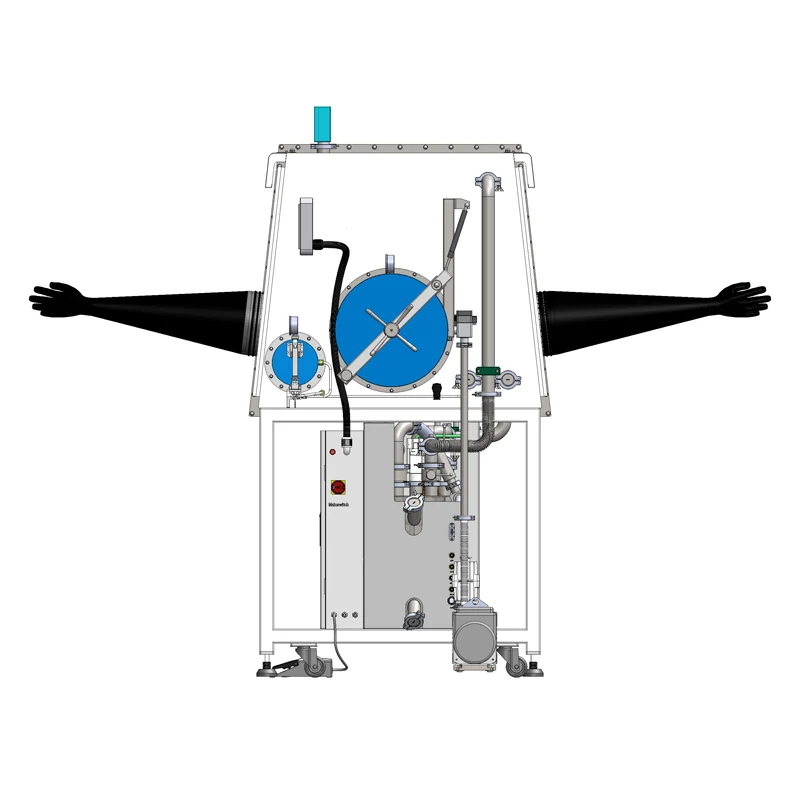
How should you select or integrate it?
Define the process before comparing configurations. List the materials, maximum sample load, required oxygen and moisture levels, acceptable transfer time, solvents or particles released, heat load, tools, analytical connections, and the number of operators. Then decide whether the six-glove double-sided layout is justified by simultaneous work or equipment access. If it is not, a smaller enclosure may be easier to site, purge, and maintain.
Plan the interfaces as a whole: gas supply, vacuum, electrical power, signal feedthroughs, exhaust or vent routing, and service clearance. Confirm that the proposed antechamber, pump, valve, and instrumentation are compatible with the box and with each other. A KF valve is only appropriate where the mating flange and seal arrangement match; it should not be added merely because a vacuum line exists. Request a current drawing and utility list rather than relying on a catalogue title.
Ask for a commissioning plan that includes leak testing, purge and start-up procedure, analyzer calibration, operator training, and a defined handover condition. Agree on what performance will be measured, with which instrument, and under what load. Keep a spares strategy for gloves, seals, and purification consumables. Finally, record the operating routine: what may enter the box, how transfers are purged, how solvents are managed, and who is authorized to change settings. Selection ends with an installed, understood system, not with a purchase order.
Frequently asked questions
Does a gas purification system make the box suitable for every air-sensitive material?
No. Suitability depends on the required atmosphere, the material's outgassing and compatibility, the presence of solvents or corrosive species, and the achievable performance of the specific configuration. Test or qualify critical processes rather than assuming that inert gas protects every sample.
Can the box reach zero oxygen or zero moisture?
No practical enclosure should be described as zero. Trace ingress, outgassing, measurement limits, and purifier capacity set a practical range. Ask for the qualified range and the measurement conditions, and do not treat a display value as an absolute guarantee.
Is the KF vacuum butterfly valve part of the purification loop?
Not normally. It is a vacuum-line component for isolation or flow control where the flange and service conditions match. It does not remove oxygen or water and should not be specified as an alternative to purification.
Can two operators work independently on the two sides?
They can share the same controlled atmosphere and work from opposite faces, but they do not have independent atmospheres. Coordination is still needed because a spill, an open port, or a heavily outgassing load affects the common volume.
When is a vacuum antechamber worth specifying?
A vacuum antechamber is useful when frequent transfer would otherwise admit too much air, but the right choice depends on the size of the items, transfer frequency, and acceptable purge time. Confirm the chamber volume, door seals, vacuum rating, and pump compatibility for the actual workload.