
A six-glove double-sided glove box with gas purification is a sealed working chamber with six glove positions on two operating faces and a recirculating atmosphere system that removes water and oxygen from the internal gas. It sits between the operator and the sensitive process: the gloves provide manual access, the chamber isolates the work from laboratory air, and the purification loop helps the internal atmosphere recover after transfers and routine use. TENCAN Glove Box Systems offers this configuration for work that needs more working space and more access positions than a compact single-operator box. See the six-glove double-sided glove box with gas purification system.
The six-glove format is a workspace and access decision; gas purification is an atmosphere-control decision. A successful installation needs both to match the process, because extra glove access does not compensate for a weak transfer procedure, and a capable purifier does not fix a leaky chamber.
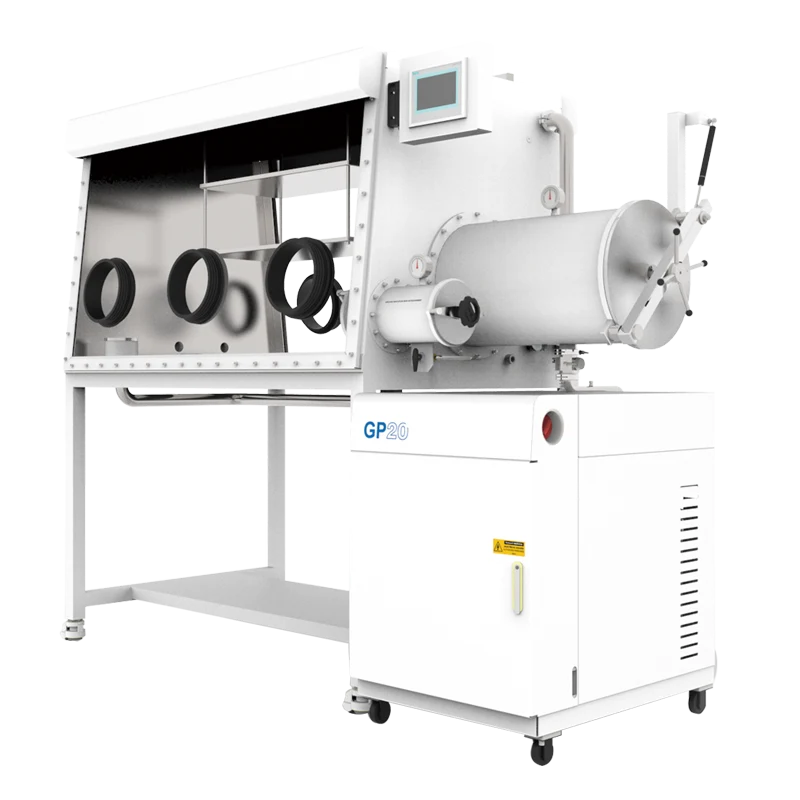
What Does a Six-Glove Double-Sided Glove Box Do?
Its function is to create a controllable microenvironment in which an operator can handle, assemble, test, or store materials while limiting exposure to ambient moisture and oxygen. The chamber provides the physical barrier, the gloves provide dexterity, and the purification system circulates the internal gas through water- and oxygen-removing material. The box is therefore more than a transparent enclosure: it is a small controlled-atmosphere workstation with a defined working volume, a transfer path, and an atmosphere-monitoring system.
The double-sided design changes how that workspace can be used. It allows working access from opposite faces of the chamber and gives the six-glove arrangement more reach across the interior. This can support two operators working together, a setup-and-inspection workflow, or a process that needs several hand positions around fixtures and equipment. It does not, by itself, create six independent work zones or guarantee that six people can work safely at the same time.
The double-sided layout and six-glove access
The useful working area is not simply the outside footprint of the box. It depends on the position of the glove ports, the internal height, the space taken by shelves or rails, the location of the antechamber, and the size of any equipment placed inside. A double-sided chamber can improve collaboration because one operator can work from the front while another works from the rear, but each task still needs a clear line of sight and enough room to move samples without crossing gloves or disturbing fixtures.
Six glove positions expand access, yet they also create more seals, more glove material, and more potential leak paths. Good ergonomics matter as much as the count. Operators should be able to reach the work area without overextending their shoulders, and glove ports should be positioned for the tasks the box will actually support. A dimensioned drawing and a trial with representative tools are more informative than a nominal chamber size alone.
How the gas purification loop works
A purification system is normally a closed loop rather than a single pass of fresh gas. Gas is drawn from the chamber, passed through filters and a circulator, directed through one or more purifier columns, and returned to the box. The purifying material captures water and oxygen; when its capacity is reduced, it is regenerated or replaced according to the manufacturer's procedure. Sensors sample the atmosphere and provide the readings used by the controller to manage circulation, alarms, and regeneration.
Regeneration is a separate operating state and should not be confused with normal purification. It can affect availability and requires the correct gas supply and control sequence. The loop also has a finite capacity to absorb contamination introduced by transfers, leaks, wet gloves, or outgassing samples. That is why antechamber practice, leak integrity, and the condition of gloves and seals are part of atmosphere control, not merely housekeeping.
Which Configurations Matter?
The current product is a six-glove double-sided box with a gas purification system. Within that architecture, several configuration choices determine whether the box fits a particular laboratory. They should be confirmed against the actual quotation and drawings rather than inferred from the product name alone.
Gloves, ports, and ergonomics
Glove material, thickness, size, and port design influence dexterity, chemical compatibility, and the load on the purification system. Thinner or more flexible gloves can improve feel but may offer different permeation behavior; thicker gloves may suit demanding handling but tire the hands. The correct choice depends on the samples, solvents, temperature, and duration of work. Confirm the port size, seal arrangement, and replacement-glove compatibility before specifying the box.
Antechambers and transfer paths
An antechamber is the small airlock used to move samples and tools into the main chamber without exposing the entire workspace to room air. Its volume, door arrangement, and purge or evacuation capability affect how quickly the main atmosphere recovers. A small chamber can recover faster but limits what can pass through; a large chamber reduces the number of transfers but introduces a larger atmosphere load each time it is opened. The operating sequence matters as much as the chamber size: minimize the time that doors are open, purge according to procedure, and allow the sensors to stabilize before starting sensitive work.
Purification, solvent handling, and monitoring
Not every purification package is intended for solvent vapors, acid gases, or high outgassing loads. If the process uses solvents, ask whether compatible traps, piping, seals, and regeneration arrangements are available. A solvent trap does not replace water and oxygen removal, and a HEPA filter removes particles rather than moisture or oxygen. Each function needs the right component. The water and oxygen sensors also need attention: range, resolution, accuracy, calibration, and sampling location are different factors, and a displayed value is only as useful as the measurement behind it.
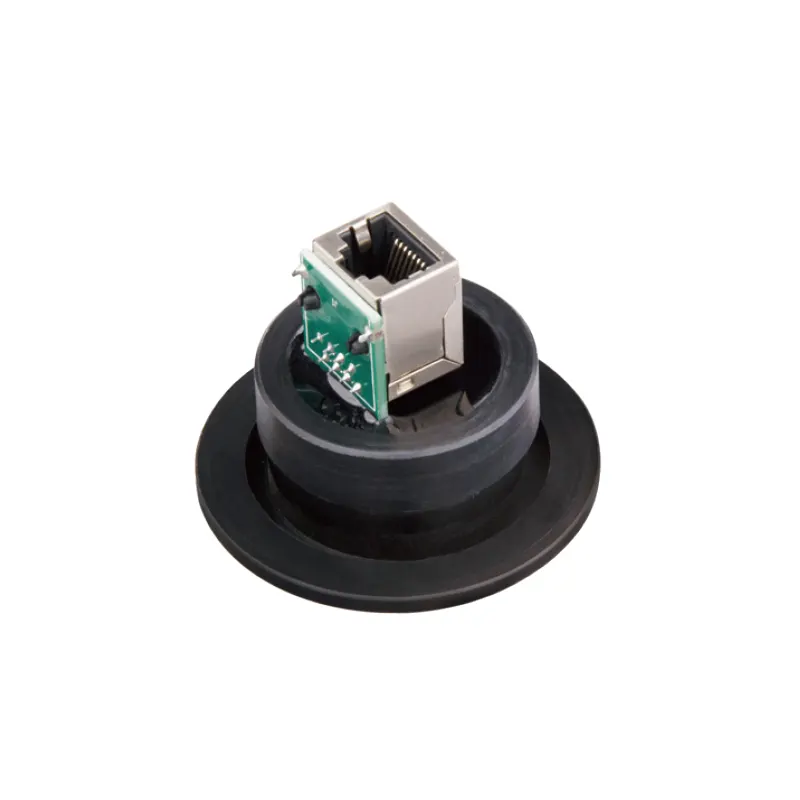
Electrical and data feedthroughs
Feedthroughs carry power, signals, gas, or data through the chamber wall without breaking the seal. A KF40 Ethernet feedthrough is one accessory for bringing an Ethernet connection through a KF40 port. It provides a sealed data path; it does not purify the atmosphere or increase the purification capacity of the box. Installation, cable compatibility, connector type, and leak integrity must be confirmed for the specific chamber. Review the KF40 Ethernet feedthrough when network access inside the enclosure is part of the process plan.
Which Specifications Should You Check?
Start with the work the box must support, then check the specifications that affect that work. For this type of system, the most relevant items are usually:
- Internal dimensions and usable height, including the space occupied by shelves, fixtures, and the antechamber opening.
- Glove port size, spacing, glove material, and the reach needed for routine tasks.
- Antechamber volume, door configuration, and transfer procedure.
- Leak integrity, chamber working pressure, and antechamber vacuum rating, treated as separate parameters.
- Purification capacity, regeneration requirements, and whether redundant purification is needed.
- Water and oxygen sensor range, resolution, accuracy, calibration method, and alarm settings.
- Available feedthrough ports, electrical services, gas supply, and data connections.
Units and test conditions matter. A water or oxygen reading in ppm is not a leak rate, and a pump's ultimate vacuum is not the same as the chamber's working pressure. Sensor resolution is not measurement accuracy; a display that changes in small increments can still have larger uncertainty. If a data sheet gives a value without stating where it was measured, how the box was prepared, or what load was present, treat it as a point to clarify rather than a guaranteed operating value.
Where Is It Suitable, and What Are Its Limits?
The strongest fit is work in which samples must be handled, assembled, tested, or stored with limited exposure to moisture and oxygen. Examples include lithium metal and solid-state battery components, perovskite and OLED materials, semiconductor and air-sensitive chemical samples, and advanced materials that degrade in ambient air. The double-sided, six-glove layout is especially useful when two people need to collaborate, when a process has several hand positions, or when a larger chamber must hold fixtures and small equipment.
The box is not automatically suitable for every air-sensitive task. It is not a sterile isolator, a biological safety cabinet, or a fume hood, and it does not by itself provide containment certification for toxic or hazardous materials. Purification targets water and oxygen; particle control needs filtration, solvent vapor needs a compatible trap or sorbent, and each sample must be checked for compatibility with the gloves, seals, and working gas. Not every material is inert in every gas.
Very high outgassing loads, wet samples, damaged gloves, or frequent large transfers can overwhelm the purification system. The operating procedure must limit the load and allow recovery before sensitive work begins. Also distinguish continuous purification from vacuum replacement: a purifier recirculates and treats gas, while antechamber evacuation and backfill reduce air ingress. Both can support atmosphere control, but neither is a substitute for the other.
How Should You Select or Integrate It?
Use a short process brief before comparing hardware. Describe the largest and heaviest item that must be handled, the tools and fixtures inside the box, the number of operators, the expected duration of each session, the solvents or gases involved, and the atmosphere specification that actually matters. Then check the layout, transfer path, purification package, and monitoring against that brief.
- Map the work: sample size, tooling, temperature, solvents, handling frequency, and required reach.
- Define the atmosphere: target water and oxygen levels, acceptable recovery behavior, alarm strategy, and recordkeeping needs.
- Plan the layout: glove port positions, antechamber location, shelves, windows, feedthroughs, and space for equipment.
- Confirm services: gas supply, power, exhaust, network, floor loading, and maintenance access. Ask TENCAN to confirm the actual requirements for the chosen configuration.
- Agree on verification: request a dimensioned drawing, utility schedule, operating sequence, maintenance plan, spare parts list, and acceptance criteria before installation.
For this product family, confirm the exact purification package, sensor set, antechamber arrangement, and feedthrough options for the requested configuration. Check the six-glove double-sided glove box details and verify compatibility of accessories rather than assuming that every port or option is included. A KF40 Ethernet feedthrough, for example, is useful only when the chamber has a suitable port and the internal cable and connector arrangement has been reviewed.
Frequently Asked Questions
Is a gas-purified glove box the same as a vacuum glove box?
No. A gas-purified box uses a recirculating system to treat the internal atmosphere, while a vacuum glove box relies on chamber evacuation and inert-gas replacement to create a controlled environment. Some purifier boxes also include vacuum antechambers, but the functions should not be conflated.
Do six gloves mean six operators can work at once?
No. Six glove positions increase access and can support collaboration, but the practical number of users depends on the internal layout, task, supervision, and safety procedure. The box is a shared workspace, not six independent stations.
Can the purification system remove solvent vapor?
Not automatically. Water and oxygen removal is a different function from solvent adsorption, and not every purifier package is compatible with every solvent. Confirm the trap, seal, and piping requirements with the manufacturer before introducing solvents.
Can a KF40 Ethernet feedthrough be added later?
That depends on the chamber design, available ports, wall preparation, and leak-testing procedure. Confirm the interface and cable arrangement with TENCAN before installation; a feedthrough is a sealed connection, not a universal retrofit.
Does a low oxygen reading guarantee zero oxygen?
No. The reading reflects the sensor, sampling point, calibration, and operating conditions. Leakage, transfer load, glove condition, and purifier status can all affect the atmosphere, so performance should be verified against agreed criteria rather than described as absolute.
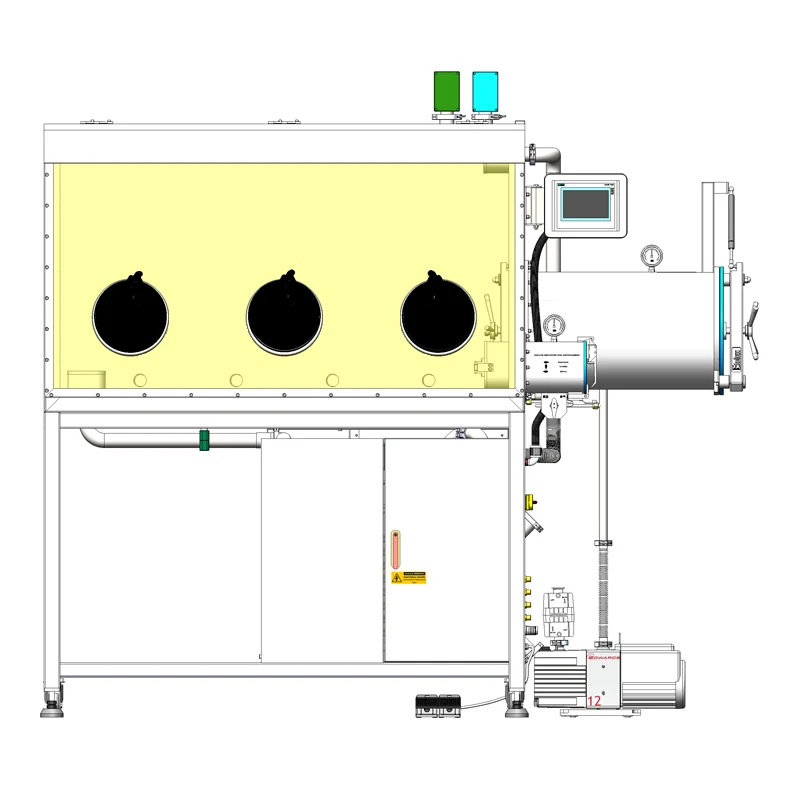
A six-glove double-sided glove box with gas purification is best understood as an integrated working system: access layout, sealed chamber, transfer path, purification loop, sensors, and operating discipline all contribute to the result. Select it by matching those elements to the materials and tasks, and confirm the details that the product name alone cannot tell you.
