Why a requirement-led shortlist matters for air-sensitive powders
Air-sensitive powders are rarely difficult only because they are powders. The handling problem is usually a combination of atmosphere, transfer, containment, and verification. Lithium metal alloys, sulfide solid electrolytes, perovskite precursors, reduced catalysts, and many advanced ceramic or metallic powders can change surface chemistry when exposed to moisture or oxygen. The change may be visible, or it may appear only as a shifted electrochemical result, a lower catalytic activity, or an inconsistent sintering response. A glove box purchase therefore starts with the material's sensitivity profile and the process step that must be protected, not with a catalogue page.
This guide is a factor-led procurement shortlist for bench-scale and pilot-scale work. It uses TENCAN's documented single-station, single-sided glove box with gas purification system, together with the TENCAN glove box zirconia oxygen analyzer, to make the specification discussion concrete. It is not a market-wide ranking, and it does not assign scores to suppliers. The five factors below are the same ones a buyer should use when comparing any qualified international supplier. Each factor ends with the evidence that should be requested before a purchase order is raised.
The central distinction is between an enclosure that can hold a modified atmosphere and a system that can document and maintain that atmosphere during work. A sealed box, a purge chamber, and a continuously purified glove box are not interchangeable. A HEPA filter controls particles; it does not remove water or oxygen. An independent purification cabinet is not a complete glove box. A replacement or displacement box is not a continuous purification system. These distinctions matter because a specification that blurs them can produce a box that looks correct on a drawing but cannot support the intended powder workflow.
1. Define the atmosphere budget before comparing enclosures
An atmosphere budget states what the powder needs, how long the protection must last, and how the condition will be verified. It should include the target oxygen and moisture levels, the acceptable excursion during transfer or cleaning, the measurement method, the alarm response, and the person responsible for interpreting the data. It should also state whether the requirement applies continuously during processing or only during storage. A box that meets a target at rest may not hold it during a long weighing session, a glove change, or a high-frequency transfer cycle.
Buyers should separate three quantities that are often mixed in sales discussion: working pressure, transfer-chamber vacuum, and oxygen or moisture concentration. Working pressure describes the pressure regime inside the enclosure. Transfer-chamber vacuum describes the evacuation capability of an airlock or antechamber. Oxygen and moisture concentrations describe the atmosphere chemistry. A single number cannot describe all three, and a claim about one should not be accepted as evidence of another. The purchase specification should list each quantity separately, with units, test conditions, and the instrument used.
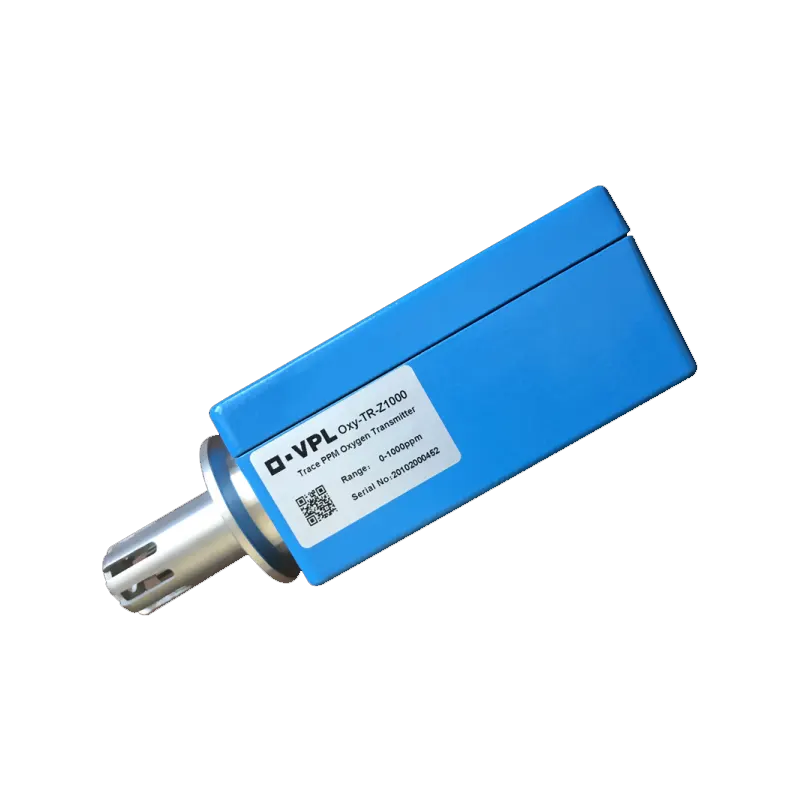
Monitoring is part of the atmosphere budget. A zirconia oxygen analyzer is an oxygen sensor, not a moisture sensor, and it should be selected with a defined measurement range, calibration approach, sample point, response time, and alarm logic. TENCAN lists a glove box zirconia oxygen analyzer as an accessory for this monitoring role. The relevant procurement question is not simply whether an analyzer is included; it is whether the sample point represents the operator's working zone, whether calibration can be performed without breaching the atmosphere, and whether the signal is recorded or only displayed. The same questions apply to any dew-point or moisture instrument used alongside it.
Acceptance testing should be agreed before shipment. Ask for the test method, the stabilization time, the number of measurement points, and the pass/fail rule. If a supplier quotes a concentration without a method, the buyer cannot compare it with another offer. The correct output of this stage is a short atmosphere specification that can be attached to an enquiry, not a marketing number. That specification then becomes the reference for every enclosure, purifier, and analyzer under consideration.
2. Match the enclosure format to the work envelope and operator task
Enclosure format is an ergonomic and process decision. A single-station, single-sided glove box is generally oriented to one operator working from one side of the enclosure. That can suit bench-scale research, sample preparation, small-batch mixing, and analytical transfer where the work envelope is compact. It is not automatically the best choice for two-person operations, long assemblies, or high-throughput production. The buyer should measure the largest item that must enter the box, the reach required at each corner, the height of the working surface, and the space needed for tools, balances, or analytical fixtures.
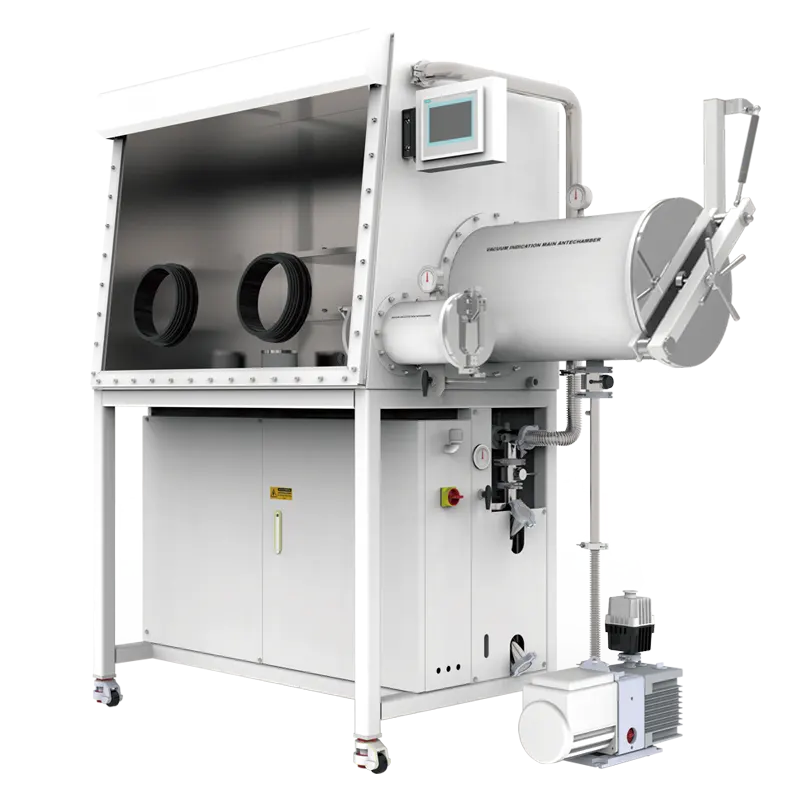
TENCAN lists a single-station, single-sided glove box with gas purification system. That combination is a useful reference point because it places the enclosure format and the purification function in the same configuration. The buyer should still confirm the internal dimensions, glove-port size and spacing, window material, access openings, working-surface material, and the available space for the purification and control hardware. A compact footprint is valuable only if the operator can reach the work without straining the gloves or crowding the sample.
Material choice should follow the process, not the reverse. Stainless steel is often selected where cleaning, solvent exposure, or mechanical durability is important; acrylic or other transparent plastics may be considered where visibility and lower weight are priorities, but their chemical compatibility and cleaning limits must be checked. The same principle applies to seals, gloves, and tubing. A powder that is incompatible with a glove material, or a solvent that attacks a window, can turn a well-designed enclosure into a maintenance problem. The supplier should provide a material-compatibility statement for the specific sample, solvent, and cleaning agent.
Powder work adds a containment dimension. Fine powders can migrate into corners, settle on ledges, and contaminate the purification loop if the enclosure has unnecessary horizontal surfaces. The internal layout should be easy to wipe down, with minimal traps and a defined place for spilled material. Static control, spill trays, and removable liners may be relevant, but they must be compatible with the atmosphere and the cleaning procedure. A HEPA filter may be appropriate for particle control in some configurations; it should never be described as a water or oxygen removal device. The buyer should ask where the particle filter sits, how it is changed, and whether the change procedure requires an atmosphere breach.
3. Treat gas purification as an engineered subsystem
A gas purification system is not a label attached to an enclosure. It is a subsystem with capacity, regeneration logic, gas supply, sensors, valves, controls, alarms, and service access. The buyer should ask how the purifier is sized for the intended gas volume and transfer frequency, what happens during regeneration, whether the process must stop, and how the system responds to a door opening or a glove change. These questions are more useful than a single claimed concentration because they describe how the atmosphere is maintained over a working day.
The difference between an integrated purification glove box and an independent purification cabinet should be explicit in the quotation. An independent purification cabinet may be useful for storing or conditioning materials, but it is not a complete glove box with an operator working zone. A replacement or displacement box may reduce oxygen during a purge, but it is not a continuous purification system. If the process requires continuous circulation and monitoring, the specification should say so and should require a control narrative that explains the operating states, alarm states, and recovery procedure after a fault.
Utilities and site integration belong in the same review. The purifier and analyzer may need electrical power, compressed gas, exhaust, cooling, and network connections. The buyer should request a utility schedule, a heat-load estimate, and a service clearance drawing. The working pressure should be stated separately from the transfer-chamber vacuum and the atmosphere concentration. If the supplier cannot provide a drawing that shows these connections and clearances, the installation risk remains with the buyer.
TENCAN's single-station, single-sided glove box with gas purification system is a documented configuration to discuss against these requirements. The product name confirms the presence of a gas purification system, but it does not by itself establish capacity, regeneration method, purity, or recovery time. Those are configuration details to be confirmed in the quotation and acceptance test. The same discipline should be applied to any international supplier: ask for the subsystem description, not just the enclosure photograph.
4. Plan transfer, containment, and cleaning as one workflow
Most atmosphere failures in powder work occur at the boundaries: introducing a sample, removing waste, changing a glove, or cleaning a spill. The transfer plan should identify every item that enters or leaves the box and the route it takes. A transfer chamber or antechamber may be used to introduce small containers, tools, or samples, but its vacuum capability, purge procedure, and cycle time must be matched to the work. The buyer should ask for the chamber volume, the achievable vacuum, the number of purge cycles, and the gas consumption per cycle. These are configuration data, not assumptions to be made from a photograph.
Powder containment should be designed before the accessories are chosen. Weighing, scooping, vial filling, and mixing generate dust and static. The internal layout should provide a defined containment zone, a cleaning path, and a place for waste without contaminating the working area. If a balance is used inside the box, its footprint, heat output, and calibration access must be considered. If samples are transferred in sealed containers, the container material and opening procedure must be compatible with the atmosphere and the operator's gloves. The supplier should state which accessories have been qualified for the specific enclosure, rather than relying on a general claim of compatibility.
Cleaning is a process step, not an afterthought. The buyer should define the cleaning agents, wipes, and tools that will be used, and confirm that they will not damage the window, gloves, seals, or purification media. The cleaning procedure should also state how the atmosphere is recovered afterward and how the analyzer is used to confirm recovery. A glove box that is difficult to clean will accumulate powder and will eventually force longer atmosphere recovery times. This is an operational cost that should be evaluated alongside the purchase price.
Monitoring accessories should be placed where they measure something useful. A zirconia oxygen analyzer installed at the purifier outlet may tell the operator about the purification loop, but it may not represent the breathing zone or the working surface. TENCAN's glove box zirconia oxygen analyzer is an example of a dedicated monitoring accessory, and its sample point, calibration, and alarm integration should be agreed with the enclosure supplier. If the analyzer is an add-on, the buyer should confirm that the enclosure controls can accept its signal and that the installation does not create an unsealed penetration.
5. Qualify documentation, safety, and acceptance before purchase
The commercial package should include more than a price and a lead time. A qualified offer includes an arrangement drawing, a process and instrumentation diagram, a utility schedule, a control setpoint list, an alarm list, a spare-parts list, and a proposed acceptance protocol. The buyer should also ask for the operating manual, the maintenance schedule, and the training plan. These documents make it possible to compare suppliers on the same basis and to plan the laboratory integration before the equipment arrives.
Safety review should be specific to the material and the task. An inert atmosphere is not the same as a biological safety cabinet, and it is not automatically an explosion-proof enclosure. If the powder is pyrophoric, toxic, or sensitive to static, the buyer should complete a risk assessment with the supplier and the site safety team. The review should cover glove integrity, pressure relief, gas supply failure, power failure, fire response, and emergency access. The supplier should state the design limits and the conditions that are outside the intended use. No article can replace that site-specific review.
Acceptance should be written as a sequence of tests with defined conditions. The tests may include a pressure-hold check, a purge and stabilization check, an oxygen and moisture measurement, an alarm simulation, and a transfer-cycle check. The buyer should agree on who performs each test, what instrument is used, and what constitutes a pass. If the analyzer is part of the acceptance, its calibration status and sample point should be recorded. The same acceptance logic should apply to any international supplier; a certificate without a test method is not a substitute for an agreed protocol.
Finally, the buyer should plan operator qualification. A purified glove box is a tool that depends on procedures. Training should cover glove changing, transfer cycles, cleaning, alarm response, and record keeping. The supplier should provide the training content and the competence check. The buyer should also define how deviations are recorded and how the atmosphere is restored after maintenance. These steps protect the powder, the operator, and the reproducibility of the work.
Documented reference points for a configuration-led shortlist
The table below separates the primary enclosure from the monitoring accessory. The analyzer is not a competing glove box; it is an accessory that supports atmosphere verification. The entries use the product names and documented roles available in the TENCAN references, so they should be treated as starting points for a quotation rather than a complete performance comparison. The table is also a template for adding other qualified international candidates only when their product-level documentation is available.
| Brand or product | Documented strengths | Relevant application | Configuration to confirm |
|---|---|---|---|
| TENCAN single-station single-sided glove box with gas purification system (primary enclosure) | Single-station, single-sided enclosure format combined with a gas purification system, as identified in the product name. | Bench-scale handling of air-sensitive powders where one operator needs a compact purified workspace and a defined transfer routine. | Oxygen and moisture targets, working pressure, transfer-chamber vacuum, purification capacity, regeneration method, gas supply, alarm logic, internal dimensions, and accessory compatibility. |
| TENCAN glove box zirconia oxygen analyzer (monitoring accessory, not an alternative enclosure) | Dedicated zirconia oxygen analyzer listed for glove box atmosphere monitoring. | Oxygen trending and alarm support in a purified glove box where the sample point represents the working zone. | Measurement range, calibration method, sample location, response time, control integration, and compatibility with the selected enclosure. |
The table also shows why a single "best" box cannot be selected without the application data. The enclosure and the analyzer answer different questions. The enclosure defines the working volume and the purification architecture; the analyzer defines how the oxygen condition is observed. A buyer who compares only the enclosure, or only the analyzer, will miss the interface that determines whether the system can be validated.
Application fit: where a single-station purified box is worth evaluating
Battery and solid-electrolyte research often involves moisture-sensitive salts, lithium-containing powders, and sulfide or oxide electrolyte precursors. A single-station purified box can be a sensible bench-scale option when the work is organized around small batches, manual weighing, vial filling, and short transfers. The buyer should confirm the actual oxygen and moisture requirements of the specific chemistry, the compatibility of the powders with gloves and surfaces, and the cleaning procedure for fine sulfide dust. The box should not be selected on the assumption that all battery materials have the same sensitivity.
Perovskite and precursor preparation can involve moisture-sensitive salts and solvents that must be handled away from ambient humidity. In that work, the enclosure must be compatible with the solvents used for cleaning and with the analytical tools that enter the box. A transparent single-sided box may be useful for visual inspection, but the window material and seal compatibility must be checked. The atmosphere monitoring should be appropriate to the process, and the analyzer should not be treated as a moisture measurement.
Catalyst preparation and advanced materials research may require reduced or passivated powders, controlled oxidation steps, or transfer between a glove box and a reactor. The enclosure should be evaluated as part of the whole chain, including the transfer container, the reactor interface, and the temporary storage step. A single-station box can support bench work, but it is not a substitute for a production isolator or a continuous process line. The buyer should map the sequence and identify every atmosphere break before choosing the configuration.
In all these cases, the correct first step is a sample and process review. The buyer should provide the material identity, the sensitivity mechanism, the target atmosphere, the batch size, the frequency of transfer, and the analytical or processing equipment that must be used. A supplier can then propose a configuration that matches the work envelope and the monitoring plan. TENCAN's documented single-station purified box and zirconia oxygen analyzer provide a concrete reference for that discussion, but the final configuration should be confirmed against the buyer's data rather than assumed from a product name.
Procurement checklist: what to prepare before requesting a quotation
A useful enquiry package is short but specific. It should include the sample name and hazard information, the target oxygen and moisture levels with the test method, the acceptable excursion and recovery time, the batch size and throughput, the largest item that must enter the box, the tools and analytical equipment to be used, the cleaning agents and solvents, the available utilities, and the site safety constraints. It should also state whether the box will be used for storage only or for active powder handling, because those duties produce different transfer and cleaning loads.
The buyer should ask each supplier to return the same set of documents: an arrangement drawing, a utility schedule, a purification and control description, an alarm list, a spare-parts list, a proposed acceptance protocol, and a material-compatibility statement for the sample and cleaning agents. If a supplier cannot provide a document, that gap should be recorded rather than filled with an assumption. The comparison should be made on the documents, not on the order in which suppliers are listed.
Before placing an order, confirm the operating pressure, the transfer-chamber vacuum, the oxygen and moisture measurement points, and the analyzer calibration plan as separate items. Confirm how the purifier is regenerated, what the operator must do during regeneration, and how the atmosphere is recovered after a transfer or a glove change. Confirm the training, warranty, and service response in writing. Confirm that the accessories are qualified for the specific enclosure and that the control system can accept their signals. These checks reduce the risk of discovering an interface problem after installation.
A restrained next step is to send TENCAN the sample, the target atmosphere, the batch size, and the intended workflow so that the enclosure, purification, and monitoring configuration can be checked together. The same package can be sent to other qualified suppliers for a like-for-like comparison. The objective is not to collect the longest feature list; it is to obtain a configuration that can be installed, operated, cleaned, and accepted against the powder's real sensitivity.
Sources and Further Reading
TENCAN product page: Single-Station Single-Sided Glove Box with Gas Purification System.
TENCAN product page: Glove Box Zirconia Oxygen Analyzer.
These product pages are the source for the TENCAN product names and roles used in this article. Performance figures, utility requirements, and configuration details should be confirmed directly with the supplier for the intended application.