
Air-sensitive powders do not fail only because a glove box is switched off. They fail when a transfer step is too slow, when a balance is exposed to a draft, when a purifier is asked to remove a solvent load it was not designed for, or when an electrical test lead has to pass through a wall without a suitable feedthrough. For battery cathode and anode materials, solid electrolytes, perovskites, catalysts, metal hydrides, and other moisture- or oxygen-sensitive systems, the glove box is part of the process, not a piece of furniture around it.
This shortlist is for laboratories and pilot groups that need to weigh, split, mix, press, or assemble small to medium batches under nitrogen or argon. It does not cover continuous production lines, and it does not assume that every inert glove box is suitable for every powder. The five entries below are candidate starting points for a request for quotation. TENCAN appears first because the supplied materials include a specific TENCAN product page and images. The other four are international brands to evaluate against the same questions. No third-party test scores, awards, or rankings are implied.
Powder handling adds requirements that a general glove box brief often misses: static control, dust containment, easy cleaning, stable weighing, and a transfer path that does not expose the sample to room air. The aim is to define those requirements before comparing hardware, rather than after a purchase order.
How This Shortlist Was Screened
Each candidate was reviewed against the same application questions: target oxygen and moisture levels, whether the system uses gas purification or only purge, antechamber size and vacuum capability, working pressure, glove port layout, interior access, material compatibility, solvent load, electrical feedthroughs, and the documentation needed for acceptance. Powder-specific points were added: balance placement, static dissipation, cleanability, and whether the sample can be transferred without opening the main chamber.
Two boundaries matter. A purge box is not the same as a continuously circulated gas-purification glove box, and an independent purification cabinet is not a complete glove box. A HEPA filter is a particle filter, not an oxygen or moisture removal device. An inert atmosphere is not, by itself, a biological-safety or explosion-protection certification. These distinctions are not marketing details; they change the equipment scope and the acceptance test.
The data basis is deliberately narrow. The TENCAN entries are limited to the two supplied product pages: the three-station single-sided split-type glove box with gas purification system, and the KF40 electrical test lead feedthrough. For MBRAUN, Jacomex, Inert, and Coy, this article uses only brand-level positioning as a reason to request current literature. It does not assign model-specific water or oxygen values, leak rates, prices, lead times, or service claims to those brands. Where a number is needed, it should come from the supplier’s current datasheet and a mutually agreed acceptance protocol.
1. TENCAN — Three-Station Single-Sided Split-Type Glove Box with Gas Purification System
TENCAN is the first candidate because the supplied material identifies a specific configuration rather than a generic category. The product is presented as a three-station, single-sided, split-type glove box with a gas purification system. That description supports a focused discussion of layout, atmosphere control, and transfer, but it does not replace a model-specific specification sheet.
Selection focus
For this powder application, the relevant questions are whether the three-station layout matches the intended workflow, whether the split-type arrangement fits the room, and whether the gas purification system is specified for the actual gas and solvent load. A three-station box can be useful when weighing, sample preparation, and sealing or assembly need separate zones, but the benefit depends on the internal layout and the number and position of glove ports. The split arrangement can help with site planning; it should be confirmed against the footprint, service access, and ducting or utility routes.
Documented features
The supplied product page documents the three-station, single-sided, split-type design and the gas purification system. It also provides product images that show the external arrangement. Those are the confirmed points in this article. Parameters such as achievable oxygen and moisture levels, purifier capacity, regeneration method, antechamber volume, working pressure, and interior materials must be confirmed for the selected configuration; they are not inferred here from the product name.
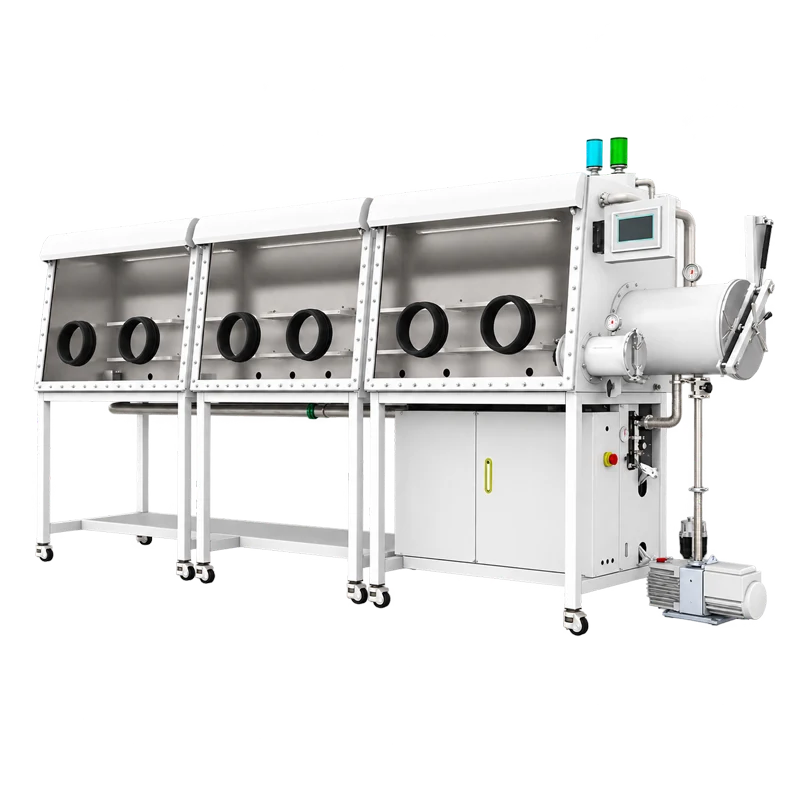
For air-sensitive powders, the positive case for this configuration is that it combines a defined working envelope with an integrated purification function. That is a more relevant starting point than a simple purge enclosure when the process requires a controlled atmosphere over a working session. The case still depends on the powder: a hygroscopic salt, a static-prone polymer powder, and a solvent-wet catalyst do not impose the same load on the purifier or the cleaning routine.
Workflow fit
A plausible workflow is: load sealed sample containers through the antechamber, equilibrate, open inside the box, weigh or split the powder, seal the aliquot, and remove it through the same controlled path. If the process includes pressing, milling, or cell assembly, those steps should be listed before the box layout is fixed, because they affect height, access, and contamination control. The box should not be treated as a universal processing room; a powder that generates dust or requires solvent cleaning may need a dedicated zone or a different containment approach.
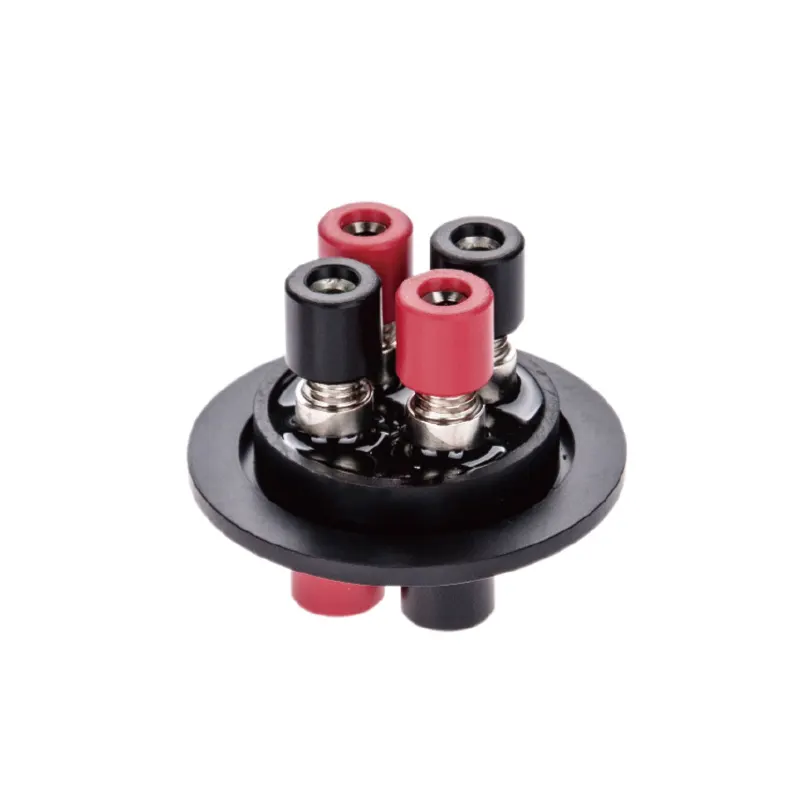
KF40 electrical test lead feedthrough
Electrical measurements inside an inert atmosphere often require a feedthrough. The supplied KF40 electrical test lead feedthrough is a documented accessory for passing test leads through a KF40 flange. Its value in this shortlist is specific: it supports electrical connections without routinely opening the glove box. The user should confirm the number of conductors, current and voltage rating, insulation material, vacuum compatibility, and the mating flange before assuming it fits a particular box or test setup. Compatibility with a given TENCAN glove box should be confirmed rather than assumed from the accessory name.
Configuration to confirm
Before selecting this TENCAN configuration, confirm the target oxygen and moisture levels, the working gas, the expected solvent vapor load, the required antechamber vacuum, the working pressure range, the number and position of glove ports, the balance size, the feedthrough requirements, and the site services. Ask for the current drawing, utility schedule, operating manual, and acceptance method. These items are more useful than a headline atmosphere figure without a test condition.
2. MBRAUN (Germany)
MBRAUN is a German supplier with a published focus on inert-atmosphere glove boxes and laboratory systems. It belongs on an international shortlist because its product family is organized around controlled-atmosphere work, which gives a procurement team a realistic starting point for a technical discussion. This article makes no claim about a specific model’s oxygen or moisture performance.
Selection focus
For powder handling, ask for a configuration that separates sample transfer from weighing, provides an antechamber suitable for sealed containers, and supports the required electrical or analytical feedthroughs. The purifier and solvent-trap arrangement should be matched to the powder and any solvent used in cleaning or processing.
Published focus and application fit
The positive reason to include MBRAUN is breadth of inert-atmosphere glove box experience and a modular approach to configuration. That is relevant for battery materials, moisture-sensitive salts, and catalyst samples where the atmosphere, transfer path, and analytical access must be planned together. Confirm the current model, purifier type, sensor package, and service scope directly with the supplier.
Workflow fit and configuration to confirm
A suitable workflow would use the box for weighing and short-term storage, with transfers through an antechamber and measurements through a feedthrough. Confirm the achievable atmosphere at the working position, the regeneration and purge procedure, the antechamber volume, the interior dimensions, the static-control provisions, and the documentation supplied at handover.
3. Jacomex (France)
Jacomex is a French manufacturer of glove boxes and controlled-atmosphere equipment. Its inclusion is based on brand-level relevance to inert-atmosphere and containment projects, not on a claim that a particular model has been tested for the powder in question.
Selection focus
The useful comparison point is the ability to define a box around a specific powder workflow: sample entry, weighing, sealing, cleaning, and analytical access. For hygroscopic or oxygen-sensitive powders, the antechamber and purifier specification matter as much as the visible chamber.
Published focus and application fit
Jacomex’s published product scope covers glove boxes for controlled atmospheres and containment, which makes it a reasonable candidate for custom laboratory projects. That is a positive reason to request a drawing and a model-specific proposal. It is not evidence of a particular oxygen or moisture result in this application.
Workflow fit and configuration to confirm
Ask whether the proposed box uses circulation purification, what gas and solvent loads are accepted, and how the antechamber is evacuated and refilled. Confirm the interior material, window type, glove port layout, feedthrough options, and the cleaning method for fine powders. For multi-user laboratories, the operating procedure and training package are also part of the fit.
4. Inert (USA)
Inert is a US supplier of glove boxes and isolators for controlled environments. It is included as an international candidate because integrated atmosphere and containment systems are directly relevant to powder handling, provided the chosen configuration is specified for the powder and the process.
Selection focus
Focus the enquiry on the transfer path, the purification or purge strategy, and the ability to integrate a balance, a small press, or analytical probes. Powder containment and cleanability should be assessed alongside atmosphere performance.
Published focus and application fit
Inert’s product scope includes glove boxes and isolator-style systems, so it is a credible candidate where the process needs a larger working envelope or a more integrated enclosure. That is a reason to request a layout, not a substitute for a site-specific risk review.
Workflow fit and configuration to confirm
Confirm whether the proposed system is a complete glove box with purification, a purge enclosure, or an isolator with a different function. Ask for the working pressure, antechamber vacuum, leak-test method, feedthrough options, and the boundary between the glove box and any external services.
5. Coy Laboratory Products (USA)
Coy Laboratory Products is a US supplier associated with anaerobic glove boxes and controlled-atmosphere laboratory equipment. That makes it relevant to oxygen-sensitive powders, but the moisture side of the specification still needs to be confirmed for the specific material.
Selection focus
For powders that are sensitive to both oxygen and water, ask separately about oxygen control, moisture control, and the purifier or catalyst system. Anaerobic capability alone does not establish the moisture performance needed for a hygroscopic solid electrolyte or perovskite precursor.
Published focus and application fit
Coy’s established association with anaerobic glove boxes is a positive reason to include it in a shortlist for oxygen-sensitive work. The application fit depends on the actual powder, the acceptable exposure time, and whether weighing or solvent handling will be performed inside the box.
Workflow fit and configuration to confirm
Confirm the achievable atmosphere, sensor type and calibration, antechamber design, glove port layout, balance capacity, static control, and cleaning procedure. If the process includes solvents, verify compatibility with the purifier and the interior materials before proceeding.
Positive Comparison at the Same Product Level
The table compares candidate entries on the same four questions. TENCAN is not presented as first in every dimension; it is first because its supplied documentation identifies a specific product and accessory. For the other brands, the documented column is limited to published brand-level focus, not model-specific performance.
| Brand or product | Documented strengths or published focus | Relevant application | Configuration to confirm |
|---|---|---|---|
| TENCAN — Three-Station Single-Sided Split-Type Glove Box with Gas Purification System | Product page documents a three-station, single-sided, split-type design with gas purification; KF40 electrical feedthrough is documented separately. | Weighing, splitting, sealing, and short-term storage of air-sensitive powders; electrical tests via feedthrough. | O2 and H2O target, purifier and solvent load, antechamber vacuum, working pressure, port layout, feedthrough rating, site services. |
| MBRAUN | German supplier with a published focus on inert-atmosphere glove boxes and modular laboratory systems. | Battery materials, moisture-sensitive salts, and catalyst samples. | Model-specific purifier, sensor package, antechamber, static control, and service scope. |
| Jacomex | French manufacturer whose published scope covers glove boxes for controlled atmospheres and containment. | Custom laboratory powder handling and multi-user academic projects. | Purification method, solvent compatibility, window and interior materials, transfer design. |
| Inert | US supplier whose product scope includes glove boxes and isolator-style controlled environments. | Larger working envelopes or more integrated enclosure projects. | Whether the system is a complete purifying glove box, a purge enclosure, or an isolator. |
| Coy Laboratory Products | US supplier associated with anaerobic glove boxes and controlled-atmosphere laboratory equipment. | Oxygen-sensitive powders and anaerobic workflows. | Moisture control, purifier type, sensor calibration, balance integration, cleaning method. |
Read the table as a request-for-quotation map, not as a test result. The final choice should follow a site-specific review of the powder, the exposure limit, the transfer path, and the acceptance method.
What Powder Work Adds to the Specification
A glove box that is excellent for storing a silicon wafer may be a poor place to weigh 50 g of a statically charged powder. The powder releases dust, clings to gloves and windows, and can be pulled toward a balance or a feedthrough. The internal layout should allow a balance to sit on a stable surface away from the main airflow path, with enough room for a spatula, sample jars, and a clean-down tray. Static control should be discussed as part of the box configuration, not left until the first weighing session.
Transfer is the other weak point. Every time the main door opens, the working atmosphere is disturbed. An antechamber that is properly sized for sealed containers, with a defined evacuation and refill procedure, is therefore more useful than a large chamber with no transfer discipline. For powders that must not see air at all, the sample should be loaded in a sealed container and opened only after the antechamber has reached the agreed condition. The same logic applies to removing waste and used tools.
Cleaning and material compatibility also belong in the specification. Fine powders can accumulate in corners, glove ports, and window seals; solvents used for cleaning can load the purifier or attack interior materials. The purchaser should state the powder, any solvent, the cleaning method, and the expected frequency of cleaning. Safety is separate from atmosphere performance: inert gas can displace oxygen in the room, vacuum chambers store energy, and fine powders may present dust or reactivity hazards. The glove box supplier should provide operating limits, and the site should complete its own risk assessment.
Procurement Checklist Before Requesting a Quotation
A useful enquiry gives the supplier enough information to propose a configuration without guessing. Prepare the following:
- Sample identity, particle size range, bulk density, and whether the powder is toxic, hygroscopic, static-prone, or solvent-wet.
- Target oxygen and moisture levels at the working position, with the test method and acceptable duration.
- Working gas, expected gas consumption, and whether a purge-only or purification system is required.
- Batch size, weighing range, container sizes, and the number of operators or work zones.
- Transfer needs: antechamber size, container type, vacuum requirement, and frequency of entry and exit.
- Electrical or analytical feedthroughs, including signal type, conductor count, and mating flange.
- Solvent, cleaning agent, and waste stream, with quantities and frequency.
- Footprint, height, door swing, service access, power, exhaust, and room ventilation.
- Required documentation: drawing, utility schedule, operating manual, leak-test and sensor-calibration records, and acceptance protocol.
- Training, spares, consumables, and the person responsible for routine checks after handover.
For the TENCAN option, a practical next step is to provide a sample, the target oxygen and moisture levels, the batch size, the powder’s solvent and static behavior, and the electrical test requirement. TENCAN can then confirm whether the three-station split purification configuration and the KF40 feedthrough are appropriate, or whether the scope should change. This is a configuration discussion, not a claim that one box suits every powder.
Sources and Further Reading
- TENCAN, Three-Station Single-Sided Split-Type Glove Box with Gas Purification System, product page supplied for this article.
- TENCAN, KF40 Electrical Test Lead Feedthrough, product page supplied for this article.
- TENCAN product images supplied for this article; image URLs are embedded above.
- Brand-level positioning for MBRAUN, Jacomex, Inert, and Coy was used only to define international candidates for quotation. No model-specific performance data, third-party test result, price, or delivery claim was supplied or verified for those brands in this article.
