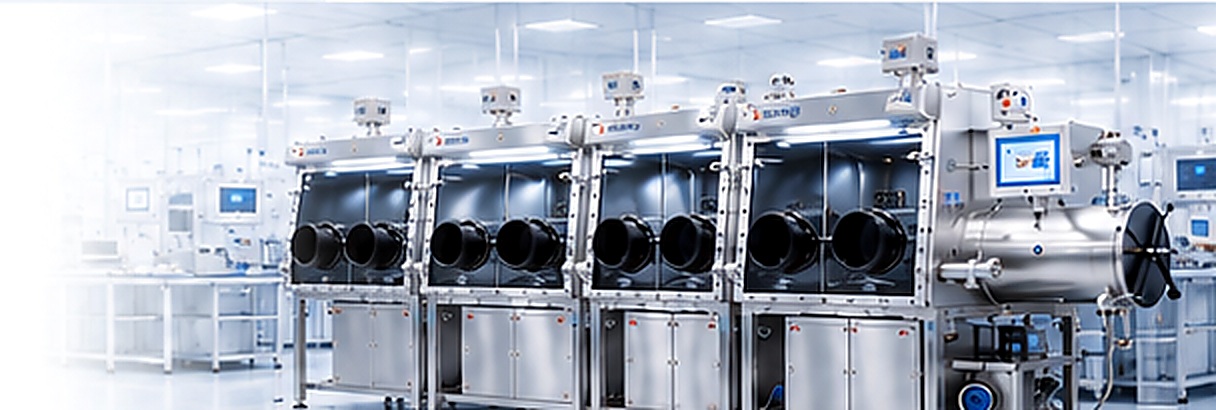
If you are working with air-sensitive materials, a glove box that maintains a low-moisture, low-oxygen environment is one of the most important pieces of equipment in your laboratory. Among various configurations, the single-station single-sided glove box with gas purification system is a popular choice for individual researchers, small research teams, and labs that need a compact yet capable inert atmosphere workstation. In this article, we will walk through how this type of glove box works, what it is typically used for, and what you should consider when selecting one for your specific applications.
What Is a Single-Station Single-Sided Glove Box with Gas Purification?
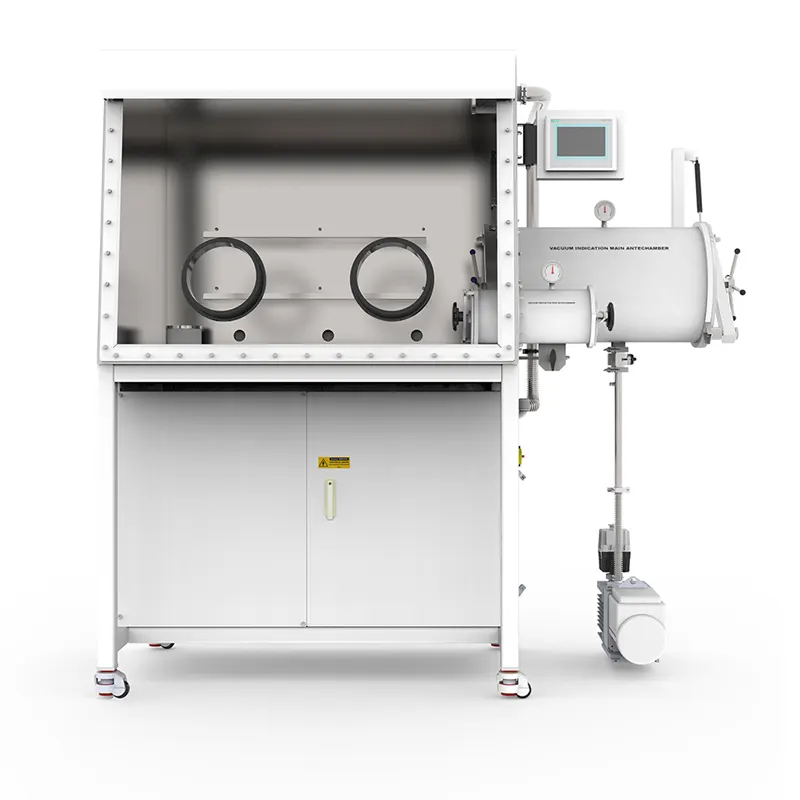
A single-station single-sided glove box refers to an enclosure designed for one operator working from one side of the chamber. It typically includes one or two glove ports on the front panel, allowing a single researcher to handle materials inside the sealed compartment. The integrated gas purification system continuously circulates and cleans the internal atmosphere by removing moisture and oxygen using a combination of catalysts and molecular sieves.
The chamber itself is made of materials such as stainless steel or acrylic, with transparent windows and sealed glove ports. The purification system often contains a copper-based catalyst for oxygen removal and a molecular sieve for water vapor adsorption. In many laboratory glove boxes, the system can maintain H₂O and O₂ levels below 1 ppm, although achieving and sustaining such low levels depends on several factors including the leakage rate of the box, glove integrity, purge operation frequency, and the quality of the inert gas supply.
How Does the Gas Purification Cycle Work?
Understanding the purification cycle helps you operate the glove box more effectively and troubleshoot when levels rise. Here is how it typically works:
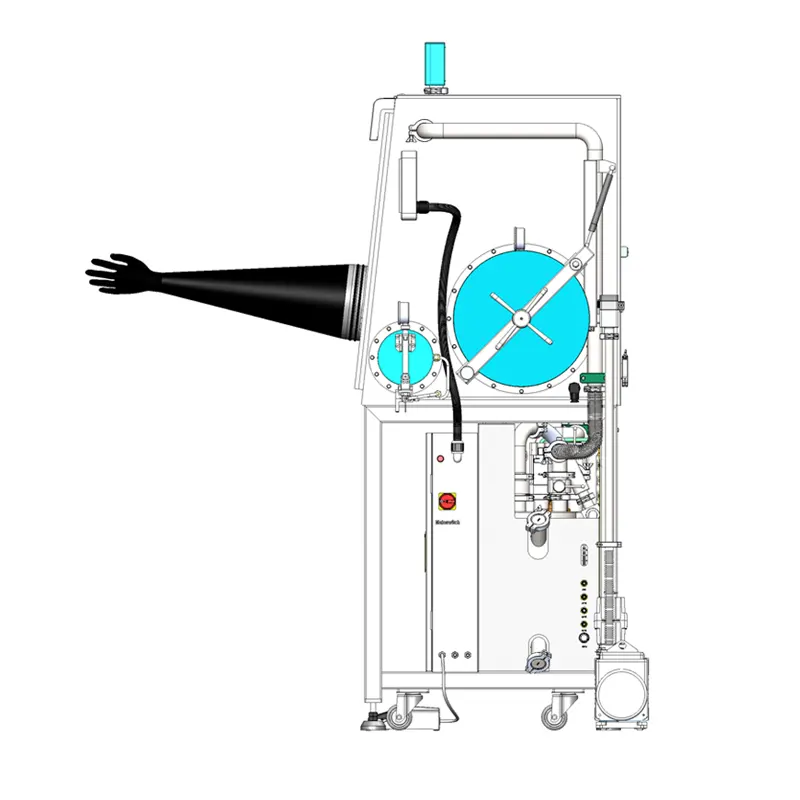
1. Circulation. A blower draws gas from the main chamber through a purification column filled with adsorbent and catalyst materials. The gas passes through a molecular sieve to capture H₂O, and then through a copper-based catalyst where O₂ reacts with the catalyst to form copper oxide.
2. Clean gas return. After the column, the purified gas flows back into the chamber, creating a continuous loop. The circulation rate — often in the range of 60 to 120 m³/h depending on chamber volume — determines how quickly the atmosphere can be cleaned.
3. Regeneration. Over time, the purification material becomes saturated. Regeneration is needed to restore its capacity. This is typically done by heating the column to around 200–300°C while purging with a mixture of inert gas and a reducing gas (such as a small percentage of hydrogen in nitrogen). The process removes adsorbed moisture and reduces copper oxide back to active copper, allowing the purification column to be reused many times. Regeneration duration and frequency vary with usage; many systems require regeneration every few months under normal laboratory operation.
What Materials and Processes Benefit from a Single-Station Single-Sided Glove Box?
This compact configuration is particularly suited for individual researchers or small-scale experiments where only one operator needs to work at a time. Common applications include:
- Lithium battery research: handling lithium metal, solid electrolytes, and cathode/anode materials that react with moisture and oxygen.
- Perovskite solar cell fabrication: depositing and testing perovskite layers in a controlled inert atmosphere to prevent degradation.
- OLED and display materials: processing organic light-emitting materials that are sensitive to oxygen and water.
- Nanomaterial synthesis: working with metal-organic frameworks (MOFs), quantum dots, or air-sensitive nanoparticles.
- Pharmaceutical & chemical research: handling moisture-sensitive reagents, catalysts, or intermediates.
- 3D printing with reactive powders: powder handling and printing in an inert atmosphere to avoid oxidation.
Because the single-station design occupies less floor space and requires a lower initial investment compared to larger multi-station systems, it is often the preferred choice for budget-conscious labs or those just starting inert atmosphere work.
Key Selection Factors for a Single-Station Single-Sided Glove Box
When evaluating a single-station single-sided purification glove box, you should consider several factors to ensure it matches your specific needs:
Chamber Size and Usable Space
A typical single-station chamber might have an internal length of around 1200 mm, depth of 750 mm, and height of 900 mm, but dimensions can vary. The interior space must accommodate your equipment (balances, hot plates, spin coaters, etc.) while leaving enough room to manipulate materials comfortably. Check the usable width between glove ports and the clearance above the floor.
Number of Gloves and Port Configuration
Most single-station units feature two glove ports, but some models offer three gloves for more flexibility. Decide whether you need one or two gloves per operator. The glove material is also important: butyl rubber offers excellent resistance to many solvents and low moisture permeability; chloroprene is another common option; and EPDM may be used for certain applications.
Purification System Type and Regeneration Method
For most inert atmosphere work, a gas purification system with an integrated or external regeneration unit is essential. Some glove boxes come with a standard purification column that can be regenerated in place, while others require sending the column back to the manufacturer. Consider whether the system supports automatic regeneration or manual control. Regeneration typically takes several hours and may require a small amount of hydrogen in the regeneration gas mixture.
H₂O and O₂ Monitoring and Control
Accuracy of moisture and oxygen analyzers directly affects your confidence in experiment conditions. Electrochemical oxygen sensors are common, but they may need periodic calibration. Electrolytic-type moisture sensors can provide readings down to sub-ppm levels. The analyzers should be placed in the circulation loop to measure representative atmosphere quality. Remember that achieving < 1 ppm for both H₂O and O₂ is possible but requires proper maintenance and careful operation of the antechamber.
Antechamber (Transfer Chamber) Configuration
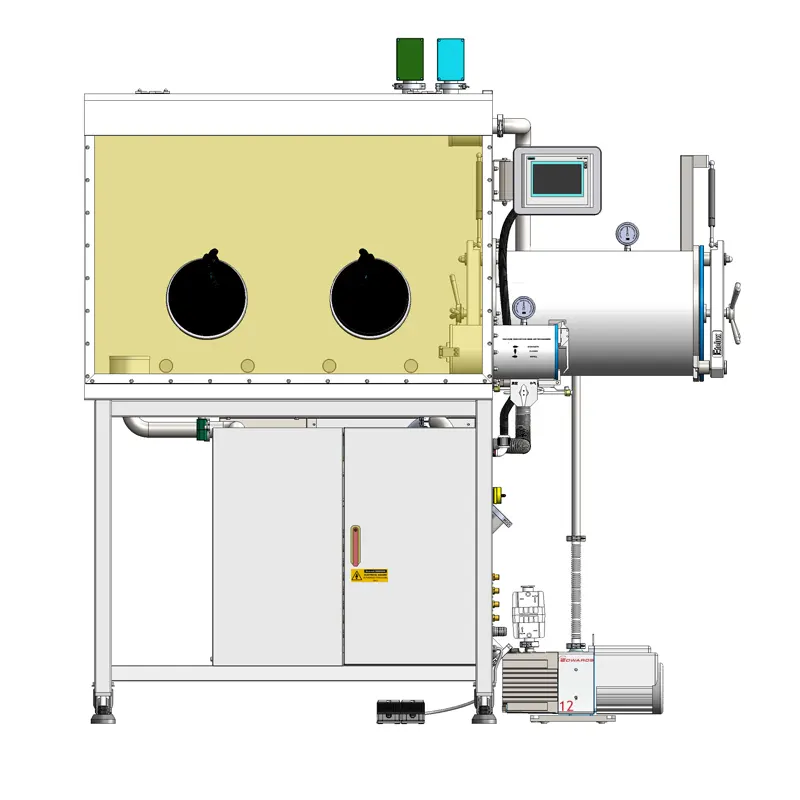
A standard single-station glove box usually includes a small antechamber on one side for transferring samples in and out without breaking the main atmosphere. Some systems also offer a large antechamber for larger equipment or bulk material loading. The antechamber should have a vacuum pump and a vent valve to perform controlled purge cycles. A typical cycle might involve evacuating to a set vacuum level and then refilling with inert gas, repeated 3 to 5 times to reduce moisture and oxygen carryover.
Control System and Data Logging
Modern glove boxes are equipped with PLC-based control and a touch screen interface for monitoring H₂O, O₂, pressure, and gas flow. Some models include data logging capabilities for tracking atmosphere history, which is valuable for quality assurance and process reproducibility. Safety features such as overpressure protection, oxygen level alarms, and emergency stop buttons are also important considerations.
Factors That Influence Actual H₂O and O₂ Control Performance
Even with a high-quality gas purification system, the actual sustained levels of moisture and oxygen depend on several real-world factors:
- Leakage rate of the box: A tight enclosure with a leakage rate below 0.05 vol%/h is desirable. Regular leak testing is recommended.
- Glove integrity: Tiny pinholes or tears in gloves can allow rapid ingress of air. Glove replacement is part of routine maintenance.
- Antechamber operation discipline: Every time you open the inner door, even after purging, some contaminants enter. Running three or more pump/purge cycles minimizes this.
- Purification column condition: As the catalyst and molecular sieve approach saturation, the efficiency drops. Regeneration restored capacity, but over many cycles, the material eventually needs replacement.
- Inert gas purity: Using high-purity argon or nitrogen (e.g., 99.999% or better) reduces the initial contaminant load.
- Ambient conditions: High humidity in the laboratory can accelerate moisture ingress through gloves and seals.
- Materials inside the box: Some samples release moisture or oxygen (e.g., from solvents or hydrates). A solvent purification module may be needed if your process introduces volatile compounds.
Is a Single-Station Single-Sided Glove Box Right for Your Lab?
This type of glove box is ideal if you are a single researcher or a small team working on one project at a time. It offers a compact footprint, lower cost, and often sufficient atmosphere control for most sensitive material research. However, if you frequently need two operators working simultaneously or require a large internal volume for bulky equipment, you might consider a two-station or double-sided configuration.
Before making a purchase decision, it helps to outline your requirements clearly: what materials will you handle, what is the target atmosphere specification, how often will you transfer samples, and what is your available laboratory space. Having these details ready will allow a glove box supplier to recommend the most suitable options.
A well-chosen single-station single-sided glove box with gas purification can greatly expand your ability to work with air-sensitive materials reliably. By understanding the principles behind its operation and the factors that affect performance, you can maximize uptime and experiment reproducibility. If you are exploring options, take time to compare purification system features, regeneration convenience, and after-sales support to find the best fit for your research needs.