
What is a Vacuum Pump Oil Mist Filter?
At its core, a vacuum pump oil mist filter is a specialized filtration device used in conjunction with vacuum pumps, particularly in glove box systems and other inert atmosphere setups. Laboratories and industrial facilities that rely on vacuum pumps for processes such as antechamber evacuation, material drying, or solvent removal use this filter to capture oil mist and aerosols generated during pump operation. By trapping these fine oil droplets, the filter prevents them from being released into the ambient air, protecting both the environment and laboratory personnel, while also reducing oil consumption and extending pump maintenance intervals.
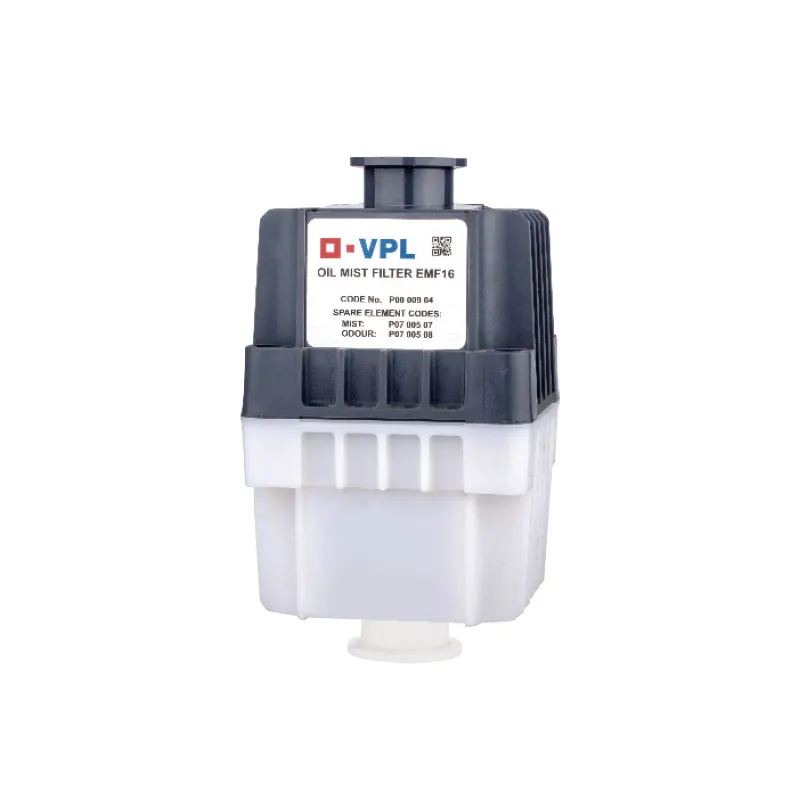
Core Function and Working Principle
The vacuum pump oil mist filter is installed on the exhaust port of a vacuum pump. When the pump operates, it compresses gas and inevitably carries fine oil droplets (mist) into the exhaust stream. The filter uses a combination of coalescing and filtration mechanisms to separate these oil aerosols from the gas. The gas passes through a filter element, typically made of borosilicate glass fiber or other high-efficiency media, which causes the small oil droplets to coalesce into larger droplets. Gravity then pulls these larger droplets down into a collection chamber at the bottom of the filter housing, where they can be drained or recycled back into the pump. The cleaned gas is then released into the atmosphere, containing only trace amounts of oil (often below 1 mg/m³).
In a glove box vacuum pump system, the oil mist filter is essential for maintaining the integrity of the inert atmosphere. During antechamber evacuation, the pump draws out air and any contaminants. Without an oil mist filter, oil vapor could backflow into the antechamber or the glove box, compromising the low water and oxygen levels required for sensitive experiments. The filter also reduces noise and prevents oily residues from coating the pump exhaust line and laboratory surfaces.
Key Components and Technology
While the vacuum pump oil mist filter itself is a relatively simple device, its design incorporates several key elements:
- Filter Element: The heart of the filter, typically a high-surface-area coalescing medium that effectively captures sub-micron oil droplets. The material is chosen for high efficiency and low pressure drop.
- Housing and Drain: A robust, often stainless steel or aluminum housing that withstands vacuum and pressure fluctuations. A manual or automatic drain valve at the bottom allows collected oil to be removed without disassembly.
- Pressure Indicator: Some models include a pressure gauge or differential pressure indicator to signal when the filter element needs replacement, ensuring optimal performance.
- Connections: Standard KF or NW flanges for easy integration into the pump exhaust line, such as the KF vacuum clamp system.
There are generally two types: standard exhaust filters for general purpose and high-efficiency filters for ultra-clean environments. The choice depends on the application's sensitivity to oil contamination.
Key Performance Indicators and Selection Criteria
When selecting a vacuum pump oil mist filter for a glove box system, consider the following factors:
- Filtration Efficiency: Look for filters that remove at least 99.9% of oil mist (0.3 μm particles) to ensure minimal oil carryover.
- Flow Rate: The filter must match the pump's pumping speed (e.g., in L/min or CFM) to avoid excessive backpressure, which can reduce pump performance.
- Pressure Drop: A low pressure drop is preferred to maintain pump efficiency. Typical values are below 50 mbar at rated flow.
- Oil Return Mechanism: Some filters have an integrated return line that sends collected oil back to the pump, reducing oil consumption and maintenance. This is especially useful for continuous operation.
- Compatibility with Pump Type: Ensure the filter is suitable for the pump lubricant (e.g., mineral oil, synthetic oil) and can handle the operating temperature.
- Ease of Maintenance: Filters with replaceable elements and easy drain access simplify routine upkeep.
For glove box applications, it is also wise to consider the filter's ability to handle occasional solvent vapors if the pump is used for solvent removal. In such cases, an organic solvent vapor adsorption system may be needed in addition to the oil mist filter.
Applications and Selection Suggestions
Vacuum pump oil mist filters are indispensable in any laboratory or production environment where vacuum pumps are used. In glove box systems, they are crucial for:
- Antechamber Evacuation: Preventing oil backflow during sample transfer in and out of the glove box.
- Glove Box Drying and Regeneration: Protecting the pump during regeneration cycles of the gas purification system.
- Material Processing: When vacuum ovens or other vacuum equipment are integrated with the glove box.
For users operating a single glove box, a compact, high-efficiency filter with a manual drain is often sufficient. For multi-glove box facilities or continuous production, consider filters with automatic oil return and replaceable elements to reduce downtime. Always check the filter's compatibility with the pump's exhaust port size and thread type.