What is a KF Stainless Steel Flexible Bellows?
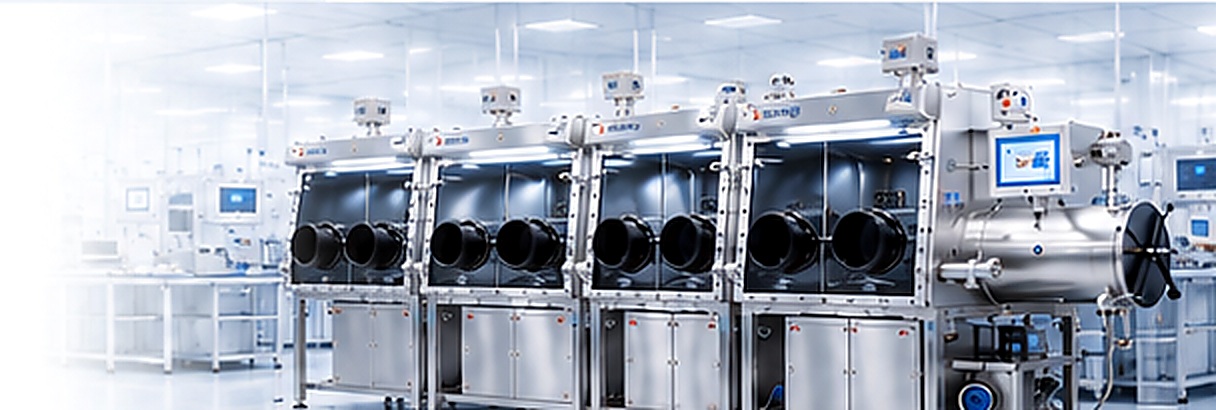
At its core, a KF stainless steel flexible bellows is a specialized vacuum component used to create a flexible, leak-tight connection between sections of a vacuum system or a glove box. Laboratories and industrial facilities use it to reliably link different parts of a vacuum network while accommodating thermal expansion, mechanical vibration, and minor misalignment without compromising the ultra-low pressure environment. Typically constructed from 304 or 316L stainless steel, these bellows are designed to withstand exposure to high temperatures, corrosive chemicals, and constant flexing. They are commonly integrated into glove box systems, vacuum pumps, and gas purification loops to maintain the integrity of the inert atmosphere.
Core Function and Working Principle
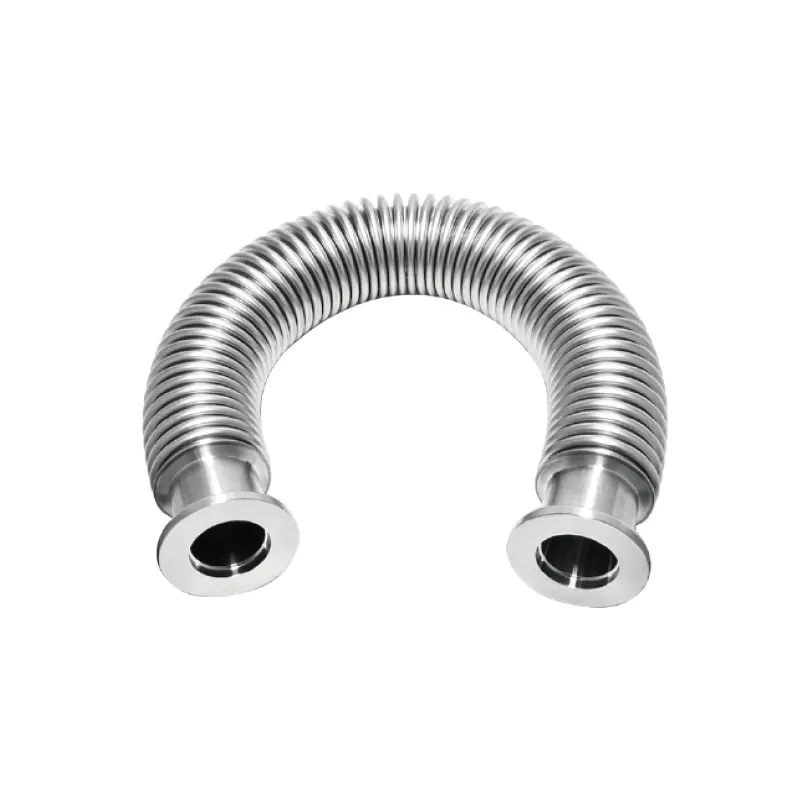
The primary function of a KF stainless steel flexible bellows is to provide a flexible yet vacuum-tight conduit. It transforms a rigid connection into a dynamic one, allowing for slight axial, lateral, and angular movements. The bellows features a series of convolutions (corrugations) that act like a spring, enabling expansion and contraction. This flexibility is essential for absorbing thermal expansion when hot or cold gases flow through the system, dampening vibrations from nearby pumps, and compensating for assembly tolerances. The bellows use edge-welded or formed construction to ensure freedom from leaks, with a typical leak rate as low as 10⁻⁵ mbar·l/s or better. The ends are terminated with KF (Klein Flansch) standard flanges, allowing quick installation with KF vacuum clamps and centering rings.
The working principle involves the bellows acting as a flexible barrier. When the system is evacuated, the bellows body can compress or extend slightly to relieve stress. During operation, the convolutions distribute mechanical loads evenly, preventing fatigue failure. The stainless steel material provides excellent resistance to corrosion from common solvents and gases, and the smooth interior surface minimizes particle generation and outgassing. This design is particularly important in glove box applications where any external contamination can compromise the low water and oxygen atmosphere.
Key Components and Variants
KF stainless steel flexible bellows are available in several configurations to suit different system requirements. The most common variants differ in material grade, number of convolutions, and wall thickness. Standard models use 304 stainless steel for general-purpose vacuum service, while 316L or 321 stainless steel options are recommended for harsh chemical environments or high-temperature operations. The number of convolutions determines the total flexibility: more convolutions allow greater movement but reduce the pressure rating. Wall thickness can be selected to balance flexibility and collapse strength under vacuum. Another important variant is the presence of an internal liner or external braid. An internal smooth liner reduces turbulence and particle entrapment, while an external wire braid provides additional mechanical support and prevents over-extension. The end fittings are typically KF10, KF16, KF25, KF40, or KF50 flanges, allowing direct connection to standard vacuum components.
Key Performance Indicators and Selection Criteria
When selecting a KF stainless steel flexible bellows, several technical parameters must be evaluated. The most critical is the leak rate, which should be below 10⁻⁶ mbar·l/s for high-vacuum applications. The working pressure range (typically from atmospheric down to 10⁻⁷ mbar) and temperature range (from -196°C to +420°C) must match the system's operating conditions. The bellows' flexibility is quantified by the allowed axial stroke, lateral offset, and angular deflection. These values should be chosen based on the expected thermal expansion and vibrational loads. The material grade and surface finish influence chemical compatibility and outgassing; electropolished surfaces are preferred for ultra-high vacuum. The number of cycles to failure under dynamic use is also a key longevity metric, with edge-welded bellows offering up to 1.5 million cycles. Finally, the connection type (KF, ISO, or custom flange) must be compatible with existing ports and valves, such as the KF vacuum butterfly valve or KF vacuum clamp. For glove box integration, the bellows should be designed to handle the inert gas atmosphere and potential exposure to solvent vapors.
Applications and Selection Advice
KF stainless steel flexible bellows are widely used in glove box systems, vacuum chambers, and analytical instrumentation. In glove box environments, they connect the main box to the gas purification system, vacuum pumps, and solvent vapor adsorption units, ensuring that vibrations from pumps or thermal expansion of piping do not stress the box walls. They are also essential for linking the glove box to external equipment like furnaces, sputter coaters, or test chambers while maintaining the inert atmosphere. Other common applications include semiconductor processing, OLED manufacturing, lithium battery research, and any process requiring a clean, low-pressure environment. When selecting a bellows, consider the total movement required, the operating temperature and pressure, and the chemical compatibility of the bellows material with the process gases. For most glove box applications, a standard 304 stainless steel bellows with KF40 flanges and an internal liner offers a good balance of performance and cost. If the system involves highly corrosive gases or frequent temperature cycling, choose 316L or 321 stainless steel with an external braid for added safety. Always verify the bellows' cycle life with the manufacturer to ensure it exceeds the expected maintenance interval.