
Why You Need an Electrical Feedthrough in Your Glove Box
When you work inside an inert atmosphere glove box — handling air-sensitive materials like lithium metal, perovskite precursors, or organic semiconductors — you often need to run electrical measurements or power devices without breaking the seal. Connecting a multimeter, potentiostat, or temperature sensor from outside to inside the box requires a sealed, vacuum-tight passage for the wires. That's exactly what a KF40 electrical test lead feedthrough is designed for.
Typical applications include:
- In-situ electrochemical testing of battery cells
- Four-point probe resistivity measurements
- Thermocouple or RTD temperature monitoring
- Powering small motors, heaters, or stirrers inside the box
- Data acquisition from custom sensors
Without a proper feedthrough, you would either have to seal wires through a port cover with epoxy — a messy, unreliable, and hard-to-reverse solution — or avoid making any electrical connections altogether. The KF40 electrical test lead feedthrough gives you a clean, reusable, and vacuum-compatible way to bring electrical signals in and out of your glove box.
What Is a KF40 Electrical Test Lead Feedthrough?
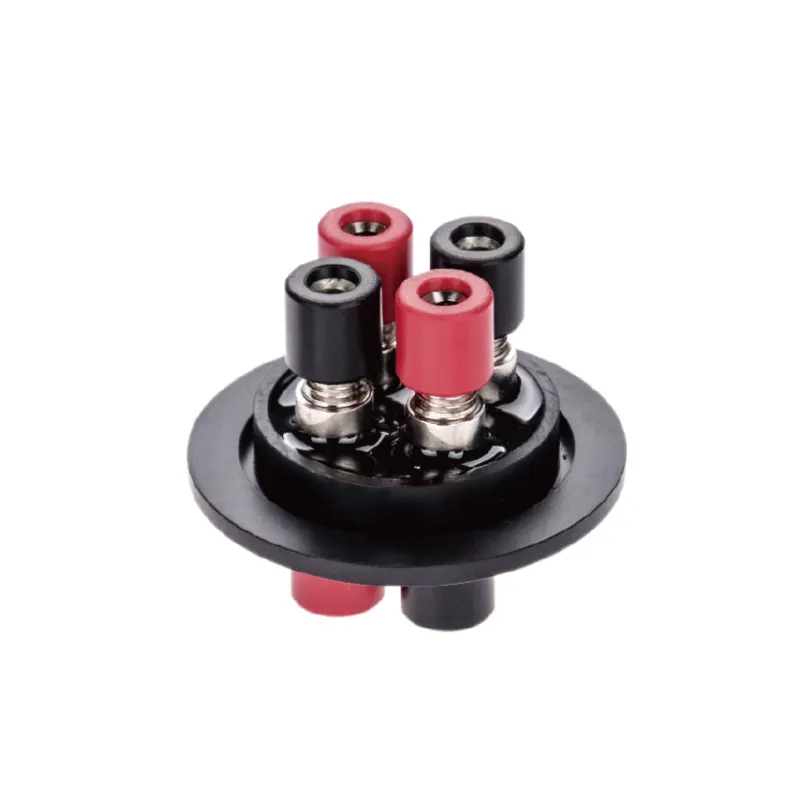
A KF40 electrical test lead feedthrough is a flange-mounted component that fits a standard KF40 (ISO-KF) vacuum port. The flange carries one or more insulated electrical conductors (test leads) that are hermetically sealed into the metal body. The leads are typically color-coded or numbered for easy identification, and they allow you to connect test equipment on the outside to your samples or devices on the inside.
Key features you should look for:
- Hermetic seal: The conductors are bonded to the flange using glass or ceramic insulation, ensuring leak rates compatible with glove box operation (typically < 1×10⁻⁶ Pa·m³/s or better).
- KF40 quick-release flange: The flange uses a wing nut clamp and O-ring carrier, which means you can mount it in seconds onto any KF40 port — no tools needed.
- Multiple test leads: Common configurations include 2, 4, 6, or more leads, depending on the number of signals you need.
- Lead material: Copper conductors with tin or gold plating for low contact resistance and corrosion resistance.
- Voltage and current ratings: Typical ratings range from 30 V to 600 V and 1 A to 10 A per lead, depending on the design.
Because the feedthrough is entirely passive, it does not introduce any heat or contamination into the glove box. It works with any inert gas atmosphere (argon, nitrogen, helium) and does not interfere with the purification system.
How to Choose the Right Electrical Feedthrough for Your Glove Box
Before you buy a KF40 electrical test lead feedthrough, consider these factors:
Number of Leads
Count the number of independent electrical signals you need to run simultaneously. For a basic thermocouple measurement, you need 2 leads. For a 4-point probe, you need 4 leads. If you plan to measure multiple devices, you may want a feedthrough with 8 or 10 leads. It's often better to have a few spare leads for future experiments.
Current and Voltage Requirements
If you only need to transmit millivolt signals from a sensor, almost any feedthrough will work. But if you plan to power a 12 V heater drawing 3 A, make sure the feedthrough's conductors are rated for that current. Most KF40 test lead feedthroughs handle up to 5 A per lead at 250 V AC/DC — sufficient for most research applications.
Lead Termination
Some feedthroughs come with bare wire ends, while others have banana plugs, BNC connectors, or screw terminals. Choose the style that matches your external instruments. You can always add connectors yourself, but factory-terminated units save time and ensure reliable connections.
Compatibility with Your Glove Box
Check the available ports on your glove box. KF40 ports are very common on antechambers and on the main chamber walls. If your box uses KF25 or KF50 ports, you can use an adaptor (KF25-to-KF40 or KF50-to-KF40) to mount the feedthrough. Also ensure the feedthrough does not protrude too far inside, blocking your working space.
Vacuum and Atmosphere Compatibility
Even though glove boxes operate at near-atmospheric pressure, the antechamber is often evacuated to switch samples. The feedthrough must be able to withstand full vacuum (down to 1 Pa or lower) without outgassing or leaking. A glass-sealed KF40 feedthrough is ideal for both vacuum and inert gas environments.
Installation: How to Mount the KF40 Feedthrough on Your Glove Box
Installing a KF40 electrical test lead feedthrough is straightforward:
- Turn off the gas supply and vent the antechamber or main chamber if you are installing on an occupied port. For a dedicated spare port, you can work with the box still purging.
- Remove the existing blank flange or port cover (if any). Keep the O-ring and clamp.
- Place the KF40 feedthrough flange onto the port, with the O-ring in position.
- Secure with a wing nut clamp (also called a quick-release clamp). Tighten evenly until the O-ring compresses and the flange is centered.
- Connect your external instruments to the outside leads, and your internal devices to the inside leads.
- Purge the box or antechamber to restore the inert atmosphere.
- Check for leaks using a portable leak detector or by monitoring the glove box moisture and oxygen analyzers over 24 hours.
That's it. The entire process takes less than 15 minutes. Because the KF40 system uses standardized components, you can easily swap the feedthrough with another accessory — like a KF40 Ethernet feedthrough or a gas/liquid feedthrough — whenever your experiment demands change.
Practical Tips for Using Electrical Test Lead Feedthroughs
Over the years, we have seen researchers use these feedthroughs in creative ways. Here are some tips to get the most out of them:
- Label both ends of each lead with heat-shrink tube markers before installation. This saves time when troubleshooting connections.
- Use twisted-pair or shielded cables on the outside for low-level signals (e.g., thermocouples) to reduce noise pickup.
- Avoid bending the leads sharply right at the feedthrough exit — this can stress the glass seal over time. Leave a small strain relief loop.
- If you need to pass high-frequency signals (e.g., for impedance spectroscopy), consider a dedicated BNC feedthrough which maintains a controlled impedance.
- Periodically inspect the O-ring on the KF40 flange. Replace it if it becomes flattened or cracked (a standard KF40 O-ring is inexpensive and widely available).
Common Questions About KF40 Electrical Feedthroughs
Can I use this feedthrough with a vacuum pump?
Yes. The hermetic seal is designed for high vacuum (down to 10⁻⁶ mbar), so it is fully compatible with the evacuation cycle of your glove box antechamber. However, you should not exceed the recommended temperature range (typically -20 °C to 150 °C) during bake-out or regeneration.
Will the feedthrough affect the glove box atmosphere?
No. Because the leads are sealed with glass or ceramic, there is virtually no outgassing. The feedthrough will not increase your moisture or oxygen levels beyond normal background. We routinely measure H₂O and O₂ levels below 1 ppm in boxes equipped with multiple feedthroughs.
How many feedthroughs can I install on one glove box?
Most glove boxes have several KF40 ports. You can install as many as you have spare ports, or you can use a multi-port KF40 adapter (a cross or tee) to mount multiple feedthroughs on a single port. Just be mindful of the physical space inside the box — too many cables can clutter your work area.
Can I solder or crimp new connectors to the leads?
Yes, the leads are standard copper wire. You can solder or crimp connectors to the outside ends as needed. Keep the total current within the rated specification to avoid overheating the feedthrough.
Summary: The Simple, Reliable Way to Bring Signals In and Out
The KF40 electrical test lead feedthrough is one of those small accessories that dramatically expand what you can do inside a glove box. Whether you are monitoring battery voltage during cycling, measuring thin-film resistance, or controlling a small heater, this feedthrough gives you a clean, vacuum-tight, and reversible solution. It installs in minutes, works with all standard KF40 ports, and requires no modification to your glove box.
If you are setting up a new experiment that requires electrical connections, consider adding a KF40 electrical test lead feedthrough to your glove box. It is available from TENCAN's glove box accessories, along with other ports, clamps, and analyzers to complete your system.