
A glove box trace oxygen analyzer is an accessory that measures oxygen concentration in gas taken from a glove box atmosphere. It sits on the monitoring side of the system, usually at a sample port or in a small gas circuit connected to the box, and answers a narrow but important question: is the oxygen level where the process needs it to be? It does not create a low-oxygen atmosphere, remove oxygen, or replace the purification system. The TENCAN Glove Box Trace Oxygen Analyzer is listed as a glove box accessory; the box, purge procedure, vacuum cycle and purification equipment perform the atmosphere work, while the analyzer provides evidence about the result.
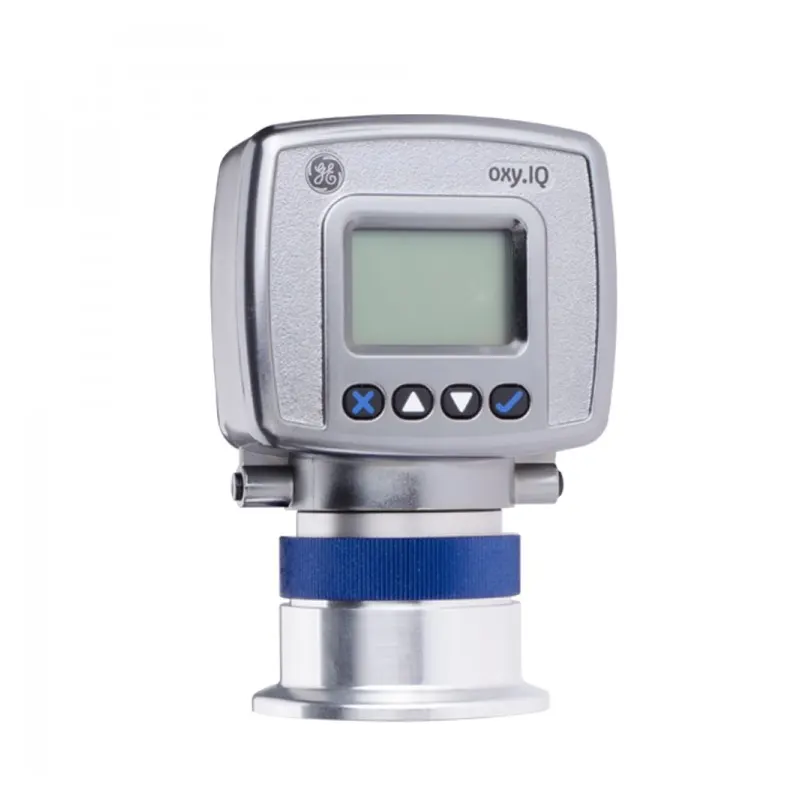
What does a trace oxygen analyzer do in a glove box?
Glove box work depends on a controlled atmosphere, yet oxygen is difficult to judge by appearance. A sealed box may look ready while residual oxygen remains in corners, transfer chambers, gloves or process materials. Oxygen can enter during transfers, through small leaks, through glove materials, through incomplete purging, or from the sample itself. A trace oxygen analyzer gives the operator a measurement instead of an assumption.
In a glove box with a gas purification system, the analyzer can help verify whether the circulation and purification loop are holding the intended oxygen level. In a vacuum glove box, it can help assess the result of vacuum and inert-gas exchange when the sampling arrangement is compatible with the box. In both cases, the analyzer measures the atmosphere; it does not control it. A purifier removes oxygen and water, a vacuum pump reduces pressure, and valves direct gas flow. The analyzer sits alongside those functions as a verification instrument.
This distinction matters during troubleshooting. A rising oxygen reading may point to a transfer, a glove change, a leak, an exhausted purifier, or a sampling problem. The analyzer narrows the question, but it does not identify the source by itself. It also does not replace a leak test, a pressure test, or a procedure review. Its value comes from being placed, sampled, calibrated and interpreted correctly.
How does a trace oxygen analyzer work?
Trace oxygen analyzers differ in sensor principle and sampling design, so the exact sensor type, measurement range and sample requirements should be taken from the current documentation for the selected unit. Functionally, however, the chain is similar: a gas sample enters the analyzer, passes through any required filter or conditioning step, reaches an oxygen sensor, and produces a signal that is processed into a display or output. Some systems use an extractive sample flow; others may be arranged differently. The manual for the exact unit defines the acceptable flow, pressure, temperature and gas compatibility.
At trace levels, the sample path matters as much as the sensor. A small leak in the sample line can draw in ambient air and raise the reading. A long or narrow line can delay response and smooth out real changes. A filter can protect the sensor from particles, but a particle filter does not remove oxygen, water vapor or solvent vapor. Moisture and condensable vapors may interfere with some sensors or sampling components, so their presence must be checked against the analyzer specifications. A clean, representative and leak-tight sample is essential.
The analyzer also needs calibration to make its number meaningful. Calibration may involve zero gas, span gas, or a manufacturer-specified procedure, and the required gases and intervals depend on the sensor and application. Warm-up time, stabilization, cross-sensitivity and sensor aging can all affect the result. A stable display is not the same as a calibrated measurement. The operator should know which readings are used for decisions, when calibration was last performed, and what uncertainty applies.
Finally, the analyzer is a measurement device, not an atmosphere source. It cannot lower the oxygen content of a box. If a reading is high, the response should be a procedure or equipment check: verify the purge, inspect the transfer path, review glove integrity, check the purification system, or confirm that the sample itself is not the problem.
Where does the analyzer fit in a glove box system?
A glove box system can be understood as three layers. The box provides containment and a workspace. The atmosphere equipment, such as a purification loop, vacuum pump or gas-exchange arrangement, conditions the internal environment. The analyzer verifies the result. Mixing these layers leads to poor selection: a purifier cannot be replaced by an analyzer, and an analyzer cannot be made responsible for atmosphere quality that the box and procedure do not deliver.
The sample point defines what the reading means. Gas taken directly from the working area reflects the atmosphere near the gloves and samples. Gas taken after a purification column may reflect the performance of that column but not necessarily the working zone. A sample taken from a transfer chamber during a cycle describes that chamber, not the main box. Long dead legs, stagnant tubing and poorly placed probes can produce readings that lag behind actual conditions. The sampling layout should be documented, and the operator should know whether the analyzer is watching the box, the loop, or a specific process step.
Sample return is another integration decision. If gas is returned to the box, the return path must not disturb the box pressure or introduce contamination. If gas is vented, the installation consumes inert gas and needs a safe exhaust arrangement. The analyzer inlet pressure range, outlet restrictions and recommended flow must be respected. These are system-design questions, not accessory details that can be assumed.
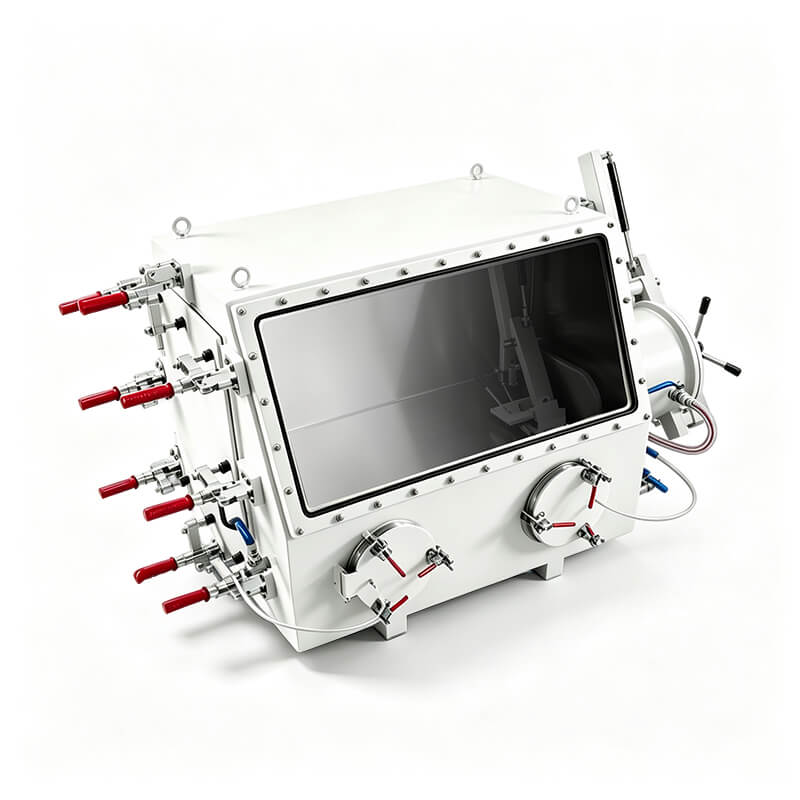
The GBV-2 Stainless Steel Vacuum Glove Box is a separate product in the stainless-steel vacuum glove box category. A trace oxygen analyzer may be relevant to monitoring a vacuum glove box atmosphere, but the two product names alone do not prove that the analyzer is included with the box or that the fittings, pressure range and electrical connections match. Port type, feedthrough availability, sample pressure and gas compatibility must be confirmed for the actual configuration.
Which specifications matter when choosing one?
Because the analyzer is an accessory, its specifications should be judged by its measurement function and its connection to the box. Box volume alone is not a sufficient basis. The useful questions are about the oxygen level to be distinguished, the gas conditions at the sample point, the calibration plan and the physical interface.
Range, resolution and accuracy are not interchangeable
Measurement range defines the span over which the analyzer is intended to operate. The lower detection limit defines how far down the scale useful measurement extends. Resolution is the smallest displayed increment; it is not the same as accuracy. Accuracy describes how close a reading is to the true value, while repeatability describes how consistently the analyzer returns a similar result under the same conditions. A display with several decimal places can look precise while still carrying a larger uncertainty.
For trace work, the relevant question is usually whether the analyzer can distinguish the oxygen levels that matter for the process. A wide-range instrument may be useful during startup but insufficient at the low end. A very narrow-range instrument may need protection from high oxygen during maintenance or a major leak. The acceptable exposure limits and recovery behavior must come from the manufacturer. Response time is also part of the specification: a fast sensor can still produce a slow system reading if the sample line is long or the flow is inadequate.
Sample compatibility, pressure and connections
The analyzer must tolerate the gas it will see. Wetted materials should be compatible with the inert gas, oxygen, moisture level, solvent vapors and any process emissions. Particles should be controlled if the sensor or flow path is sensitive to them. Temperature and pressure at the inlet should fall within the specified range. If the box operates slightly above or below atmospheric pressure, the sample system must be designed so that it does not pull air in through a fitting or push gas where it should not go.
Connections deserve the same attention. The sample port, tubing size, fitting type, electrical feedthrough and signal cable must match the installation. A port that is adequate for a vacuum test may not be suitable for continuous sampling. A signal output may be analog, digital, alarm-based or another format, and the available options must be confirmed rather than assumed. The analyzer should be mounted where it can be isolated, serviced and calibrated without compromising the box atmosphere.
Calibration, maintenance and records
Calibration is a continuing requirement, not a one-time purchase detail. The user should know which calibration gases are needed, how often calibration is expected, how long warm-up and stabilization take, and what consumables or replacement parts are involved. Filters, sample lines and sensors may need periodic attention. Records should connect each reading to a calibration state and a sample point.
Calibration confirms the analyzer response; it does not validate the box atmosphere by itself. A calibrated analyzer connected to a poor sample point still gives a misleading result. Conversely, a good sample point with an uncalibrated analyzer gives an unknown result. Both the measurement chain and the atmosphere procedure need to be controlled.
Where is it suitable, and what are its limits?
A trace oxygen analyzer is suitable where oxygen-sensitive materials or processes need an evidence-based check of an inert atmosphere. Typical contexts include lithium and solid-state battery research, perovskite and OLED work, semiconductor and advanced materials research, air-sensitive chemistry, and other laboratory processes where moisture and oxygen can alter results. It is also useful during commissioning, after maintenance, during leak investigations, and when comparing the performance of a purge or purification routine.
- Verifying that a purge or inert-gas exchange has reached the intended condition.
- Monitoring oxygen trends in an inert glove box during routine work.
- Checking whether a transfer, glove change or maintenance event has affected the atmosphere.
- Supporting troubleshooting when a purification loop, vacuum cycle or gas supply appears inconsistent.
- Documenting atmosphere conditions for experiments that are sensitive to oxygen.
The limits are equally important. The analyzer does not remove oxygen, water or solvent vapor. It does not turn a leaking box into a sealed one, and it does not replace a pressure test, leak test or maintenance schedule. It measures oxygen, not moisture, so a separate water analyzer is needed when water content is the control variable. It does not establish sterility, cleanroom classification, biological safety or hazardous-material containment. Inert gas is not automatically inert for every sample, and a low oxygen reading does not prove that a material is unchanged.
The analyzer also cannot guarantee that every location in a box is identical. Oxygen may vary near a transfer chamber, a glove port or a newly introduced sample. A single fixed reading is a data point, not a complete map of the workspace. Where distribution matters, the sampling plan should state how representative locations are checked. Finally, no accessory should be treated as compatible with every glove box. The actual port, pressure, materials and electrical arrangement must be reviewed.
How should you select and integrate one?
Start with the monitoring objective, not the model name. Decide whether the analyzer is needed for continuous trend monitoring, periodic checks, commissioning, troubleshooting or documentation. That decision determines the required response time, output format, calibration routine and installation location. Then define the normal gas composition and the upset conditions the analyzer may see. A unit selected only for clean, steady-state inert gas may behave differently after a transfer or during a high-oxygen event.
- Confirm that the box has a suitable sample port and a safe return or vent path.
- Check sample pressure, flow, temperature, moisture, solvent exposure and particle loading.
- Define the oxygen range, lower detection limit, accuracy and response time needed for the decision.
- Verify wetted materials, sensor compatibility and any maximum exposure conditions.
- Plan calibration gases, intervals, warm-up time and record keeping before installation.
- Confirm power, signal, alarm and data connections, including feedthrough requirements.
- Choose a sample point that represents the atmosphere of interest and is not a stagnant dead leg.
- Assign responsibility for installation review, calibration and interpretation of trends.
Compatibility questions to ask before purchase
- What is the exact sample-port fitting, and is it suitable for continuous analyzer operation?
- What are the normal and worst-case oxygen, moisture, solvent and particle conditions?
- Does the analyzer require a pump, a specific inlet pressure, or a return line?
- Which calibration gases and procedures are specified, and who will perform them?
- Which output, alarm and electrical connections are needed for the control system?
- Has the box manufacturer or integrator confirmed that the installation will not affect pressure balance or leak integrity?
A careful selection process ends with a documented compatibility check. The analyzer, sample line, port, electrical interface and operating procedure should be reviewed together. That is especially important when the analyzer is considered for a vacuum glove box, where pressure changes and gas exchange are part of normal operation. The fact that two products appear on the same website does not replace that review.
Frequently asked questions
Does a trace oxygen analyzer remove oxygen from a glove box?
No. It measures oxygen in a gas sample. Oxygen removal is performed by purging, vacuum and inert-gas exchange, or a compatible purification system. A low reading is evidence of conditions, not a treatment method.
Can it replace a gas purification system?
No. A purification system removes oxygen and water through a closed-loop process. A trace oxygen analyzer verifies the atmosphere but does not provide purification. The two functions are complementary when correctly integrated.
Does it measure moisture as well as oxygen?
No. Oxygen and water are separate measurements. A trace oxygen analyzer is not a moisture analyzer, and a low oxygen reading does not establish that water content is acceptable. Water-sensitive work needs an appropriate water measurement and drying strategy.
Does a display with fine resolution guarantee fine accuracy?
No. Resolution is the smallest displayed change. Accuracy, repeatability, lower detection limit, calibration and sample handling determine whether the number is trustworthy. The exact performance figures must come from the current documentation for the selected analyzer.
Can the analyzer be added to any glove box?
Not automatically. The box needs a suitable sample point, compatible materials, a safe return or vent path, and appropriate electrical connections. Pressure balance and leak integrity must be reviewed. For a specific model such as the GBV-2, the actual configuration should be confirmed before assuming compatibility.
A trace oxygen analyzer earns its place when it is treated as part of a measurement chain: representative sample, compatible materials, valid calibration and a clear interpretation plan. It is not a substitute for atmosphere control, but it makes atmosphere control visible.
