
A glove box zirconia oxygen analyzer is a monitoring instrument that measures oxygen concentration in a glove box atmosphere or in a gas sample drawn from it. It is usually installed at a sampling point on the circulation loop or an external sample panel, not in the usable work zone, and it answers one specific question: how much oxygen is present at that point? TENCAN's Glove Box Zirconia Oxygen Analyzer is listed as a glove box accessory, placing it in the measurement and monitoring group rather than the purification group.
The distinction matters. A purification system removes oxygen and moisture; an analyzer provides evidence about the result. It can show whether a purge has stabilized, whether a purifier is still performing, or whether a glove change or transfer introduced air. It cannot, by itself, lower the oxygen level, dry the atmosphere, or make a leaking enclosure airtight.
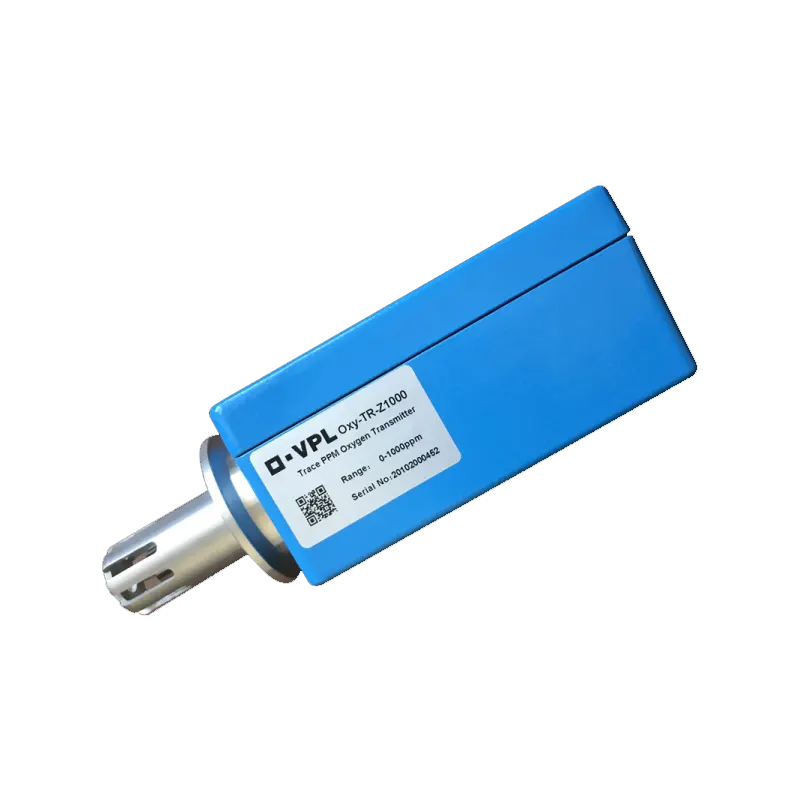
How the Zirconia Sensor Produces an Oxygen Reading
Most zirconia oxygen analyzers use a heated ceramic sensing element. At operating temperature, the zirconia electrolyte conducts oxygen ions. When the two sides of the sensor are exposed to different oxygen partial pressures, an electrochemical voltage develops. That voltage follows a logarithmic relationship with the ratio between the sample and reference oxygen pressures. The analyzer electronics convert this signal into an oxygen concentration, such as parts per million or percent, depending on the configured range.
Because the measurement depends on partial pressure, sample pressure and flow need to be reasonably stable. A change in sample pressure can shift the reading even if the true concentration has not changed. The sensor also needs a reference, which may be ambient air or a supplied reference gas depending on the design. The installation must therefore account for the reference side as well as the sample side.
The sensor is heated, so warm-up and thermal stability matter. A cold sensor does not provide a valid trace-oxygen reading, and a sensor that is cooling after a power interruption may need time to recover. The complete measurement chain includes the sample probe or port, filter, sample line, pump if the design is extractive, the sensor, signal processing, display, outputs, and calibration. A good sensor connected to a poor sampling arrangement can still produce misleading results.
Where the Analyzer Fits in a Purified Glove Box
A typical purified system, such as TENCAN's Single-Station Single-Sided Glove Box with Gas Purification System, combines a single working station, a single-sided enclosure, and a gas purification system. The purifier and circulation loop manage the atmosphere; the analyzer belongs to the monitoring layer that verifies what the loop has achieved. It does not replace the purifier, the blower, the antechamber, or the sealing function of the gloves and enclosure.
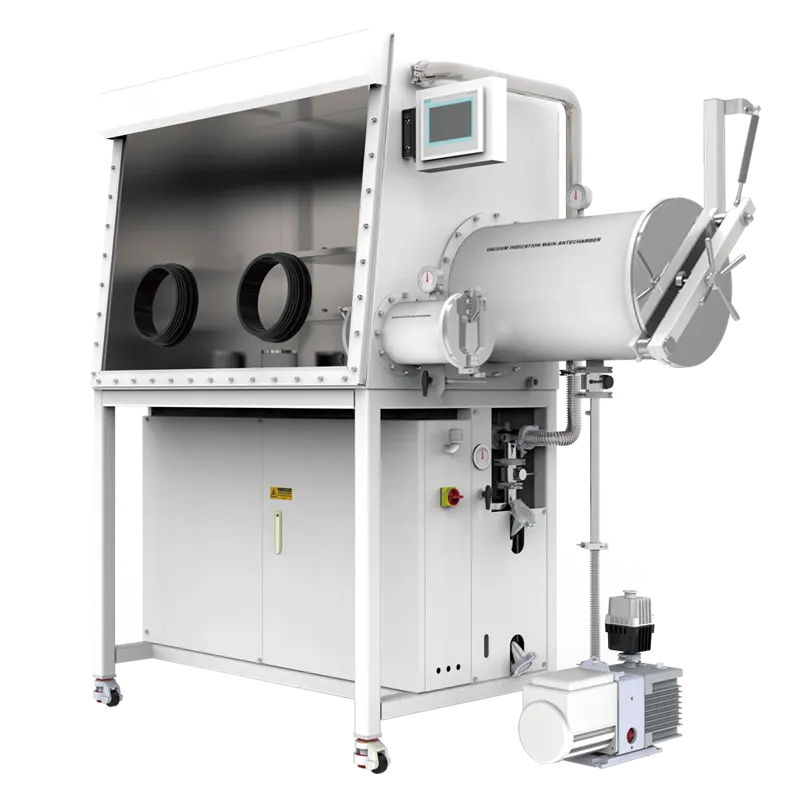
Placement changes the meaning of the reading. A sample taken from the purifier outlet indicates the quality of gas leaving the purification column. A sample taken from the box or its return line is closer to the atmosphere experienced by the sample or device inside. If only one sampling point is available, the operator should know exactly what it represents. A reading from the outlet is not automatically a reading of every corner of the working space.
The analyzer also should not be treated as an automatic upgrade to any enclosure. A host system needs a suitable sample port, electrical provisions, signal handling, and a gas path that can be connected without creating a leak or disturbing pressure balance. Whether an existing controller displays, logs, or interlocks the analyzer signal depends on the system configuration, so compatibility should be confirmed rather than assumed.
Sampling Point and Installation Choices
In-line versus extractive measurement
An in-line arrangement exposes the sensor to a side stream from the glove box circulation loop. An extractive arrangement draws a sample through a line to the analyzer and may return it to the box or route it to a safe exhaust. In-line sampling can reduce transport lag, while extractive sampling can place the instrument where it is easier to service. Both approaches need filtration, leak-tight connections, and a defined pressure path.
Choosing a representative point
The best point is one where the gas is well mixed and represents the atmosphere of interest. Corners, long dead legs, and the inside of an antechamber may not represent the main working volume. Short sample lines reduce response lag and limit surface interactions. A leak in the sample line can draw in ambient air and produce a falsely high oxygen reading, so the line should be leak-tested after installation.
If the sample is returned to the box, the return path must not pressurize or depressurize the enclosure beyond its intended operating range. If the sample is vented, the gas consumption and exhaust route need to be considered. Filters protect the sensor from particles, but the filter housing and wetted materials must also be compatible with the process atmosphere and any solvent vapors present.
Specifications to Confirm Before Purchase
Because an analyzer is part of a measurement chain, its specifications should be read together with the host system requirements. The current product datasheet and a compatibility statement from the supplier are more useful than a single headline number.
| Specification area | What to check |
|---|---|
| Measurement range and units | Confirm that the range covers normal operation, purge conditions, and expected upset conditions, and that the units match the process specification. |
| Lower detection limit and resolution | These are not the same as accuracy. A fine display resolution does not prove that the analyzer can measure reliably at that level. |
| Accuracy and repeatability | Ask how the values are defined, over what range, and under what sample conditions. |
| Response time and warm-up | Check how quickly the reading responds after a transfer, purge, or leak event, and how long the sensor needs before it is trusted. |
| Sample flow, pressure, and temperature | The sensor has operating limits. Confirm that the sample can be delivered within them. |
| Reference gas | Establish whether the sensor uses ambient air or a supplied reference and what that requires at the installation site. |
| Wetted materials and filtration | Check compatibility with the working gas, process vapors, and any particles that could reach the sensor. |
| Calibration and validation | Confirm the calibration method, required gases, access for service, and documentation available for the laboratory. |
| Outputs and integration | Verify display, analog or digital output, alarm contacts, power, and whether the host controller can use the signal. |
| Sensor life and service | Ask about replacement, cleaning, expected influences on sensor life, and spare-part availability. |
Do not compare resolution with accuracy. Resolution is the smallest change the display can show; accuracy describes how close the reading is to a traceable reference; the lower detection limit describes the lowest level at which a meaningful measurement is possible. A pressure change can also alter a concentration reading even when the oxygen partial pressure has not changed, especially when results are converted between units. Comparisons between instruments should therefore include sampling location, calibration status, sample pressure, and response time.
Limits, Interferences, and Common Misreadings
- It does not measure moisture. Oxygen and water are separate measurements. A dry-looking oxygen reading says nothing about the water content of the atmosphere.
- It does not purify the gas. The analyzer can reveal a high oxygen level but cannot remove oxygen or regenerate a purifier.
- It is not a leak locator by itself. A rise can indicate net air ingress, but finding the actual leak requires a separate leak-checking method.
- One point is not a map. A reading at the return line does not prove that every glove port, shelf, or antechamber has the same atmosphere.
- Sensor chemistry has limits. Reducing gases, solvent vapors, condensation, and other contaminants may affect a zirconia sensor. Suitability for the actual process atmosphere must be confirmed.
- A low display value is not proof of zero oxygen. Readings below the reliable measurement range should be interpreted with the sensor specification and calibration in mind.
An analyzer can also be added to a vacuum-purged or acrylic glove box, but it does not turn that box into a continuously purified system. It can monitor the result of a purge or reveal gradual air ingress, while the enclosure design, seals, and gas strategy determine what stability is achievable. A heated zirconia sensor may not be appropriate for every atmosphere, and a sensor exposed to liquids or particles can be damaged. Filters and correct operating conditions are part of the measurement design, not optional details.
Finally, an oxygen analyzer should not be treated as a safety instrument unless the specific model is rated and installed for that purpose. It is a process and atmosphere monitor. Flammable-gas handling, toxic-gas containment, biological protection, and cleanroom classification require their own engineering controls and verification.
Where It Is Suitable, and Where It Is Not
Oxygen monitoring is relevant wherever an oxygen-sensitive material or process is handled inside a controlled atmosphere. Examples include lithium metal and solid-state battery research, perovskite and OLED device work, semiconductor and air-sensitive chemistry, advanced materials preparation, and additive manufacturing powder handling where oxide formation matters. In these settings, the analyzer helps the team see whether the box is at the intended condition before a sensitive step and whether the condition remains stable during work.
The application should define the requirement, not the other way around. A process with a strict oxygen threshold needs an analyzer whose range, accuracy, response, and sampling arrangement match that threshold. A process that is mainly moisture-sensitive may need a water analyzer as well, because an oxygen reading cannot stand in for humidity measurement. A process involving unusual gases or solvent vapors needs explicit confirmation that the sensor and wetted materials are compatible.
The analyzer is not evidence of sterility, cleanroom class, biological safety, or hazardous-material containment. It also does not guarantee that every gas is inert to every sample. It measures oxygen at a defined point under defined conditions, and that is already a valuable but limited role.
How to Select and Integrate the Analyzer
- Define the decision. Decide whether the analyzer is needed for trend monitoring, purge verification, purifier checks, process documentation, or alarm response. The answer determines the required range, response, and output.
- Classify the host system. Confirm whether the glove box has a purification loop, how the atmosphere circulates, and where a sample can be taken without disturbing pressure or creating a dead zone.
- Check gas and material compatibility. Review the working gas, expected vapors, particles, and cleaning agents with the analyzer supplier. Do not assume that a zirconia sensor is suitable for every atmosphere.
- Confirm the physical and electrical interface. Verify port size, sample connections, power, signal type, space for service, and whether the host controller can display or log the result.
- Plan calibration and maintenance. Establish who will calibrate the analyzer, which reference gases are needed, how the sample line will be checked, and how sensor replacement will be handled.
- Document installation and response. Leak-test the sample path, establish a baseline, record calibration status, and train users to interpret the reading in context rather than as a stand-alone pass or fail number.
The TENCAN Glove Box Zirconia Oxygen Analyzer product page is the appropriate starting point for the currently offered configuration, available documentation, and purchasing questions. The final selection should be based on the measurement objective, the host glove box, the sample conditions, and a realistic service plan.
FAQ: Practical Questions About Zirconia Oxygen Analyzers
Does the analyzer include a gas purification system?
No. It is a monitoring accessory. Oxygen removal is performed by a purifier or by a purge-and-refill strategy, depending on the host system.
Can the analyzer directly lower the oxygen level?
No. It measures oxygen and may provide an alarm or control signal. The purification loop, gas supply, and enclosure seals do the actual atmosphere control.
Can it be added to any glove box?
Not automatically. A suitable sample point, electrical provisions, pressure management, material compatibility, and controller support are needed. The analyzer and host should be checked together.
Why does the reading differ from another oxygen meter?
Different sampling points, calibration states, response times, sample pressures, and sensor principles can all produce different readings. Compare instruments under documented conditions rather than assuming one is wrong.
Is it a leak detector?
It can indicate that air ingress may be occurring, but it does not locate the leak. A separate leak-checking procedure is still required.
