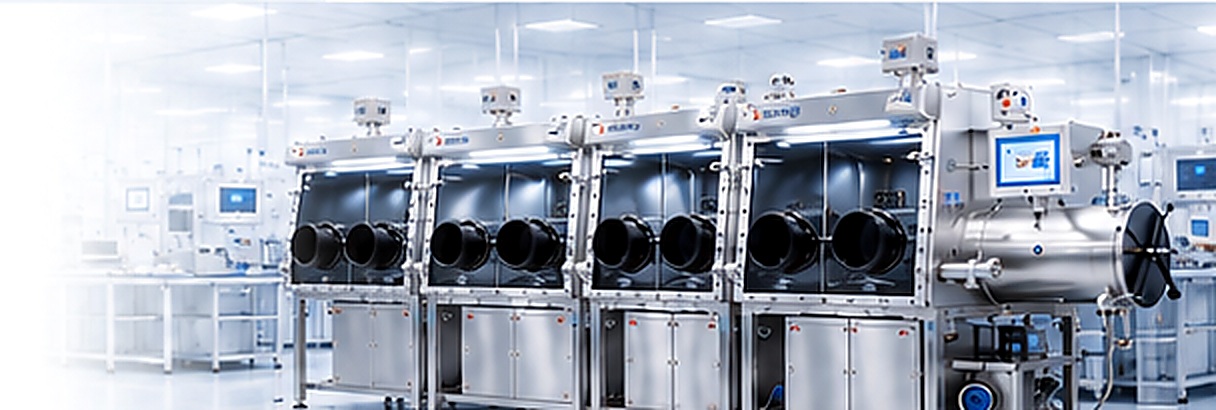
A glove box zirconia oxygen analyzer is an instrument that measures how much oxygen is present in a glove box atmosphere, using a heated zirconia ceramic cell as its sensing element. It is installed on the box itself, on the gas purification loop, or on a sample line connected to the box, and it turns an invisible condition into a reading that an operator or control system can act on. It does not remove oxygen, and it does not create an inert atmosphere. It tells you whether the atmosphere you established is still the atmosphere you believe you have.
What Does a Glove Box Zirconia Oxygen Analyzer Do?
In a controlled-atmosphere enclosure, oxygen is the variable most likely to drift without anyone noticing. A glove box is opened and closed, gloves are used for hours, a transfer chamber is cycled dozens of times a day, and the purification system works in the background. Each of these events changes the oxygen load on the system, and the change is invisible. The analyzer is the instrument that makes the change visible.
Practically, a reading from the analyzer supports several different jobs: confirming that a purge or vacuum-and-refill cycle has actually reached the target condition, tracking whether the purification column is still performing as it did when new, spotting a slow leak in a glove, a port or a door seal, and documenting the atmosphere at the time a sensitive sample was handled. Those are four distinct uses, and a single instrument can serve all of them only if it is installed and configured for the way you actually work.
Where the analyzer sits in the gas circuit
There are three common positions, and the choice affects response time, serviceability and risk. An in-situ probe placed directly in the working space reads the atmosphere closest to the sample with the shortest lag, but it occupies a port, is exposed to spills and solvent vapor, and is harder to service without disturbing the box. A sensor tapped into the circulation or return line of a purifying glove box reads gas that has just passed through the working volume and the purifier, which is representative of steady-state conditions but can mask a local problem near one workstation. An extractive sampling line with a small pump and filter protects the sensor best, at the cost of transport delay and additional fittings that must not leak.
The measurement chain is more than the sensor
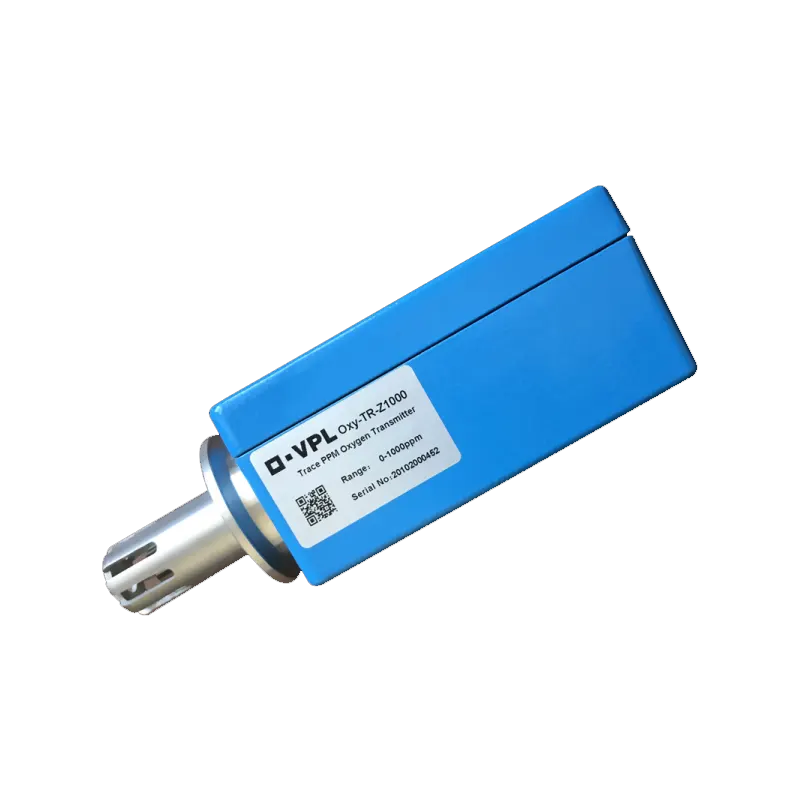
A zirconia cell alone is not a usable instrument. The analyzer includes a heated zone that brings the ceramic to its operating temperature, temperature control to keep that zone stable, signal electronics that convert a very small voltage into a readable concentration, a display, and usually an analog or digital output for a PLC or data logger. Some configurations add a sample filter, a flow indicator, isolation valves, and a calibration gas inlet. When comparing analyzers, compare the whole chain. A high-quality sensor behind unstable heating or noisy electronics produces a worse result than a modest sensor in a well-engineered housing.
How a Zirconia Oxygen Sensor Produces a Reading
Zirconium oxide becomes an oxygen-ion conductor at elevated temperature. In a typical sensor, a small zirconia element is coated on both sides with porous electrodes and held at its operating temperature by an internal heater. One side is exposed to the gas being measured; the other is exposed to a reference gas, usually ambient air. Because oxygen ions migrate through the ceramic, a voltage develops across the two electrodes that depends on the ratio of oxygen partial pressures on each side. That voltage is the measurement.
The relationship is logarithmic, not linear. Each decade of change in oxygen concentration produces a similar increment of voltage rather than a proportional one. This is the fundamental reason zirconia analyzers can span from percent-level oxygen down to low parts-per-million in a single instrument, and it is also the reason the low end demands more care than the high end.
What the logarithmic response means in practice
Near the bottom of the range, a large relative change in oxygen corresponds to a small voltage change, so anything that perturbs the sensor shows up in the reading: fluctuation in the heated zone, contamination of the reference air, moisture in the sample, or electrical noise on the signal path. It also means that a displayed digit is not automatically a meaningful measurement. Resolution describes the smallest step the electronics can display; accuracy describes how close that number is to the true value after calibration and over time. They are different specifications, and only one of them can be verified with a certified calibration gas.
In-situ reading versus extractive sampling
An extractive arrangement adds a path between the box and the sensor. Every tube, fitting and filter in that path is a potential leak point, a dead volume that slows response, and a surface that can adsorb or release moisture and solvents. Short, small-diameter, well-sealed lines reduce these effects. When a sampling pump is used, its materials must be compatible with the gas being sampled, and its flow must be matched to the analyzer rather than chosen for convenience. If the analyzer can be isolated by valves, it can be serviced or recalibrated without breaking the box atmosphere, which is a practical advantage that is easy to overlook at the purchasing stage.
Which Specifications Should You Check?
Because published figures are only useful when the measurement conditions are known, ask for the condition attached to every number: the gas, the flow, the temperature, the calibration point and the warm-up time that produced it.
Range, resolution and accuracy
Decide first what you actually need to distinguish. An application that requires confirmation that a purge cycle reached a low parts-per-million condition has a different requirement from one that only needs to know whether the box is above or below a percent-level threshold. Ask for the calibrated range, the accuracy at stated points, the drift over a defined period, and the recommended calibration interval. A reading below the calibrated range may exist on the display without being supported by a stated accuracy.
Fitting, sealing and service access
The analyzer must connect to a real port on a real box. Confirm the flange or fitting type and size, the tube connection, the insertion depth of an in-situ probe, and whether the connection can be isolated. A weld-in or flanged port is a permanent modification; a KF-style connection with a valve is more flexible. Either way, the seal must suit the atmosphere, and the assembly must be leak-tight, because an analyzer that admits air through its own fitting will report the leak it created.
Materials and gas compatibility
Wetted materials should be reviewed against everything that will be inside the box, not only the working gas. Solvent vapors, sulfur-bearing or halogen-bearing compounds, and combustible or reducing gases can affect a zirconia cell or its reading, and some of these effects are cumulative. Where such substances are present, confirm suitability with the supplier before installation and consider a sampling arrangement that protects the sensor with a filter or a dedicated sample line. The analyzer measures oxygen; it does not report solvent concentration, and a satisfactory oxygen reading says nothing about the solvent load in the box.
Outputs, alarms and integration
Check what the instrument can hand to the rest of the system: a current or voltage output for a PLC or logger, alarm relays with adjustable setpoints, and any serial or digital interface. Confirm the supply voltage and power budget, and how the cable enters the enclosure if the electronics sit outside the box. If the analyzer output is intended to trigger an interlock or control a purge sequence, have that function confirmed by the supplier rather than assumed from the presence of a signal output.
Analyzer, Purifier and Purge: Three Different Jobs
The most common misunderstanding in atmosphere control is the expectation that better measurement will improve the atmosphere. It will not. Purification removes oxygen and moisture through a regenerable column in a closed circulation loop; purging or vacuum-and-refill cycles dilute and displace the residual air; and the analyzer only observes the result. A HEPA filter captures particles and does nothing to water or oxygen. A solvent scrubber captures organic vapor and does not replace the oxygen-purifying column. Regeneration restores the purification material and is a separate operating step with its own requirements. Keeping these functions distinct prevents both false confidence and unnecessary purchases.
For the same reason, do not treat an analyzer as a substitute for a leak test. A pressure-decay or vacuum-hold test detects a physical leak directly; the analyzer only observes the consequence of a leak on the atmosphere. The two tests answer different questions and are most useful together.
Where an Analyzer Fits, and Where It Does Not
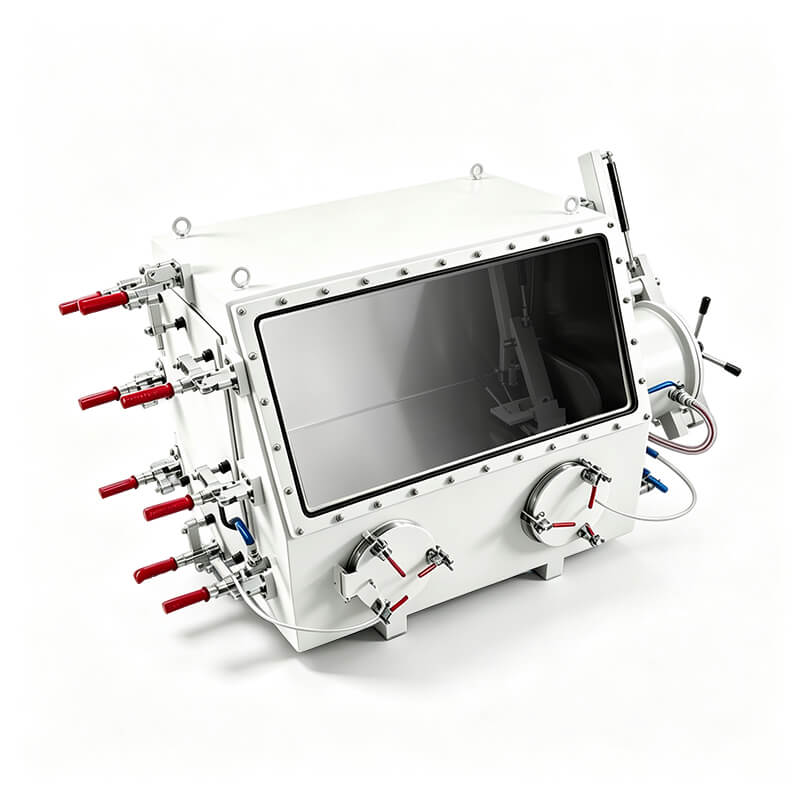
An analyzer is appropriate wherever an inert atmosphere is claimed as part of the process: lithium and solid-state battery material preparation, perovskite and OLED device work, air-sensitive chemistry, metal and polymer processing, and additive manufacturing pre- and post-handling. It is equally appropriate on a vacuum glove box, where the atmosphere is established by evacuation and inert gas backfill rather than continuous purification, because there is no circulation loop to infer performance from. The GBV-1 stainless steel vacuum glove box is an example of that category, and the same measurement logic applies: the instrument reports the result of the cycle, but the port, probe length and sensor configuration must be confirmed for the specific box rather than assumed.
The limits are equally clear. An analyzer cannot verify sterility, cleanliness class, or biological containment; inert atmosphere is not the same as aseptic conditions. It cannot confirm that every gas is inert toward every sample. It cannot remove oxygen, and it cannot repair a saturated purification column. Used on a box where the sample line is long, the fittings untested or the calibration overdue, it will produce numbers that look precise and mean very little.
How to Select and Integrate an Analyzer
Work from the measurement requirement backwards to the hardware. The following points cover most of the decisions that determine whether the installation is useful or merely present:
- Define the lowest concentration you must reliably distinguish, and at what accuracy, before comparing any range figures.
- Decide between continuous monitoring and spot checks; continuous monitoring needs a fixed, sealed installation, while spot checks may justify a portable arrangement.
- Identify an existing, suitable port, or plan the modification and its leak testing in advance.
- Choose in-situ or extractive sampling based on solvent exposure, spill risk and acceptable response lag.
- Confirm wetted materials against every substance present in the box, not only the working gas.
- Plan calibration: which certified gases, at which points, how often, and how the sensor is isolated during the procedure.
- Confirm the output signal, alarm setpoints and any interlock function with the supplier in writing.
- Keep records of readings alongside process notes, so that a slow drift becomes visible as a trend rather than a surprise.
The glove box zirconia oxygen analyzer page lists the current configuration information for this accessory; use it as the starting point for confirming fitting, range and integration details against your own box rather than relying on generic descriptions. Where a detail is not stated, ask.
Questions Buyers Ask
Does an oxygen analyzer lower the oxygen level in a glove box?
No. It measures. Removal of oxygen is the job of the purification system, of purging, or of vacuum-and-refill cycles. The analyzer can trigger an alarm or a sequence, but it does not itself change the atmosphere.
Can an analyzer be added to any glove box?
Usually a port can be provided, but the specific box, its sealing arrangement and the intended sampling method have to be reviewed. Compatibility should be confirmed for the actual model rather than assumed from a product category.
Why choose a zirconia sensor rather than another measuring principle?
Zirconia cells suit wide dynamic ranges and heated, continuous measurement. Other principles have their own strengths, particularly where reducing or combustible gases are present. The right choice follows from the gas composition and the required range, not from a general preference.
How often should the analyzer be calibrated?
The interval depends on the sensor, the environment and the criticality of the measurement, and it should come from the supplier plus your own drift records. A calibration schedule that is never verified against historical readings is only a formality.
Does a good reading prove the gloves are intact?
No. A reading reflects the atmosphere as a whole. Glove integrity is established by inspection and by specific leak testing, and a stable oxygen value can coexist with a small defect that the purification system is currently masking.
Treat the analyzer as one instrument within a system: valuable when it is correctly placed, correctly calibrated and correctly interpreted, and misleading when it is asked to do a job that belongs to the purifier, the pump or the leak test.