
A glove box moisture analyzer is often treated as a panel accessory: a small display, a number, and perhaps an alarm. In practice it is part of the evidence chain for atmosphere control. The reading influences whether an operator opens a box, starts a purge, replaces a purifier column, or releases a sensitive sample to the next step. If the number is misunderstood, the consequence is not merely an untidy record. It can be unnecessary regeneration, a missed leak, or false confidence in an experiment that is already changing.
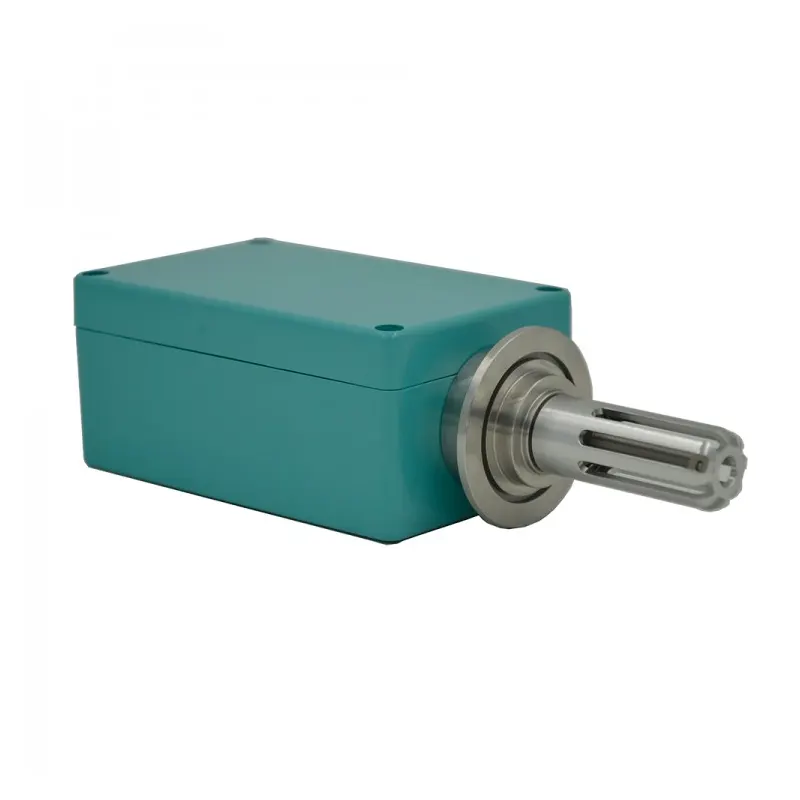
The Glove Box Moisture Analyzer listed by TENCAN belongs in that decision chain. The product listing identifies the accessory category, while the exact sensor, measurement range, interface, and calibration arrangement must be confirmed for the selected configuration. This article therefore focuses on the application question: what the analyzer should do in a glove box, how its reading is produced, and which details determine whether it fits a particular box and process.
Why Moisture Needs a Dedicated Measurement Point
Water vapor is one of the quiet variables in a glove box. It can enter through glove surfaces and seals, arrive on a sample or solvent, remain in a transfer chamber, or pass through a gas supply that is not as dry as assumed. A purifier may remove water and oxygen together, but the two measurements answer different questions. Oxygen data cannot be converted into a water-vapor value, and a low oxygen reading does not prove that the moisture burden is low.
The practical reason for a dedicated channel is trend visibility. A moisture reading taken at a defined point, under stable conditions, shows whether the atmosphere is moving toward or away from the intended state. That trend is useful before a sensitive load is introduced, after a transfer, and during purifier operation. It also gives maintenance a basis for checking seals, gas quality, and sample handling rather than reacting to a single alarming number.
A useful monitoring plan separates short-term disturbance from baseline condition. A reading captured during a transfer is not the same as a settled reading before work begins. Both can be useful, but they should not be averaged together or compared without context. The sampling frequency should match the decision: continuous monitoring may suit a process with frequent access, while periodic checks may be enough for a stable box used in batch work.
Moisture control is not a generic claim that every material is safe in every inert gas. The analyzer reports the condition of the atmosphere; the process owner must still decide whether that condition is acceptable for the material, the exposure time, and the handling step.
What the Analyzer Measures, and What It Does Not
An analyzer is a measuring device, not a purification device. It can report water vapor in the sampled atmosphere, but it does not remove water, regenerate a column, or certify that a box is leak-free. Keeping that distinction clear prevents both overconfidence and unnecessary equipment changes.
Water Vapor Is Not Oxygen
In many glove box systems, water and oxygen are monitored side by side because both can damage sensitive materials. They are still separate variables. A wet sample can raise water vapor while oxygen remains stable. A small air ingress can raise both. A solvent release can affect the moisture reading while having little to do with oxygen. The two channels should be interpreted together, but neither should be used as a substitute for the other.
The analyzer also does not measure the water content of a powder, film, or electrolyte. It measures the atmosphere around the work. Material moisture requires a different method, and the two results should not be conflated in a batch record.
Resolution, Accuracy, and Response Are Different Promises
Resolution is the smallest change the display can show. Accuracy describes how close the indication is to a reference value under stated conditions. Response time describes how quickly the indication follows a change at the sampling point. A display with fine resolution can still have a larger uncertainty, especially near the lower end of its range. A fast sensor can still appear slow if the sample line has a large dead volume or a low flow.
Calibration links the indication to a known reference and should be planned rather than treated as an emergency measure. The calibration gas, reference method, temperature, pressure, and sample flow all belong in the record. Without those conditions, a certificate or a single zero check has limited value. The exact calibration procedure for the selected accessory should come from its current documentation.
Units should be fixed in the record. Water vapor may be expressed as ppm by volume, dew point, or relative humidity at a stated temperature. These are not interchangeable unless temperature and pressure conditions are known. A relative-humidity value can appear reassuring while the absolute water burden is high. Convert only with a defined basis and keep the original unit visible.
Sensor and Sampling Choices Have Consequences
Trace moisture instruments use different sensing principles, and the product information for the chosen accessory should be the source for its actual principle, wetted materials, and limits. From a selection standpoint, the important question is compatibility: the gas being measured, the pressure at the sample point, the presence of solvent vapor, the expected moisture range, and the required output. A sensor intended for ambient relative humidity is not automatically suitable for trace water vapor in an inert atmosphere.
Sampling method matters as much as the sensor. An internal sensor sees the local atmosphere but must tolerate the box environment. An external analyzer draws gas through a line, so the line material, length, filtration, and leak tightness become part of the measurement. If the sample path adsorbs or releases water, the reading may lag or drift even when the analyzer itself is working correctly.
Cross-sensitivity is another reason to read the datasheet closely. Solvent vapors, oxygen, pressure changes, and temperature swings can influence some sensing methods. The correct response is not to assume interference in every case, but to identify the expected atmosphere and ask whether the selected instrument has been specified for it.
Placement and the Sample Path: Where a Reading Is Born
A moisture reading is only representative of the point where the sample is taken. In a small, well-mixed box the difference between locations may be modest. In a larger box, a transfer chamber, or a work area with local solvent use, the difference can matter. The first decision is therefore not which display to buy, but which question the measurement must answer.
If the purpose is to protect a sensitive operation, sample near the work zone or the return path from it. If the purpose is to judge purifier performance, sample where the treated gas leaves the purification loop. These are different monitoring positions and can produce different trends without either instrument being wrong. The chosen point should be documented and used consistently.
Flow and valve sequencing also affect what the display shows. A sample trapped in a line before the valve opens is not the same as a continuously flowing sample. If the analyzer is switched between points, allow a defined purge volume before recording the value. The required flow and settling time should be based on the instrument instructions and the actual line volume, not on a guess.
Inside or Outside the Box
An analyzer mounted inside the glove box avoids an external sample line, but its enclosure, display, and cable route must be compatible with the box atmosphere and cleaning practice. An external analyzer keeps service access outside the box, but requires a feedthrough or sampling connection. Every added penetration is a potential leak path until it has been checked. The connection should be designed so that the analyzer can be isolated for service without compromising the box atmosphere.
Dead Volume and Dead Corners
Long sample lines, tees, filters, and unused branches create dead volume. A sensor may respond quickly in its own cell while the complete system takes much longer to deliver a representative sample. Stagnant corners in the box create another kind of dead volume. Placement behind a baffle or away from circulation can make the atmosphere appear more stable than it is at the work position.
Reading a Slow Recovery Without Jumping to Conclusions
A rise in moisture after a door opening, glove change, transfer, or new load is expected. The interesting part is the recovery, not the spike. Does the reading fall promptly once the box is closed? Does it plateau? Does it rise again without a new disturbance? The shape of the curve narrows the possible causes, but it does not prove a fault by itself.
If recovery is slower than usual, first identify what changed. A wet load, a solvent-containing sample, a new glove batch, a gas cylinder change, or a purifier regeneration can all alter the starting condition. Compare the reading with oxygen, pressure, and the operating log. When several independent indicators move together, the case for an ingress event is stronger than when only one channel drifts.
A steady rise with the box closed points toward ingress, a wet source inside the box, or a sampling problem. A rapid rise during transfer followed by a long tail can reflect real moisture release from surfaces. A reading that falls only when the sample line is changed points toward the line. A reading that is slow at both high and low humidity may reflect sensor response, flow, or dead volume. These are diagnostic possibilities, not a verdict on the equipment.
Do not adjust calibration simply to make a reading agree with an expected value. Calibration corrects the instrument; it does not remove water from the box. If an independent check is available, use it to separate an atmosphere problem from an indication problem. If no independent check is available, change one variable at a time and document the result.
A deliberate, small event can be more informative than a long argument about a single number. Record the response to a normal transfer, a brief door opening, or a known purifier cycle. That baseline makes later changes easier to judge and helps distinguish a genuine atmosphere trend from an alarm that is simply responding to routine work.
Selection Criteria That Matter More Than the Display
The most useful analyzer is not necessarily the one with the most digits. It is the one whose measurement range, sample conditions, and service requirements match the application. Use the table below as a briefing structure; the exact values for a given model must come from its current product information.
| Selection area | Question to ask | Why it matters |
|---|---|---|
| Measured variable and units | Is the output water vapor concentration, dew point, or another value? | Prevents comparison of values that are not equivalent |
| Range and lower limit | Does the range cover both normal operation and upset conditions? | A display that is adequate at normal levels may not resolve a low-level trend |
| Accuracy and resolution | Are uncertainty and display increment stated separately? | Fine resolution is not the same as measurement accuracy |
| Response and sample flow | What flow and settling time are required? | Line volume and flow can dominate the observed response |
| Gas compatibility | Is the instrument specified for the actual gas or mixture? | Nitrogen, argon, helium, and solvent-bearing atmospheres are not identical |
| Pressure conditions | Will the sensor see box pressure, vacuum, or a regulated sample pressure? | The sample point must remain within the instrument limits |
| Wetted materials | Are seals, tubing, and sensor parts compatible with the atmosphere? | Corrosion or adsorption can degrade the reading |
| Mounting and feedthrough | Is the analyzer internal, external, or connected through a port? | Every connection must preserve the box seal |
| Output and alarm | Are analog, digital, or relay outputs needed for the record or control system? | Data is useful only if it can be captured and acted on |
| Calibration and service | How is the sensor checked, replaced, or isolated? | Service access affects data continuity and maintenance effort |
Range has two ends. A wide upper range may be useful during a large transfer, but it should not come at the cost of meaningful low-end information. Conversely, an instrument optimized only for trace levels may be outside its comfort zone during a major upset. The right balance depends on whether the analyzer is used mainly for process protection, maintenance diagnosis, or both.
Alarms Should Follow Process Risk
An alarm is only useful if the threshold has a defined action. A warning that sounds after the box has already been opened for a long transfer may be too late. A threshold set so tightly that normal recovery triggers it will be ignored. Define the response: stop the transfer, extend purge, check the seal, or hold the material. The right threshold depends on the material and the operation, not on a generic number.
Calibration and Service Access
Service access affects both uptime and data quality. Confirm how the sensor is replaced or cleaned, whether calibration can be performed in place, and what isolation is needed before the analyzer is opened. A design that requires breaking the box atmosphere for routine service may be acceptable in one laboratory and unacceptable in another. The answer depends on the maintenance plan, not on the accessory alone.
Fitting an Analyzer to a Vacuum Glove Box
The GBV-2 Stainless Steel Vacuum Glove Box is presented as a stainless steel vacuum glove box. Its operating concept uses a sealed chamber and vacuum or gas-exchange steps to establish a controlled atmosphere. That is not the same as a continuously purged system with a purification column, and the presence of a moisture analyzer does not turn one into the other. The distinction affects how the reading should be used.
In a vacuum glove box, an analyzer can help verify the atmosphere after a cycle if the sampling arrangement is compatible with the pressure changes. The sensor may need isolation during evacuation, and the sample line must not become a path for air ingress. Do not assume that an analyzer, feedthrough, or valve is vacuum-rated merely because the box is. Confirm the pressure rating and installation requirements for each item.
The GBV-2 product page should be used to confirm available ports, feedthroughs, and accessory arrangements for that model. A moisture analyzer listed for glove boxes is not automatically a direct-fit accessory for every box. Compatibility depends on the connection, the atmosphere, the pressure cycle, and the electrical route. When in doubt, specify the analyzer and the box together rather than treating them as independent purchases.
Vacuum-rated construction and atmospheric operation are separate questions. A component that works well at slight positive pressure may not tolerate evacuation, and a sensor isolated by a valve may still be exposed to a pressure transient when the valve opens. The installation drawing should show where isolation occurs, how the line is purged, and how the sensor is protected during the box cycle.
Commissioning, Records, and the Supplier Brief
Commission the analyzer with the same care as any other atmosphere instrument. Establish a stable baseline, record the units, sample point, flow, and calibration status, and define what counts as normal for that box. Check the new connection for leaks before relying on the data. Then observe a known event, such as a controlled transfer or a normal door opening, so that the recovery pattern is documented rather than guessed.
Records should make the reading interpretable months later. Include the analyzer identifier, calibration date, sample location, gas, pressure condition, and any maintenance that could affect the result. An alarm log without the associated box state is difficult to use. A short note about what changed at the time of the event is often more valuable than a long data export with no context.
For a supplier review, provide the box model and configuration, the gas or gas mixture, the expected moisture range, the pressure and vacuum conditions, the available port or feedthrough, the sample-line length, and any solvent exposure. State the required output and alarm function. Ask for the calibration method, service access, and pressure compatibility in writing. These details let the supplier confirm a suitable arrangement instead of matching only by product name.
Before purchase, also ask what the analyzer is not intended to measure. That question exposes assumptions about trace range, solvent tolerance, and vacuum exposure more quickly than a list of favorable features. The Glove Box Moisture Analyzer is a focused accessory for a focused question: what is the water-vapor condition of the atmosphere, and is it moving in the right direction? When the measurement point, calibration, and recovery pattern are understood, the reading becomes a useful control signal rather than a decorative number.
