
Why the Moisture Analyzer Matters in Your Glove Box
If you work with air-sensitive materials — lithium metal, perovskite precursors, OLED compounds, or reactive catalysts — you already know that water vapor is your enemy. Even a few parts per million (ppm) of moisture can ruin a batch, oxidize a sample, or cause hazardous side reactions. That's why the glove box moisture analyzer is arguably the most critical sensor in your inert atmosphere system. Without accurate real-time H₂O readings, you're flying blind.
Yet many researchers treat the moisture analyzer as a black box: they glance at the display, assume it's correct, and only panic when the number suddenly jumps. In this guide, we'll walk through how these analyzers work, what to look for when selecting one, how to calibrate them properly, and common pitfalls that can lead to false readings. By the end, you'll have a solid understanding of how to keep your glove box's moisture level under control — and your experiments reproducible.
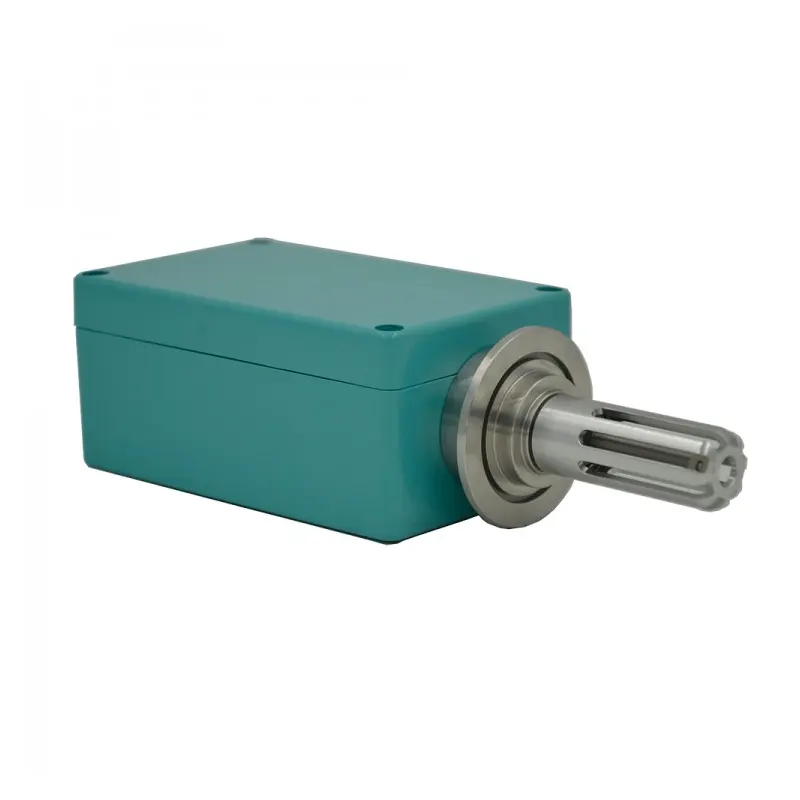
How Does a Glove Box Moisture Analyzer Work?
Most glove box moisture analyzers used in research and industry rely on one of two sensing principles: electrolytic (P₂O₅) or metal-oxide capacitive sensors. Both are designed to measure trace amounts of water vapor in inert gases like argon, nitrogen, or helium.
Electrolytic (Coulometric) Sensors
In an electrolytic sensor, the gas stream passes over a thin film of phosphorus pentoxide (P₂O₅) that absorbs water molecules. An applied voltage electrolyzes the absorbed water into hydrogen and oxygen, generating a current proportional to the water concentration. These sensors are extremely sensitive at low levels (sub-ppm) and are often used when H₂O must be maintained below 1 ppm. However, they require periodic regeneration of the P₂O₅ coating and can be poisoned by certain solvents or acidic gases.
Capacitive (Metal-Oxide) Sensors
Capacitive sensors use a hygroscopic dielectric layer whose capacitance changes with relative humidity. At very low dew points, the output is calibrated to give a direct ppm value. These sensors are more robust, have faster response times, and generally require less maintenance than electrolytic types. They are the most common choice in modern glove box systems because they offer good accuracy down to about 0.1 ppm and can handle a wide range of background gases.
Other technologies, such as chilled mirror hygrometers, provide the highest accuracy (especially for calibration standards) but are too bulky and slow for continuous glove box monitoring. Therefore, the vast majority of integrated glove box moisture analyzers use either capacitive or electrolytic sensors.
Key Parameters to Consider When Choosing a Moisture Analyzer
Not all moisture analyzers are created equal. When you're evaluating a glove box moisture analyzer for your system, keep these factors in mind:
Measurement Range and Resolution
For most glove box applications, you need to measure H₂O from 0.1 ppm up to 1000 ppm (or higher during regeneration or after a leak). Look for a sensor that offers a resolution of at least 0.1 ppm at low levels. Many high-end analyzers provide a range of 0–1000 ppm with a resolution of 0.01 ppm, which is more than sufficient for maintaining <1 ppm conditions.
Accuracy and Repeatability
Accuracy is typically stated as ±1 ppm or ±5 % of reading, whichever is greater. At very low levels (below 1 ppm), the absolute error matters more. A good analyzer should be repeatable to within ±0.1 ppm when measuring a stable gas stream. Always check the specs at the lower end of the range — that's where you'll be operating most of the time.
Response Time
A slow moisture analyzer can delay your response to a contamination event. Typical T90 response times (time to reach 90 % of a step change) range from 30 seconds to 5 minutes. For dynamic processes like antechamber cycling or sample introduction, faster response is better. Look for sensors with a bypass flow design that reduces sample dead volume.
Gas Compatibility
Most analyzers work with argon, nitrogen, and helium, but some are sensitive to corrosive gases or high concentrations of hydrogen. If your glove box uses a nitrogen-hydrogen mixture for regeneration, ensure the sensor can tolerate that environment without drift or damage.
Calibration and Maintenance Interval
Electrolytic sensors need periodic re-coating or replacement of the P₂O₅ cell, typically every 6–12 months. Capacitive sensors drift less but still require annual calibration against a traceable standard. Some analyzers feature built-in auto-calibration using a moisture generator, which simplifies maintenance. Consider the total cost of ownership, including calibration gas, replacement parts, and technician time.
How to Calibrate a Glove Box Moisture Analyzer
Regular calibration is essential for trustworthy readings. Even the best sensors drift over time due to contamination, aging, or changes in the gas matrix. Here's a practical approach:
Use a Certified Moisture Standard
The most reliable method is to connect the analyzer to a gas stream with a known moisture concentration, generated by a precision humidity generator or a certified gas cylinder with a traceable dew point. Many laboratories use a two-point calibration: one at a low level (e.g., <1 ppm) and one at a higher level (e.g., 100 ppm) to verify linearity.
Perform a Span Check with SmartCal or Similar
For quick routine checks, you can use a test substance like SmartCal (a proprietary sachet that releases a known amount of moisture when heated). This is a simple 10‑minute test that verifies both the heating and weighing functions of a moisture analyzer, but for glove box applications, the same principle applies: introduce a known moisture pulse and verify the response.
Zero Calibration
To establish a zero point, you can use a high-purity carrier gas dried through a molecular sieve or a dedicated getter. Most glove box analyzers allow you to zero the reading when the gas is known to be extremely dry (e.g., after a full regeneration cycle).
Document Every Calibration
Keep a log of calibration dates, results, and any adjustments. This is crucial for FDA/GMP compliance in pharmaceutical applications and for troubleshooting drift over time. Some analyzers store calibration history automatically.
Common Problems and How to Fix Them
Even with a good analyzer, you may encounter issues that affect accuracy. Here are the most frequent ones:
Slow Response or Sticky Readings
If the displayed value changes very slowly or seems stuck, the sensor may be contaminated with oil mist from the vacuum pump, solvent vapor, or particulate. Check the inlet filter and replace it if needed. For capacitive sensors, a baked-out regeneration at 100 °C for a few hours can restore sensitivity.
Drift Over Time
All sensors drift. If you notice a gradual increase in the baseline H₂O reading even though the glove box is tight, the sensor may need recalibration. Compare the reading with a portable dew point meter or a second analyzer to confirm.
Negative Readings or Off-Scale Low
A negative reading (or 0.0 ppm) often indicates a cable fault, a disconnected sensor, or a problem with the electronics. Check the wiring and connections. If the sensor uses a heated element, ensure the heater is powered.
Water Condensation in the Sample Line
If the sample gas cools below its dew point, water will condense in the tubing, causing false low readings. Make sure the sample line is heated or kept at a temperature above the dew point. For glove box applications, this is rarely an issue since the gas is at room temperature, but it can occur if the analyzer is in a cold room.
Final Recommendations for Your Lab
Selecting the right glove box moisture analyzer is a balance between initial cost, accuracy, and long-term maintenance requirements. For most academic and industrial labs working with <1 ppm H₂O, a capacitive sensor with a range of 0–1000 ppm and a resolution of 0.1 ppm is perfectly adequate. If you frequently handle extremely dry materials or need metrological traceability, consider an electrolytic sensor with a calibration certificate.
Remember that the moisture analyzer is only one part of the equation. The best sensor in the world cannot compensate for a leaky glove box, worn gloves, or improper antechamber purging. Use the analyzer as a diagnostic tool to verify your system's health, not just as a display. When you see a sudden spike, investigate immediately — it's often your first warning of a problem.
By understanding how your moisture analyzer works, how to calibrate it, and what can go wrong, you'll be able to maintain a truly inert atmosphere and produce data you can trust.