Application fields

Welding and additive manufacturing
Inert atmosphere glove box solution

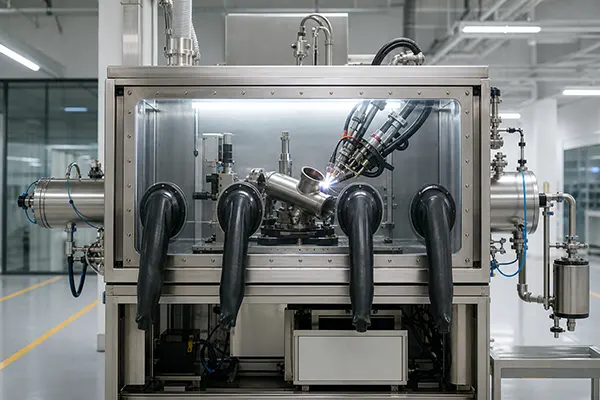
Provides a controllable inert, dry, low-oxygen environment for high-temperature processes, and is used for preliminary program evaluation of welding, laser welding, electron beam welding and additive manufacturing processes.

  • Target oxygen and water indicators should be confirmed based on material, heat input and quality requirements
  • Can evaluate the integration needs of energy sources such as high current welding, laser and electron beam
  • The box and transfer plan can be planned according to the size, weight and transportation method of the workpiece
  • Filtration, exhaust, anti-static and safety interlocking must be specifically confirmed according to process risks

Industry pain points

High temperature oxidation

The welding and additive processes have high temperatures, and material oxidation, discoloration and performance fluctuations need to be carefully evaluated in the plan.

Large size workpiece

Large-sized or complex structural parts need to match consistent atmosphere space, load-bearing and material inlet and outlet conditions.

Energy source integration

The integration of welding machines, lasers and other equipment involves vibration, sealing, electrical and gas path penetration interfaces.

Smoke and splash

Welding fume, spatter and particulate matter will affect observation, box cleaning and seal maintenance.

Powder risk

Metal powder inerting, dust removal, anti-static, exhaust and pressure strategies require special risk assessments.

Typical process flow

01

Workpiece cleaning

Remove oil and impurities

02

Transfer to box

Import via delivery bay

03

Gas replacement/purification

Control the atmosphere according to target conditions

04

Workpiece positioning

Fixture fixation and calibration

05

Welding/Additive Manufacturing

Processed in a controlled atmosphere

06

Cooling

Cooling according to process requirements

07

Surface inspection

Appearance and size inspection

08

Removal and cleaning

Take out through the delivery cabin

Key variables that need to be controlled

Workpiece size and weight

Determine cabin volume, structural strength, load-bearing and handling plans.

O₂

Target oxygen content

Confirmation should be based on material, heat input and quality standards.

Welding/additive method

Different processes have different requirements for atmosphere, heat source and interface.

Heat input and heat generation

The relationship between temperature rise, heat dissipation and atmosphere stability needs to be evaluated.

Smoke and particles

It is necessary to plan the capture and maintenance based on the amount of smoke and particle properties.

Exhaust, filtration and interlocking

Special design must be carried out based on process, site and regulatory requirements.
Recommended system direction

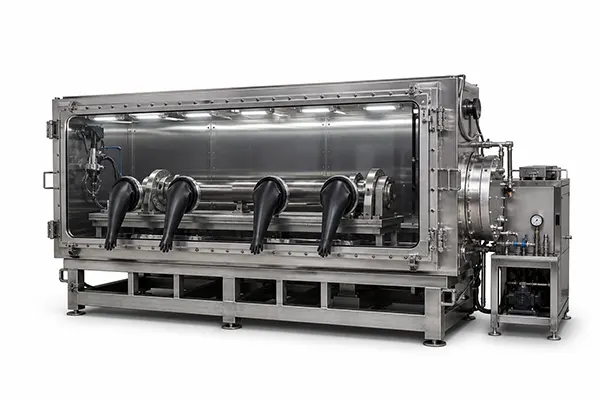
Illustration of a large customized inert atmosphere glove box

Large-scale customized inert atmosphere system

The configuration of the cabinet and purification system can be evaluated based on large workpieces, material loading and unloading methods, load-bearing capacity, and process equipment layout.

Communication plan
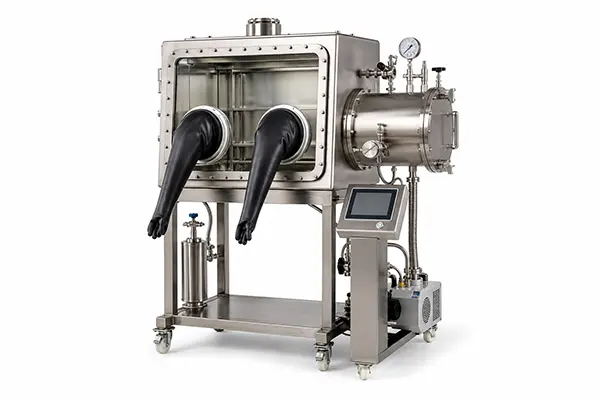
Vacuum displacement welding glove box diagram

Vacuum displacement welding system

Replacement and cycle purification strategies can be evaluated based on the initial atmosphere, cabin opening frequency, cabin volume and process rhythm.

Communication plan
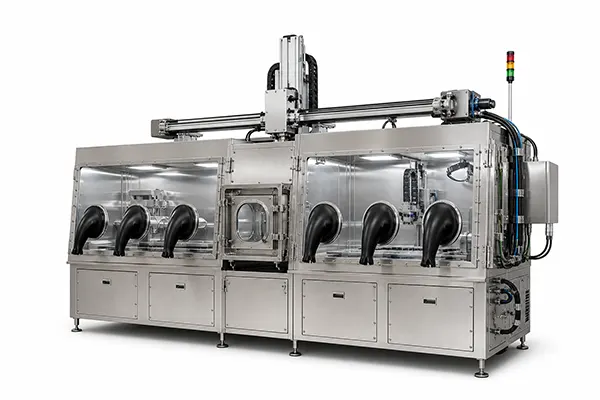
Schematic diagram of automated integrated glove box system

Double-sided/automated integrated system

Double-sided operation and automation integration methods can be evaluated based on the number of operators, loading and unloading, maintenance space and cycle time requirements.

Communication plan
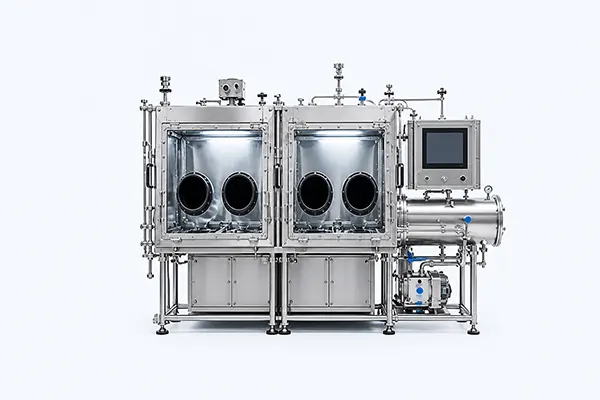
System solution structure diagram

Structure diagram of inert atmosphere glove box system
Welding observation window
Main cabinet
Analyzer interface
Filter interface
Large front door/pass cabin
Load-bearing base plate
Electrical and pneumatic interface
Cooling water interface
Main cabinetWelding observation windowAnalyzer interfaceFilter interfaceLarge front door/pass cabinLoad-bearing base plateElectrical and pneumatic interfaceCooling water interface

Evaluable configuration items

Feeding and discharging methodsLarge front door or transfer bay options can be evaluated based on workpiece size, weight and handling path.
Working platformLoad-bearing and work platform structures can be evaluated in conjunction with process equipment, fixtures and operating heights.
Observation and protectionViewing windows, protection and maintenance requirements should be confirmed in conjunction with heat sources, splash and on-site risks.
Filtration and exhaustFiltration levels, exhaust methods and maintenance intervals need to be evaluated based on smoke, powder and regulations.
Cooling and control interfaceInterfaces can be reserved according to peripherals, power supply, gas circuit, cooling water and data communication needs.
Automated integrationThe integration of robots, loading and unloading, vision and process equipment needs to be confirmed based on the rhythm and maintenance space.
Safety interlockMeasures such as hatches, gas lines, pressure and emergency stops must be specifically determined based on project risks and applicable regulations.

Key control objectives reference

Oxygen content
Confirm by process
Materials related to heat input
Water content
Confirm by process
Opening the cabin is related to the purification strategy
Pressure strategy
Special assessment
Not a substitute for safe design
Large artifact support
Customized to size
Filter/interlock
Confirm by process

Typical application scenarios

Titanium alloy welding process scenario

Titanium alloy welding

Suitable for titanium alloy welding needs that require evaluation of inert atmosphere, workpiece transfer, observation and process interface conditions.
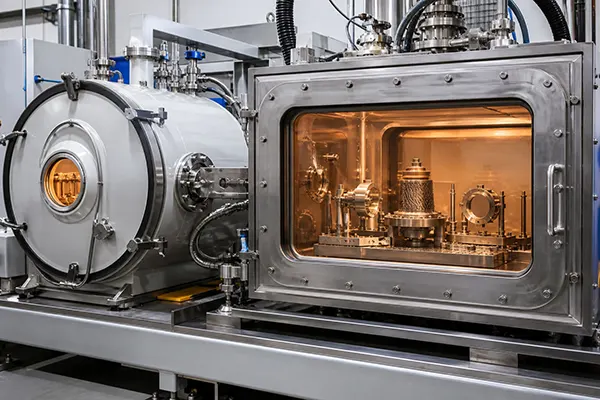
High temperature alloy brazing process scenario

High temperature alloy brazing

Can communicate solutions around atmospheric conditions, thermal management, observation and protection, and workpiece loading and unloading under high-temperature processes.
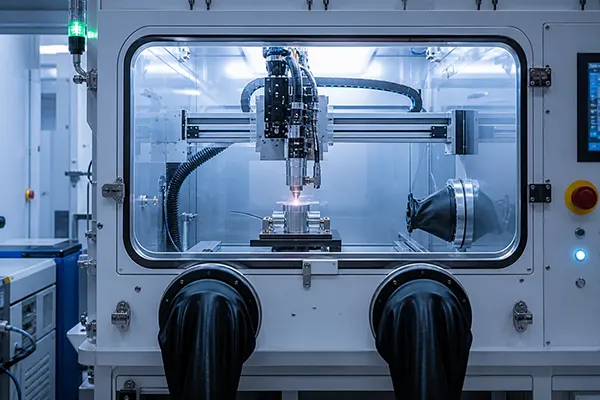
Laser welding and automated work station scene

Laser welding and automated work stations

Integrated assessment can be carried out for the combined conditions of laser, automated handling, robots, vision and maintenance space.
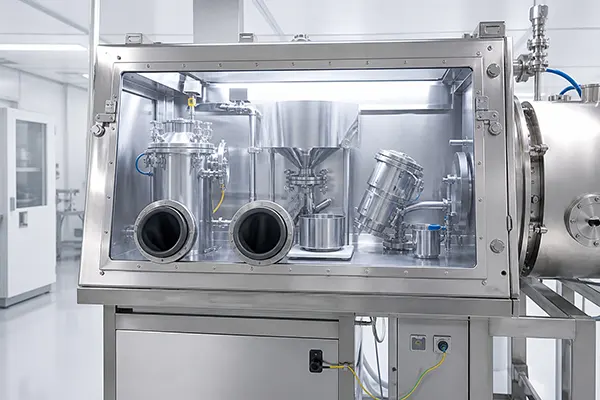
Additive manufacturing powder processing process scenario

Additive Manufacturing Powder Processing

Powder screening, packaging and transfer involve inerting, anti-static, dust removal and exhaust, which should be combined with special assessment of material characteristics.
Typical engineering requirements

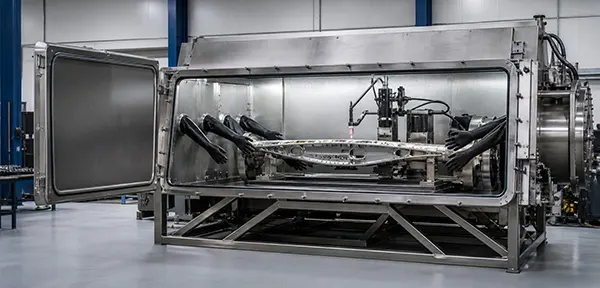
Schematic for inert atmosphere welding of large workpieces

Inert atmosphere welding of large workpieces

Suitable for sorting out the working dimensions, load-bearing capacity, material inlet and outlet paths, fixtures and integration conditions of welding equipment.
  • Workpiece size and weight
  • Fixture, heat source and cooling conditions
  • Onsite safety and compliance boundaries
Submit process requirements
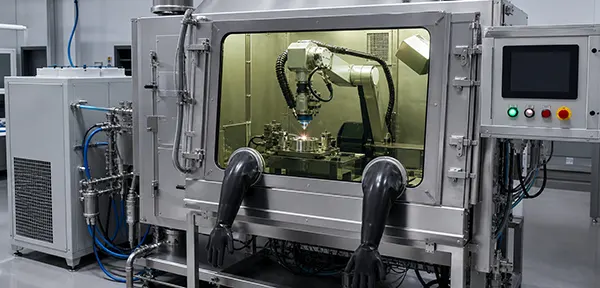
Illustration of laser welding inert atmosphere workstation

Laser welding inert atmosphere workstation

The system boundary can be planned around the laser optical path, robot loading and unloading, vision, cooling and electrical communication interfaces.
  • Heat source and optical path interface
  • Automation pace and maintenance space
  • Interlocking and emergency stop requirements
Submit process requirements
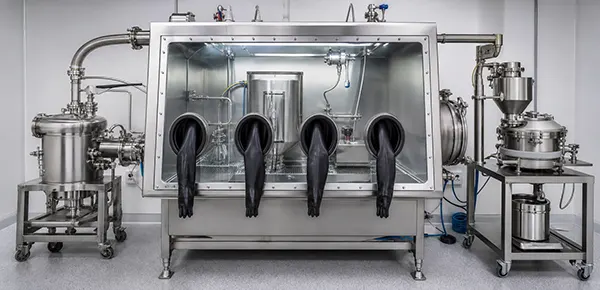
Powder additive manufacturing material processing instructions

Powder additive manufacturing material processing

Key boundaries such as powder properties, transfer methods, dust removal, filtration, exhaust and static electricity control can be communicated in the early stage.

  • Powder physical properties and processing capacity
  • Filtration and exhaust conditions
  • Risk assessment and regulatory requirements
Submit process requirements

Key points of plan communication

Demand boundary sorting

First clarify the materials, processes, equipment and site conditions to facilitate the establishment of an executable assessment scope.

System integration assessment

Comprehensive interfaces for cabinets, heat sources, automation, gas circuits, electrical, cooling and maintenance spaces.

Security condition confirmation

Pressure, filtration, exhaust, grounding, anti-static, fire protection and interlocking all require special confirmation.

Technical data alignment

Check target configuration against materials, quality standards, site conditions and technical protocols.

Project communication path

Help engineers carry out subsequent technical communication through process requirements, layout and concerns.

Security Boundary and Technical Statement

Welding, high-temperature processing and combustible metal powder projects require special risk assessments. Ordinary inert atmosphere glove boxes are not equivalent to biosafety isolators, nuclear-grade isolation systems, explosion-proof systems, or unproven specialized safety equipment.

  • Pressure, filtration, exhaust, grounding, anti-static, fire protection and interlocking must be confirmed by professional engineers.
  • When it comes to high-pressure gas, flammable gas and dust environments, applicable regulations and standards must be followed.
  • The final configuration, installation conditions and performance guarantee values are subject to the engineering evaluation and technical agreement.
  • Please submit materials, processes and on-site information through the inquiry form below for targeted communication.

FAQ

Target oxygen and water indicators need to be confirmed in combination with material grade, heat input, quality standards and on-site conditions. Process evaluation cannot be replaced by a single value.
It is necessary to comprehensively confirm the cabin volume, initial atmosphere, opening frequency, continuous operation time and process rhythm; different combinations may be used for different projects.
It can be evaluated from paths such as large front doors, customized transfer cabins, tracks, working platforms or hoisting interfaces, and the load-bearing, handling and safety interlocking conditions can be checked at the same time.
Capture, filtration, differential pressure monitoring, maintenance and exhaust solutions should be determined based on welding materials, fume volume, dust risks and local regulations.
After confirming the equipment layout and risk conditions, electrical, optical circuits, cooling water, gas circuits, data communication and interlocking interfaces can be evaluated.
It is necessary to consider the weight, dynamic load, force distribution, transportation and installation conditions of the workpiece, fixture and integrated equipment at the same time, and check them by qualified engineering personnel.
Pressure strategies should be comprehensively evaluated based on powder characteristics, process risks, filtration, exhaust, and local regulations. Flammable or explosive dusts must undergo special safety assessments.
After clarifying the rhythm, process equipment, maintenance space and safety conditions, the integration requirements for robots, linear modules, fixtures, loading and unloading and visual inspection can be communicated.
Solution Consultation

Find the Glove Box Solution That Fits Your Needs

Tell us about your application, chamber size, H2O/O2 specifications, or integration requirements, and our engineers will recommend a suitable configuration.

  • Standard products and customized integration available
  • Your requirement details are kept strictly confidential
Technical consultation specialist
Questions? Contact our technical specialists.