Why Precise Oxygen Measurement Matters in a Glove Box
If you work with air-sensitive materials — lithium metal, perovskite precursors, OLED compounds, or reactive catalysts — you know that even a few parts per million (ppm) of oxygen can ruin an experiment. A glove box creates a controlled inert atmosphere, but without a reliable oxygen analyzer, you are essentially operating blind. How do you know the atmosphere inside the chamber is truly below 1 ppm O₂? How do you detect a leak before it compromises your sample?
The answer lies in the choice of oxygen sensor. Among the available technologies, the glove box zirconia oxygen analyzer has become a trusted solution for laboratories that demand long-term stability, low maintenance, and accurate readings at trace levels. In this article, we will walk through the operating principle of a zirconia sensor, why it fits glove box applications, and what factors you should consider when selecting one.
How a Zirconia Oxygen Analyzer Works
Solid Electrolyte Sensing Principle
A zirconia oxygen analyzer uses a ceramic sensor made of zirconium dioxide (ZrO₂) stabilized with yttrium oxide. At high temperatures (typically 600–800 °C), the zirconia ceramic becomes a solid electrolyte that conducts oxygen ions. The sensor has two electrodes separated by the zirconia element: one exposed to the sample gas (inside the glove box) and the other exposed to a reference gas (usually ambient air).
When the oxygen partial pressures on the two sides differ, the sensor generates a voltage according to the Nernst equation. This voltage is directly proportional to the logarithm of the oxygen concentration ratio. By measuring this voltage, the instrument calculates the oxygen level in the glove box atmosphere.
Why It Works Well for Glove Boxes
Several characteristics make the zirconia analyzer particularly suitable for glove box use:
- Wide measurement range — from percent levels down to sub-ppm levels. It can cover both initial purge monitoring and long-term trace control.
- Fast response time — typically within a few seconds, allowing you to detect sudden oxygen ingress from a glove leak or antechamber operation.
- Long sensor life — the zirconia element is robust and does not degrade quickly in dry inert gases, unlike electrochemical cells that require periodic replacement.
- Low drift — once calibrated, the sensor maintains its accuracy over extended periods, reducing the need for frequent recalibration.
Of course, actual performance depends on proper installation, adequate gas flow, and the overall condition of the glove box. No single sensor can guarantee a fixed ppm level under all conditions, but the zirconia technology offers a strong foundation for reliable oxygen monitoring.
Zirconia vs. Other Oxygen Analyzer Types for Glove Boxes
You may also encounter electrochemical (fuel cell) oxygen analyzers and paramagnetic analyzers in glove box applications. Understanding the differences helps you make an informed choice.
| Feature | Zirconia Analyzer | Electrochemical (Fuel Cell) Analyzer |
|---|---|---|
| Measurement principle | Solid electrolyte (Nernst voltage) | Chemical reaction generating current |
| Typical range | 0.1 ppm – 25% | 0.1 ppm – 25% |
| Sensor lifetime | Several years (no consumable) | 1–2 years (electrolyte dries out) |
| Response time (T90) | < 5 seconds (typical) | 10–30 seconds |
| Cross-sensitivity to other gases | Low (specific to oxygen) | Can be affected by acid gases |
| Maintenance | Low (calibration check recommended) | Periodic sensor replacement |
| Best suited for | Continuous monitoring, trace levels | Lower cost, less frequent use |
For most glove box applications where you need < 1 ppm O₂ control day after day, the zirconia analyzer offers a better balance of accuracy, longevity, and low intervention. If your glove box is used only occasionally or for less demanding processes, an electrochemical analyzer may be sufficient, but you will need to budget for sensor replacement every 1–2 years.
Key Factors When Selecting a Glove Box Zirconia Oxygen Analyzer
Measurement Range and Resolution
Check that the analyzer can measure down to at least 0.1 ppm O₂ if you are targeting < 1 ppm. Many models offer autoranging from ppm to percent. A resolution of 0.01 ppm is desirable for trace-level work.
Sample Gas Flow and Conditioning
The zirconia sensor requires a steady flow of sample gas, typically 0.5–2 L/min. The gas should be free of dust, oil mist, and excessive moisture. In a glove box, you can install a small bypass line from the circulation loop or directly from the chamber. Some analyzers include an internal pump, while others rely on external pressure. Ensure the flow rate is within the specified range for accurate readings.
Calibration and Zero Stability
Zirconia analyzers are usually calibrated with ambient air (20.9% O₂) as a span gas and a certified zero gas (e.g., high-purity nitrogen or argon with < 0.1 ppm O₂) for the zero point. Some models offer automatic calibration at the touch of a button. Over time, the sensor may drift slightly, so a monthly calibration check is a good practice. The analyzer should also have a stable zero offset; otherwise, readings at low ppm can be unreliable.
Installation and Integration
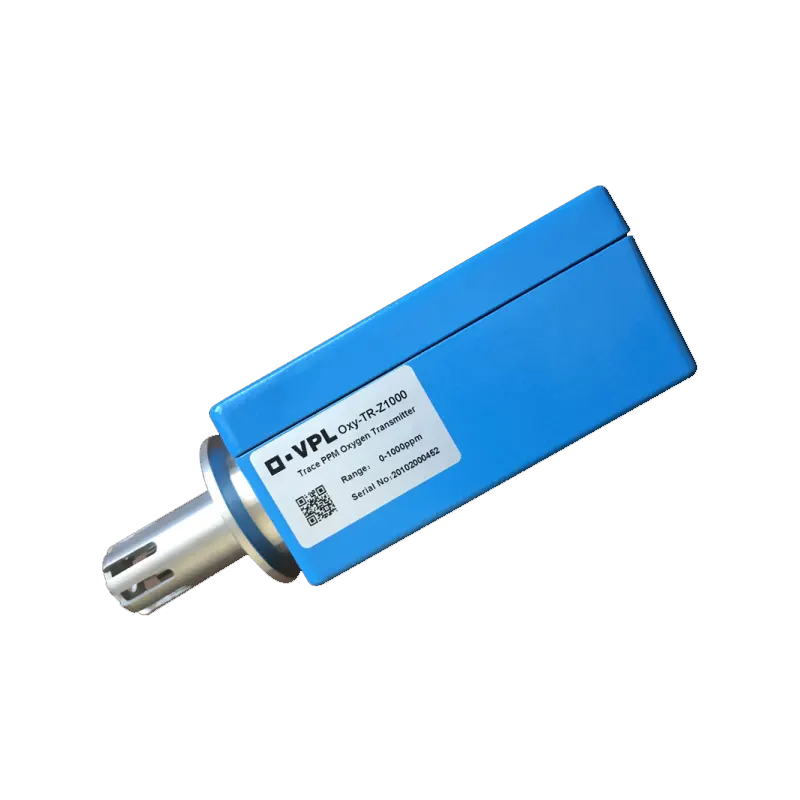
Consider how the analyzer will be connected to your glove box. Most units use a KF-25 or KF-40 vacuum fitting for the gas inlet and outlet. The analyzer should be mounted outside the glove box, with a sample line reaching into the chamber. If you already have a moisture analyzer, you can often share the same gas sampling port. The Glove Box Zirconia Oxygen Analyzer from TENCAN is designed specifically for glove box integration, with a compact enclosure and KF fittings that make installation straightforward.
Data Output and Alarm Capabilities
For a modern laboratory, the analyzer should provide an analog output (4–20 mA or 0–10 V) and a digital interface (RS485, Modbus, or Ethernet) to connect with your glove box PLC or data logging system. An alarm relay that triggers when O₂ exceeds a set threshold is essential for safety. Many glove box operators set an alarm at 1–5 ppm to warn of a leak or improper antechamber operation.
Practical Tips for Maintaining Your Zirconia Oxygen Analyzer
- Keep the sensor heated. Zirconia sensors operate at high temperature; once powered, they should remain on continuously to avoid thermal cycling stress. If you must turn off the analyzer, allow the sensor to cool gradually.
- Use a particulate filter. Install a sintered metal filter on the sample inlet to prevent dust from entering the sensor chamber. This extends sensor life and reduces calibration drift.
- Check the reference air. The analyzer uses ambient air as reference. If the reference air is contaminated (e.g., high humidity, solvent vapors), the reading will be affected. Ensure the reference port is open to clean, dry air.
- Perform a periodic leak test. If the sample line develops a leak, ambient air will dilute the sample, causing a false low reading. Use a simple pressure decay test to check the integrity of the tubing.
- Log the readings. Connecting the analyzer to a data logger or your glove box control system allows you to track O₂ trends over time. A gradual increase may indicate a small leak, glove deterioration, or a purification column nearing saturation.
Common Questions About Glove Box Zirconia Oxygen Analyzers
Can I use a zirconia analyzer if my glove box uses argon or nitrogen?
Yes. Zirconia sensors measure oxygen partial pressure regardless of the background gas. However, the thermal conductivity of the gas can affect the sensor temperature, so the analyzer must be calibrated for the specific gas type. Most units have a gas selection setting.
How often should I regenerate the purification columns if I use a zirconia analyzer?
The analyzer itself does not affect the regeneration frequency, but it gives you accurate data to decide when to regenerate. Typically, when the O₂ level rises above your target (e.g., 1 ppm) despite normal operation, it is time to regenerate the column. The actual frequency depends on the leakage rate, antechamber usage, and glove integrity.
Is a zirconia analyzer suitable for solvent vapor environments?
Zirconia sensors can be affected by combustible solvents at high temperatures (the sensor runs at 600–800 °C). If your glove box contains volatile organic solvents, you should use an optional solvent trap or a solvent-resistant sampling system. TENCAN offers an Organic Solvent Vapor Adsorption System that can be paired with the analyzer to protect the sensor.
Bringing It All Together
Choosing the right oxygen analyzer for your glove box is not just about the initial cost — it is about ensuring the integrity of your experiments day after day. A glove box zirconia oxygen analyzer provides the accuracy, speed, and longevity needed for demanding inert atmosphere work. By understanding the sensor principle, comparing it with other technologies, and considering key selection factors, you can make a confident decision.
When you are ready to evaluate a specific model, look for one that fits your glove box's gas fittings, offers the measurement range you need, and integrates seamlessly with your existing control system. The accessory page for the Glove Box Zirconia Oxygen Analyzer provides detailed specifications and installation guidance. Remember that the best analyzer is the one that matches your process conditions, so take the time to review your typical oxygen levels, gas type, and sampling requirements.
With a reliable oxygen analyzer in place, you can focus on your research and production, knowing that your glove box atmosphere is under control.