All applications

Air-free sample transfer for materials analysis

Protected handling can preserve a freshly prepared sample until it reaches the instrument. Mount it in a purified inert-atmosphere glove box, seal it in a compatible transfer device, and agree with the instrument facility on how it will be loaded or measured.

Discuss your transfer setup
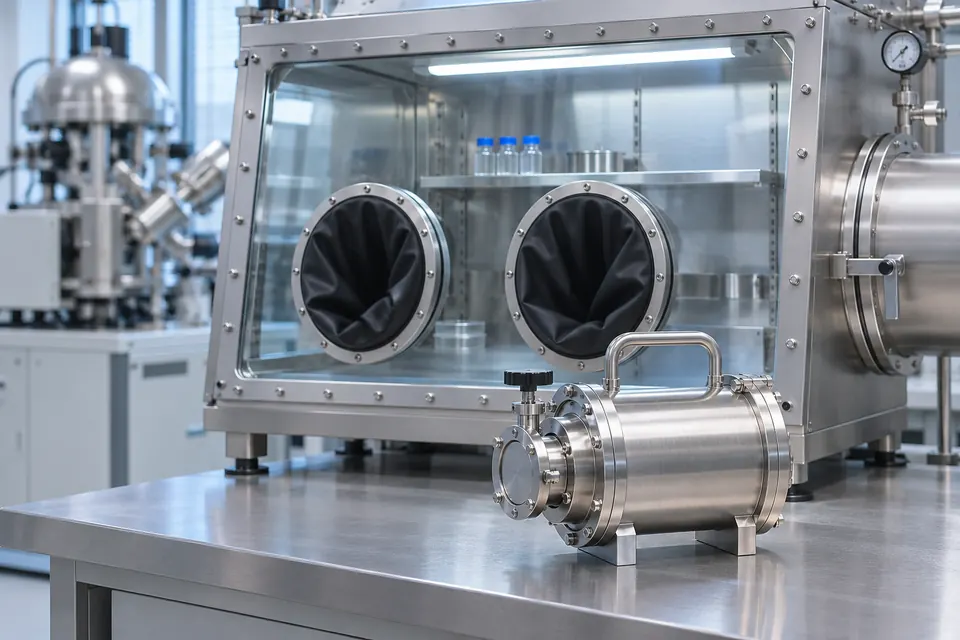
Illustration of an inert-atmosphere glove box and a sealed transfer vessel
Illustration of a protected transfer setup

Which samples need a protected handoff?

Process illustrations
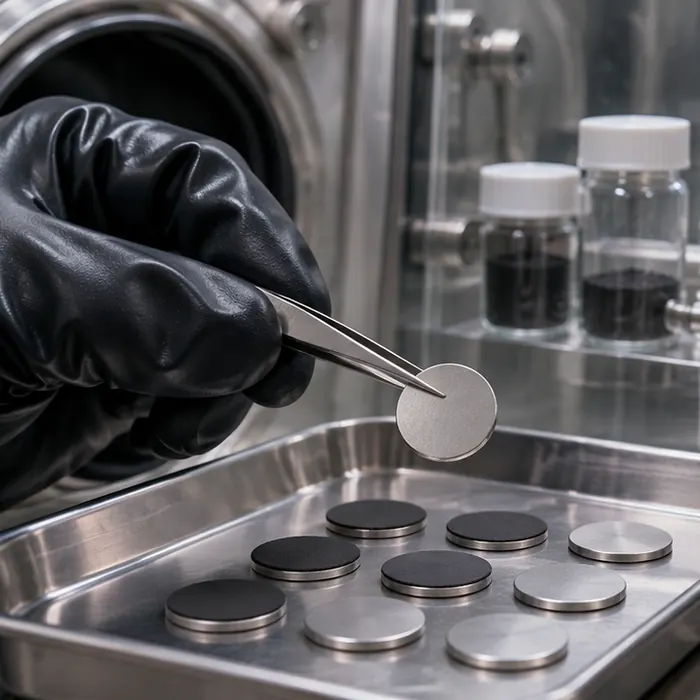
Battery development — Cycled electrode surface Battery development

Cycled electrode surface

Exposure risk
Air exposure during cell teardown can change the surface film before XPS.
Transfer route
Open the cell in the glove box, mount the electrode on a puck and dock the closed vessel at the XPS load lock.
How to check
Compare a protected specimen with a matched specimen given a documented air exposure. Keep cycling history and acquisition settings the same.
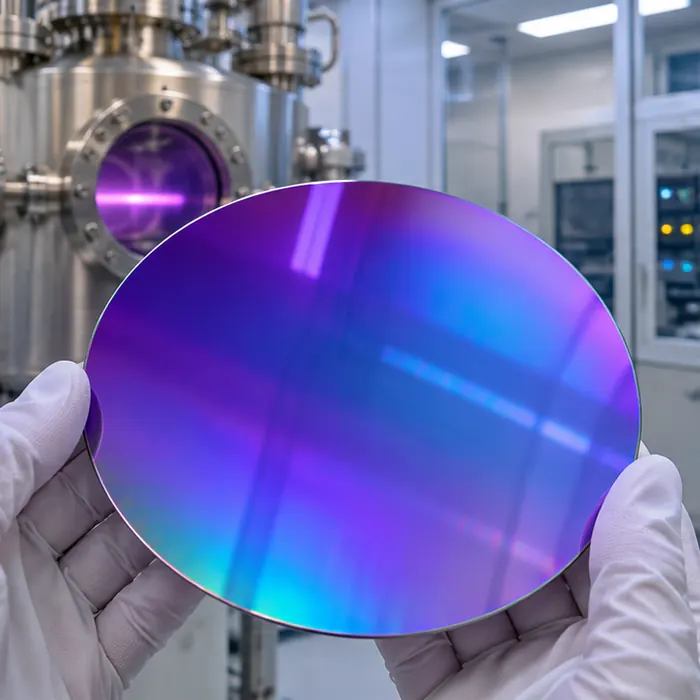
Semiconductor thin films — Freshly deposited film Semiconductor thin films

Freshly deposited film

Exposure risk
Oxide formed during the walk from deposition to analysis can obscure the as-grown surface.
Transfer route
Mount a witness coupon alongside the wafer. Transfer the coupon from the inert enclosure to XPS in a compatible vessel.
How to check
Compare protected and exposed coupons from the same run. Track the film’s chemical states alongside the oxygen signal.
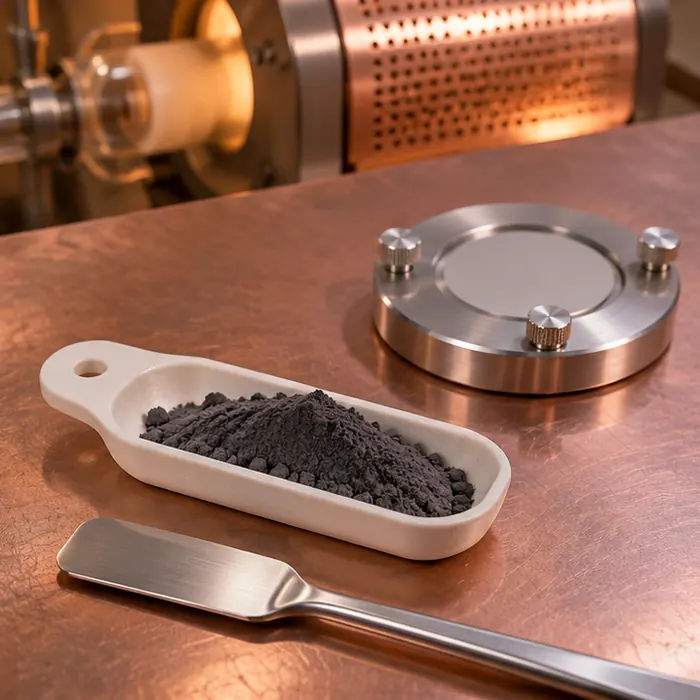
Catalyst development — Air-sensitive crystalline catalyst powder Catalyst development

Air-sensitive crystalline catalyst powder

Exposure risk
Exposure during weighing or packing can change the phase before diffraction.
Transfer route
Pack the powder in a windowed XRD holder in the glove box. Keep the holder closed throughout the scan.
How to check
Scan an empty sealed holder with the same window. Compare its background with the loaded pattern before assigning weak peaks.

Follow the protected transfer route

Follow the amber specimen through the cutaway.
Process illustrations — Mount

Mount

Load a conditioned holder, then mount and label the specimen inside the glove box. Keep a clean holder or blank available to help distinguish handling contamination from sample chemistry.

Sample
Process illustrations — Seal & move

Seal & move

Close the holder or transfer vessel inside the controlled atmosphere. Check its seals and confirm that it can maintain the required atmosphere or vacuum for the full trip and wait before loading.

Sample
Process illustrations — Dock or measure sealed

Dock or measure sealed

Open a compatible vessel inside the verified load interface. For diffraction with a sealed XRD holder, keep the window closed during measurement and measure the empty holder to identify its background.

Sample

Match the transfer device to the measurement

TechniqueSuitable transfer setupConfirm before ordering
XPS surface analysisAn inert or vacuum transfer vessel that docks at the XPS load lock and stays closed until protected loading.Instrument model, flange or docking format, sample puck, transfer arm reach and accepted load-lock conditions.
TEM imagingAn instrument-approved sealed TEM holder or compatible transfer chain for the grid or chip, loaded under inert gas.Holder model, grid or chip support, stage clearance and the facility’s opening sequence.
XRD phase analysisAn airtight XRD holder or capillary that stays sealed while the pattern is collected.Window background, sample thickness, beam geometry and whether the seal remains intact throughout the scan.
Oxford inert sample preparation and characterisation platform ↗

Specify the glove box and acceptance checks

For recurring transfers, consider a circulation purifier, separate O₂ and H₂O readings, and an antechamber sized for the largest holder or vessel including its handles. Ask for a demonstration with the actual load: record baseline readings, recovery after repeated transfers, and a blank or known reference taken through the complete route. Set pass limits with the receiving facility based on the sample and instrument.

Frequently asked questions

Will low O₂ and H₂O inside the glove box protect the sample all the way to the instrument?

The chamber readings describe the preparation environment. Verify the seal, transport time and receiving interface separately for the full transfer route.

What can I do if the instrument has no protected loading port?

For XRD, a compatible sealed holder may let you measure through a window. For XPS or TEM, ask the facility about a supported transfer accessory or protected interface before specifying the glove box.

Solution Consultation

Find the Glove Box Solution That Fits Your Needs

Tell us about your application, chamber size, H2O/O2 specifications, or integration requirements, and our engineers will recommend a suitable configuration.

  • Standard products and customized integration available
  • Your requirement details are kept strictly confidential
Technical consultation specialist
Questions? Contact our technical specialists.